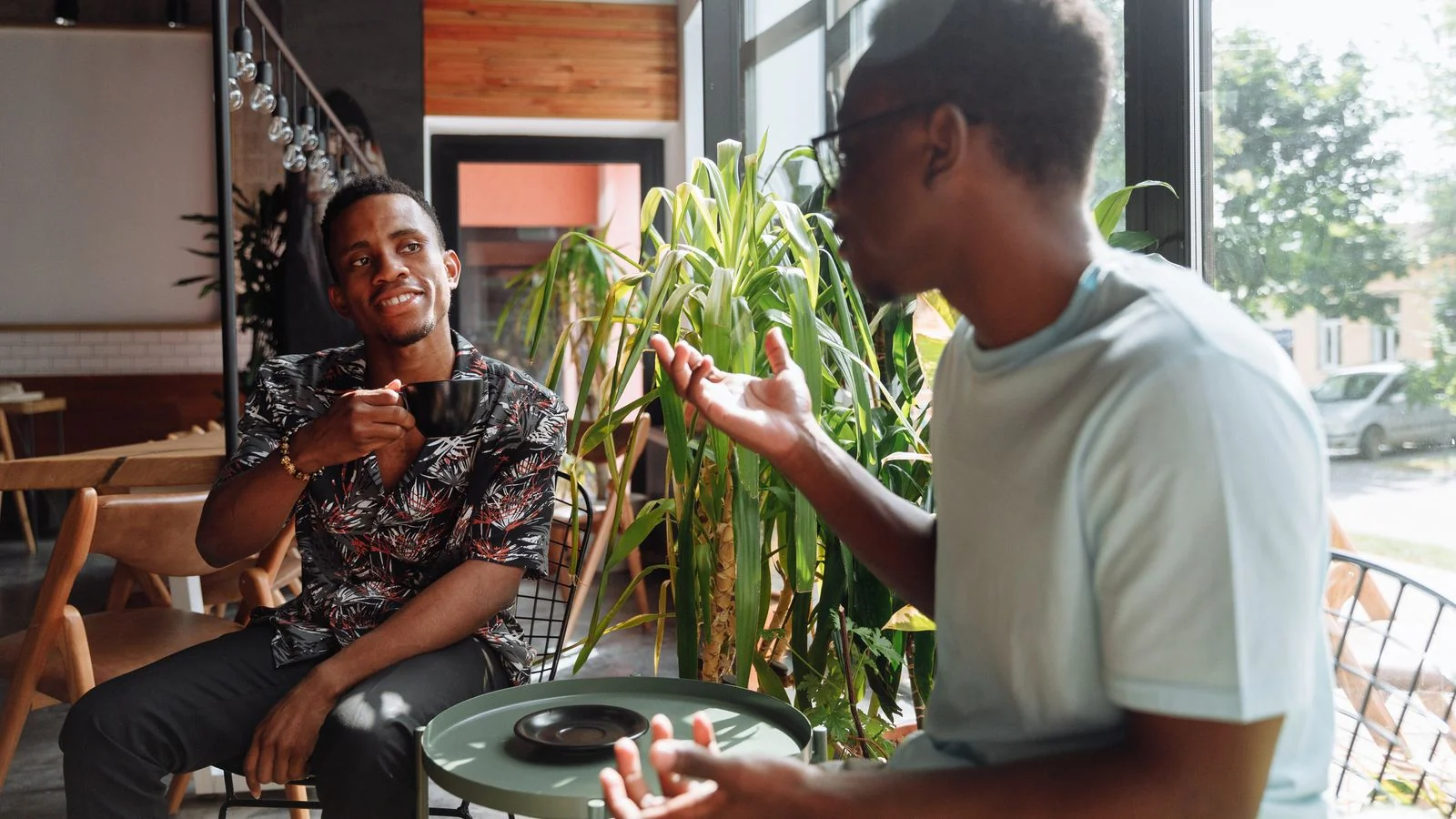
When was the last time you bought something expensive without asking anyone first? For most people the answer is never. What changed in the last two years is who they ask. A friend at dinner, a stranger with a four-star review, and now a chatbot that has read both and summarizes them in a paragraph.
That shift is the story inside the 2026 word of mouth marketing statistics. Trust in personal recommendations has barely moved in a decade. The channels carrying those recommendations have moved a lot. This piece gathers the strongest numbers from Nielsen, McKinsey, Edelman, BrightLocal and Semrush, gives each one its source and year, and closes with a model you can use to score where your brand is being talked about and where it is silent.
Friends still beat every ad on trust

Start with the baseline that every other number sits on. Nielsen’s 2015 Global Trust in Advertising study found that 83% of respondents completely or somewhat trust recommendations from people they know. Branded websites came second at 70%, and consumer opinions posted online came third at 66%. Six years later, Nielsen’s 2021 Trust in Advertising study, fielded in August and September 2021, put trust in recommendations from people they know at 89%, again the most trusted channel it measured.
Edelman’s research tells the same story with fresher data. Its 2025 Trust Barometer special report, “Brand Trust, From We to Me,” surveyed more than 15,000 people across 15 countries between April 24 and May 5, 2025. When Edelman asked which sources people trust for accurate information about brands, friends and family led at 84%. Customers like me came second at 80%, then customer reviews at 68%. Brand employees scored 63%, journalists 59%, and both the brand’s CEO and influencers scored 58%.
Read that ranking from the top down and it describes a ladder of distance. The closer the voice is to the buyer’s own life, the more weight it carries, and the company talking about itself sits near the bottom.
Edelman also asked what shapes opinion before a purchase. Own experience led at 70%. The experience of others, which Edelman defined as friends and family, customer reviews and influencers, came next at 59%. What the brand says about itself, through ads, its website or its social channels, came last at 50%. Paid and owned media still count. They just count less than the people around the buyer.
What matters for a marketer is the stability. Across the word of mouth marketing statistics in this piece, trust in the people we know has held above 80% in every major study for a decade. If your plan for 2027 has a line for paid media and nothing for the conversations customers have about you, the budget is pointed at the less trusted half of the ladder.
How much of buying does word of mouth drive?
The most cited estimate is still McKinsey’s. In an April 2010 McKinsey Quarterly article, Jacques Bughin, Jonathan Doogan and Ole Jørgen Vetvik wrote that word of mouth is “the primary factor behind 20 to 50 percent of all purchasing decisions.” The effect is strongest on first-time and expensive purchases.
The same article broke word of mouth into parts that still hold up. Experiential word of mouth, meaning what people say after using a product themselves, made up 50 to 80 percent of word-of-mouth activity in a given product category. About 8 to 10 percent of consumers were what McKinsey called influentials, and they generated three times more word-of-mouth messages than everyone else, with each message carrying four times the impact on a recipient’s purchase decision. A high-impact recommendation was up to 50 times more likely to trigger a purchase than a low-impact one.
McKinsey also found that in categories such as skincare and mobile phones, marketing-induced word of mouth generated more than twice the sales of paid advertising. Its clearest example was the iPhone in Germany, where sales driven by word of mouth outstripped those from Apple’s paid marketing sixfold in the product’s early years there.
A 2014 study from Ogilvy, TNS and Google came at the question from the buyer’s side. It surveyed 2,458 recent purchasers of vehicles, beauty products and smartphones and asked what influenced their decision. Word of mouth led at 74%. Retailers and store visits followed at 69%, YouTube at 64% and company websites at 59%.
Two cautions belong with these numbers. The McKinsey estimate is from 2010 and the Ogilvy study from 2014, before AI assistants reshaped discovery. And both measure influence, not causation. Still, no study since has knocked word of mouth off the top, and the newer data below suggests its reach has grown.
Reviews turned the kitchen table public
A review is word of mouth with a permanent address. It is one customer’s opinion, written once and read by thousands of people who will never meet the writer. BrightLocal’s 2026 Local Consumer Review Survey, published February 11, 2026 from 1,002 U.S. adults, shows how far that public version has spread.
Ninety-seven percent of consumers read reviews for local businesses. Forty-one percent say they always do, up from 29% in BrightLocal’s 2025 edition. And 49% trust reviews from strangers online about as much as personal recommendations from people they know. That last figure is the bridge between the two worlds. For half of all buyers, a stranger’s review now sits close to a friend’s advice.
The reviews have to be fresh, plentiful and good. BrightLocal found 74% of consumers only consider reviews written in the last three months, and 32% look only at reviews from the last two weeks, up from 20%. Forty-seven percent will not use a business with fewer than 20 reviews. The bar on ratings rose too. Thirty-one percent only use businesses rated 4.5 stars or higher, up from 17% a year earlier, and 68% require at least four stars, up from 55%.
The payoff for clearing that bar is large. Eighty-five percent of consumers say they are more likely to use a business after reading positive reviews, and 93% have bought something after reading reviews. On the other side, 77% are less likely to use a business after negative ones.
Customers also expect the business to join the conversation. Eighty-nine percent expect owners to respond to reviews, and 80% are more likely to use a business that responds to all of them. But 50% are put off by templated replies. A copy-and-paste thank-you reads as a brand talking to itself, which, as the Edelman ranking showed, is the least trusted voice in the room.
The supply side is healthier than owners assume. BrightLocal found 69% of consumers wrote a review in the past 12 months. Seventy-eight percent had been asked to leave one, and 83% of those who were asked did it. The single most effective word-of-mouth tactic in the 2026 data is the plainest one: ask.
Where those reviews live is changing. Consumers now use an average of six review sites. Google’s share of review usage fell from 83% to 71% in a year, while Apple Maps rose from 14% to 27%. Local news sites fell from 48% to 29%. Word of mouth is spreading across more places, which makes it harder for any one listing to carry the whole reputation.
Is the AI assistant the newest voice in the conversation?
This is where 2026 breaks from every earlier year. The same BrightLocal survey found 45% of U.S. consumers now use ChatGPT or other generative AI tools for local business recommendations, up from 6% the year before. That made AI the third most used source for local recommendations. Forty percent said they trust AI platforms for recommendations, and 42% trust them as much as traditional reviews. And 82% read AI-generated review summaries, with 23% saying they would rely on the summary alone.
Edelman’s 2025 report found the same move in shopping. Fifty-five percent of respondents across 15 markets use generative AI platforms, rising to 74% among people aged 18 to 28. Of those users, 91% use AI for shopping in some way. Forty-one percent ask it for personalized product recommendations, 38% use it for review summaries, 37% use it to compare brands, and 31% use it to discover new brands.
McKinsey’s October 2025 research on AI search, titled “New front door to the internet,” found that about half of U.S. consumers now intentionally use AI-powered search tools when making buying decisions. McKinsey projected that AI-powered search will influence $750 billion in U.S. consumer spending by 2028, and warned that brands unprepared for the shift could lose up to 50% of their traffic from traditional search.
The most important finding in that McKinsey work is about sources. A brand’s own website makes up only about 5 to 10 percent of the sources AI models use to build their answers. The rest comes from third parties: reviews, forums, publishers, lists, and other people’s descriptions of you. In other words, the AI answer is word of mouth, compressed. It reads what strangers, customers and journalists have written and repeats the consensus back to the buyer in a confident tone.
Semrush’s November 2025 study of more than 230,000 prompts across ChatGPT search, Google AI Mode and Perplexity shows which voices those systems lean on. Reddit and LinkedIn ranked among the top five most cited domains on all three platforms. LinkedIn appeared in nearly 15% of AI Mode responses. On ChatGPT, Reddit was cited in close to 60% of responses in early August 2025, then fell to around 10% by mid-September, a reminder that the mix of sources can swing hard within weeks.
Put these numbers next to the trust data and the shape is clear. People still trust friends most. But a growing share of the “friend” advice they act on is now drafted by a machine that learned what to say from public conversation about your brand. If that conversation is thin, stale or missing, the assistant either leaves you out or describes you in someone else’s words.
Map your brand with the Three-Room Relay
The statistics above describe one chain, not three separate channels. We call it the Three-Room Relay. Word of mouth now passes through three rooms, and each room can only pass along what the room before it handed over.
Room One is the Table. These are private conversations between people who know each other: dinner tables, group chats, texts, calls, the colleague one desk over. This is where trust is highest, with Nielsen at 89% and Edelman at 84%. It is also invisible. No review site, search engine or AI model can read a group chat.
Room Two is the Wall. This is word of mouth written in public, where strangers can read it: reviews on Google, Apple Maps and Yelp, Reddit threads, LinkedIn posts, customer case studies, and press coverage. BrightLocal’s 49% figure says half of buyers trust the Wall about as much as the Table. The Wall matters for a second reason, because it is the main thing Room Three reads.
Room Three is the Answer. This is the AI assistant that a buyer asks for a recommendation. It has no table conversations to draw on, and McKinsey’s research suggests your own website supplies only 5 to 10 percent of what it reads. It builds its answer mostly from the Wall. The Answer is now the room that 45% of local shoppers visit, according to BrightLocal, and it is the room most brands have never checked.
The relay explains a pattern many founders feel but cannot name. A company can be loved at the Table and still be absent from the Answer, because the praise never got written down where machines can read it.
To use the model, score each room from zero to three, for a total out of nine.
For the Table, score zero if you have no way to tell how new customers heard about you. Score one if you ask “how did you hear about us” but do not track the answers. Score two if you track referral sources and can name your top referrers. Score three if referral is a measured, growing share of new business and you have a program that thanks or rewards it.
For the Wall, use BrightLocal’s thresholds. Score zero if you have fewer than 20 reviews on your main platform or none in the past three months. Score one if you clear 20 reviews but sit below four stars or reply to few of them. Score two if you have recent reviews, a rating of four stars or higher and personal replies. Score three if you also have independent public mentions beyond review sites, such as press coverage, Reddit or LinkedIn discussions, or published customer stories that describe what you do in specific terms.
For the Answer, open ChatGPT, Google AI Mode and Perplexity and ask each for a recommendation in your category, the way a buyer would. Score zero if no assistant mentions you. Score one if one assistant mentions you. Score two if two or three mention you but describe you vaguely or incorrectly. Score three if all three mention you and describe you accurately, with your real strengths.
A total of seven to nine means the relay is working end to end. Four to six usually means the baton is dropping between the Table and the Wall, so focus on turning happy customers into written, public proof. Three or below means the Answer room is speaking for you without your input, and it should be the first gap you close.
The fix is almost always in Room Two. You cannot write the AI’s answer, and you should not write your customers’ reviews. You can ask every satisfied customer for a review, reply to each one in a human voice, give journalists and podcast hosts reasons to cover you, and publish specific stories that other people can cite. The Wall is the only room you can furnish on purpose.
Use these numbers with their sources attached
Word of mouth marketing statistics travel fast and lose their footnotes on the way. Before any of the figures below go into a deck, carry the source, year and sample with them.
| Statistic | Source | Year |
|---|---|---|
| 89% trust recommendations from people they know | Nielsen Trust in Advertising | 2021 |
| 84% trust friends and family for accurate brand information | Edelman Brand Trust special report | 2025 |
| Word of mouth drives 20 to 50% of purchase decisions | McKinsey Quarterly | 2010 |
| 74% name word of mouth as a purchase influence | Ogilvy, TNS and Google | 2014 |
| 49% trust online reviews as much as personal recommendations | BrightLocal Local Consumer Review Survey | 2026 |
| 45% use generative AI for local recommendations, up from 6% | BrightLocal Local Consumer Review Survey | 2026 |
| Brand websites supply 5 to 10% of AI answer sources | McKinsey | 2025 |
Three habits will keep your word of mouth marketing statistics honest. First, date every figure. The McKinsey 20 to 50 percent estimate is still the best of its kind, but it predates the smartphone era of reviews, and saying so makes your argument more credible. Second, note who was surveyed. BrightLocal’s numbers describe U.S. consumers shopping for local businesses, and Edelman’s span 15 countries, so a B2B software team should treat both as direction rather than a forecast for its own pipeline. Third, separate trust from action. People say they trust friends at rates near 90%, but the purchase still depends on whether the friend’s advice is at hand at the moment of decision. That moment, more and more, happens inside an AI answer.
That is the larger reading of the 2026 data. Trust in word of mouth has not weakened. The number of hands it passes through before it reaches a buyer has grown, and the last pair of hands now belongs to a model that only knows what was written in public. If you want a quick read on how your brand shows up in that last room today, Instant Press runs a free AEO rating that checks what AI assistants say about you.
So run the Three-Room Relay on your own brand this week. Your customers are talking about you at the Table. Is any of it reaching the Wall, and what is the Answer saying when you are not in the room?