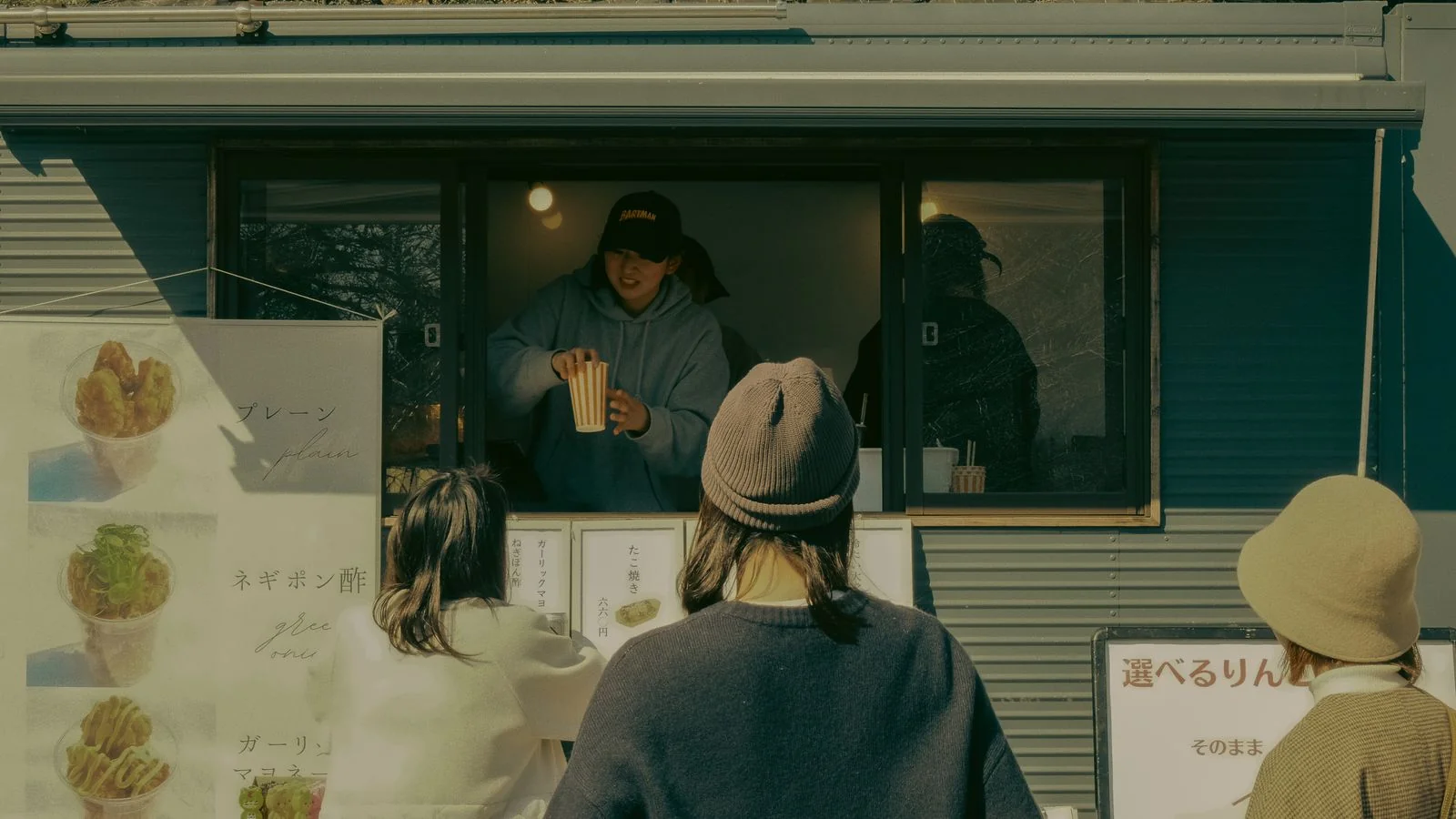
Kogi launched in Los Angeles in late 2008 with a Twitter account and a route. Roy Choi used the account to announce where the truck would park, which meant the queue formed before the truck arrived rather than after, and within a couple of years he had become the first food truck chef named a Food and Wine Best New Chef.
Everyone in the industry knows the food part of that story. The part worth studying is that Choi treated a logistics problem as a publishing problem, and in doing so said something about how restaurants find customers that the restaurant business had not said about itself.
That is the template, and it is available to anyone with a truck and an opinion.
Roy Choi’s real advantage was not the tacos
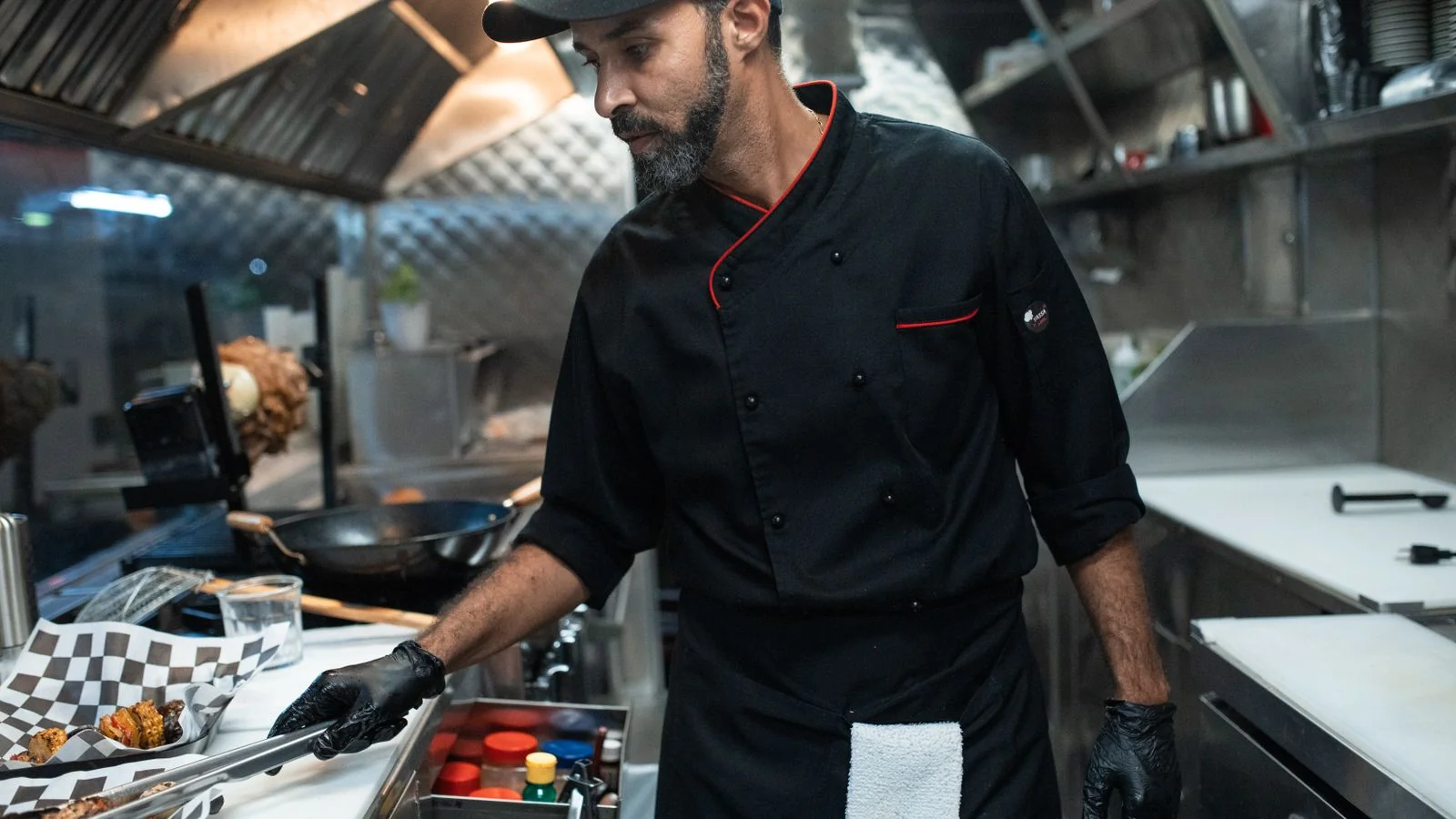
Food truck operators are treated, by the food media and by the restaurant industry, as a charming subcategory. Small, scrappy, a stepping stone to a real place with walls.
That framing is wrong on the economics and it costs operators enormously in credibility. A truck is not a small restaurant. It is a different business model that solves problems restaurants cannot solve, and the people running them accumulate operational knowledge that restaurant owners would pay a consultant for.
Consider what you have to be good at. Menu engineering under extreme constraint, because you have four burners and no storage. Demand forecasting without a booking system. Location economics, tested weekly rather than decided once at lease signing. Labour efficiency in a space where one extra person is physically impossible. Cash-to-cash cycles measured in days rather than months. Weather risk management, which restaurants do not face at all.
The first angle is to stop presenting yourself as a small restaurant and start presenting yourself as an operator of a different model. The moment you do, the material you have becomes interesting to an audience much larger than people who want lunch.
What can you prove that a restaurant owner cannot?
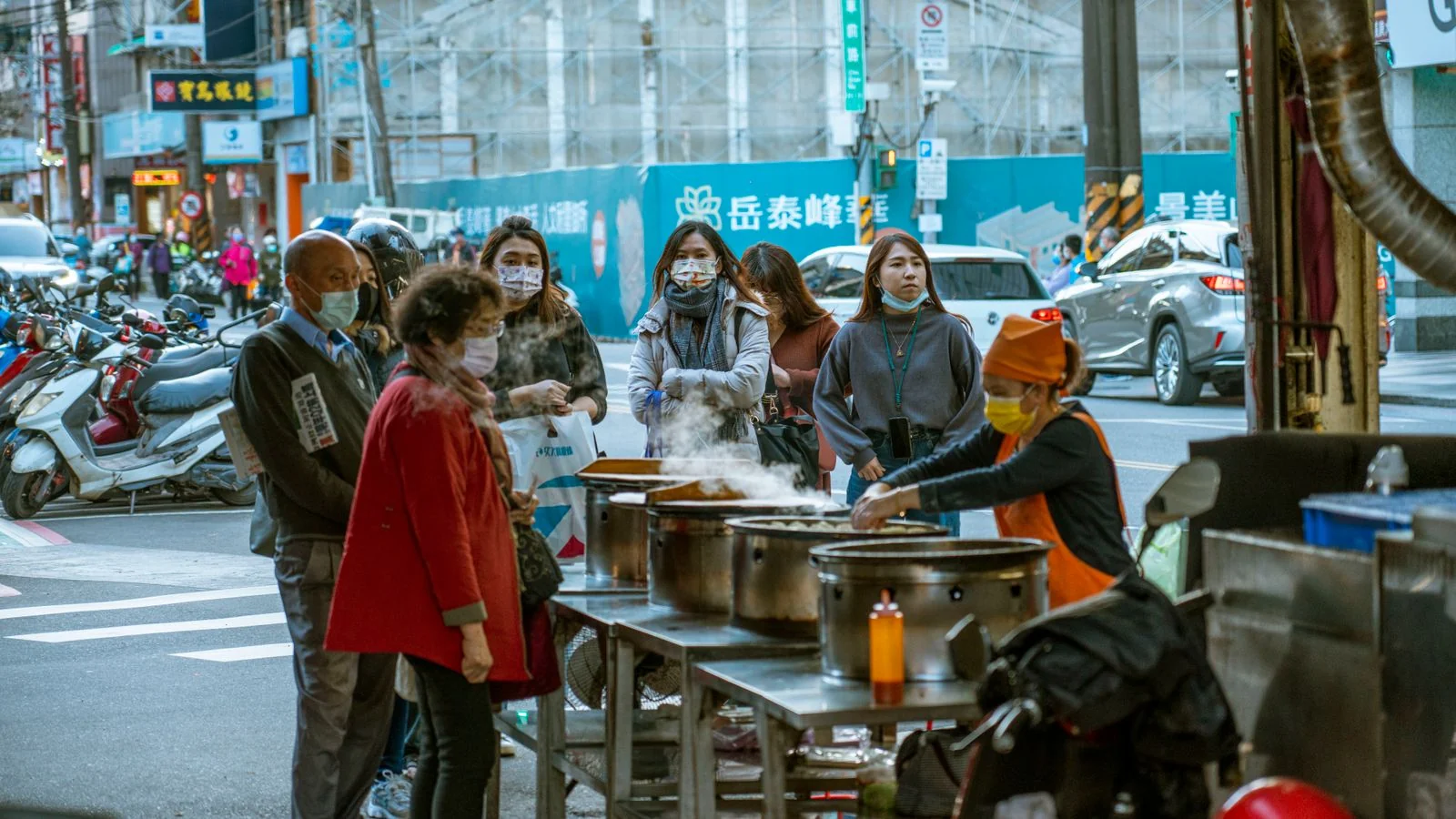
This is the question that separates operators who get taken seriously from operators who post photographs of their food.
A restaurant tests a price change once and lives with the result for a quarter. You can test a price on Tuesday in one neighbourhood and Wednesday in another and read the difference immediately. A restaurant learns about a neighbourhood by signing a ten-year lease. You learn about six neighbourhoods in a month and can leave any of them on a Friday.
That is a real research capability, and it is the basis of everything credible you could publish. You are not offering opinions about street food. You are reporting findings from a business that runs controlled experiments by its nature.
The second angle follows: start recording what you already observe. Not for content, at first. For yourself. Sales by location, by day, by weather, by price point. Six months of that and you are holding something no restaurant owner in your city can produce, and something a journalist covering the local food economy would find genuinely useful.
The recording does not need a system. A spreadsheet with six columns is enough: date, location, hours traded, covers, gross, and the weather. Add a seventh for anything unusual that day. Most operators already have the first five sitting in their point of sale and have never exported them, which means the dataset is half built and nobody has looked at it.
What comes out of six months of that is usually surprising to the operator too. The pitch everyone told you was the good one turns out to be mediocre once you price the fee. The Tuesday nobody wants turns out to carry the best margin because your costs are lower and the competition is absent. The rain penalty is smaller than you assumed and the wind penalty is larger. Those findings are worth money to you before they are worth anything to a journalist, which is the right order.
The five angles that land
Here are the five that consistently work for truck operators, ordered by how easy they are to start.
Unit economics is the first, and it is the most under-published subject in the entire food business. What a truck actually costs to buy, fit out, permit and run. What a realistic monthly revenue looks like and what it nets. Where the money actually goes, which is usually commissary fees, permits, fuel and the vehicle itself rather than anything a customer imagines. Aspiring operators search for this constantly and find almost nothing but sales pages from truck manufacturers.
Location economics is the second. You are running the largest continuous experiment in urban foot traffic that anyone in your city is running. Which streets work and when, how office density interacts with lunch trade, what a festival is actually worth once you price the pitch fee and the staffing, how a new development changes a corner. City planners, commercial property people and local business media all care about this and none of them has your data.
Regulation is the third, and it is the angle most likely to get you into serious publications. Food truck permitting is a mess in most cities, often protectionist, frequently written by people who have never operated. An operator who can explain clearly and without rancour what a specific rule costs and who it protects becomes the person journalists call whenever the council revisits it. That is a durable position and it accrues to whoever occupies it first.
Menu and supply constraint is the fourth. Building a menu that works with four burners, no storage and a ninety-second ticket time is a design discipline. Restaurant chefs find it genuinely interesting because it inverts every assumption they work under, and the food press will run it.
Career path is the fifth. The honest version of whether a truck is a route to a restaurant, who should do it, who should not, and what the failure modes actually are. Written without either the romance or the cynicism, this is the piece that gets shared hardest, because thousands of people are considering this and almost nobody is telling them the truth.
Of the five, unit economics and regulation are the two worth starting with, for different reasons. Unit economics has the largest unmet demand, because every person considering a truck searches for it and finds marketing. Regulation has the highest ceiling, because it puts you in front of news desks and policy people rather than only food readers, and because the position tends to be permanent once you occupy it.
Location economics is the slow one that pays the longest, and it requires the six-column spreadsheet to exist first. Start recording now and you can write it in a year. Most operators never start, which is why nobody has published it in most cities, which is why it is still available to you.
Pick a fight worth picking
Thought leadership that offends nobody persuades nobody, and the food truck sector has several arguments sitting unclaimed.
Whether the truck-to-restaurant path is good advice or survivorship bias dressed up as a career ladder. Whether commissary requirements in your city are a food safety measure or a rent extraction scheme. Whether festival pitch fees have reached a level where the festival is the only party making money. Whether delivery platforms are a viable channel for a truck or a structural loss. Whether the gourmet framing helped the sector or trapped it in a price ceiling.
Each of those is a position an experienced operator could defend with numbers from their own business. Each would get read, argued with and quoted, which is the entire mechanism by which someone becomes the person the media calls.
The mistake to avoid is picking a fight with an individual competitor. That reads as personal and it makes you look small. Pick a fight with a practice, a rule or an assumption, and bring evidence.
The second mistake is picking a fight you cannot sustain. Taking a public position on commissary rules means being asked about commissary rules for the next three years, including by people who disagree and by officials who would rather you stopped. If you are not prepared to hold the position under mild pressure, choose a different one. A retracted argument is worse than no argument, because the retraction is what people remember.
The third is confusing a position with a complaint. Operators have a great deal to complain about and complaining reads as noise. The difference is that a complaint describes what is unfair to you, and a position describes what a rule costs, who pays it, and what a better rule would look like. The first gets ignored. The second gets you invited to the consultation.
Where a truck operator gets heard
Local business media before food media. Your city’s business journal, the local paper’s business desk and the regional economic development press are all interested in small business operations and receive almost nothing from food operators. Food media is more competitive and more focused on what is on the plate.
Restaurant trade press after that, which covers operations for an audience of people who run food businesses and which will take a well-argued piece from an operator with a different model.
Podcasts throughout. Restaurant and hospitality podcasts are numerous, always looking for guests, and suit operators who would rather talk than write. A forty-minute conversation about unit economics is easier to produce than a thousand-word article and often reaches a better audience.
City council and licensing consultations underneath all of it. Turning up to those, prepared, with figures, is unglamorous and it is how you become the operator whose name is in a reporter’s contacts file when the rules change.
Trade associations are the multiplier on all four. Most cities and regions have a food truck or street food association, and most are under-resourced and short of members willing to do anything beyond pay dues. An operator who writes the association’s submission to a licensing consultation, or who puts together the first real survey of operators in the region, acquires a platform and a mandate at the same time. It is the fastest route from one truck to being treated as a representative voice, and it is available because almost nobody wants the work.
None of this requires you to be the biggest operator in your city. It requires you to be the one who wrote things down.
So: what do you know, from six months of your own sales data, that the restaurant owner three streets away could not find out at any price? Write that down first. It is worth more than another photograph of the queue.