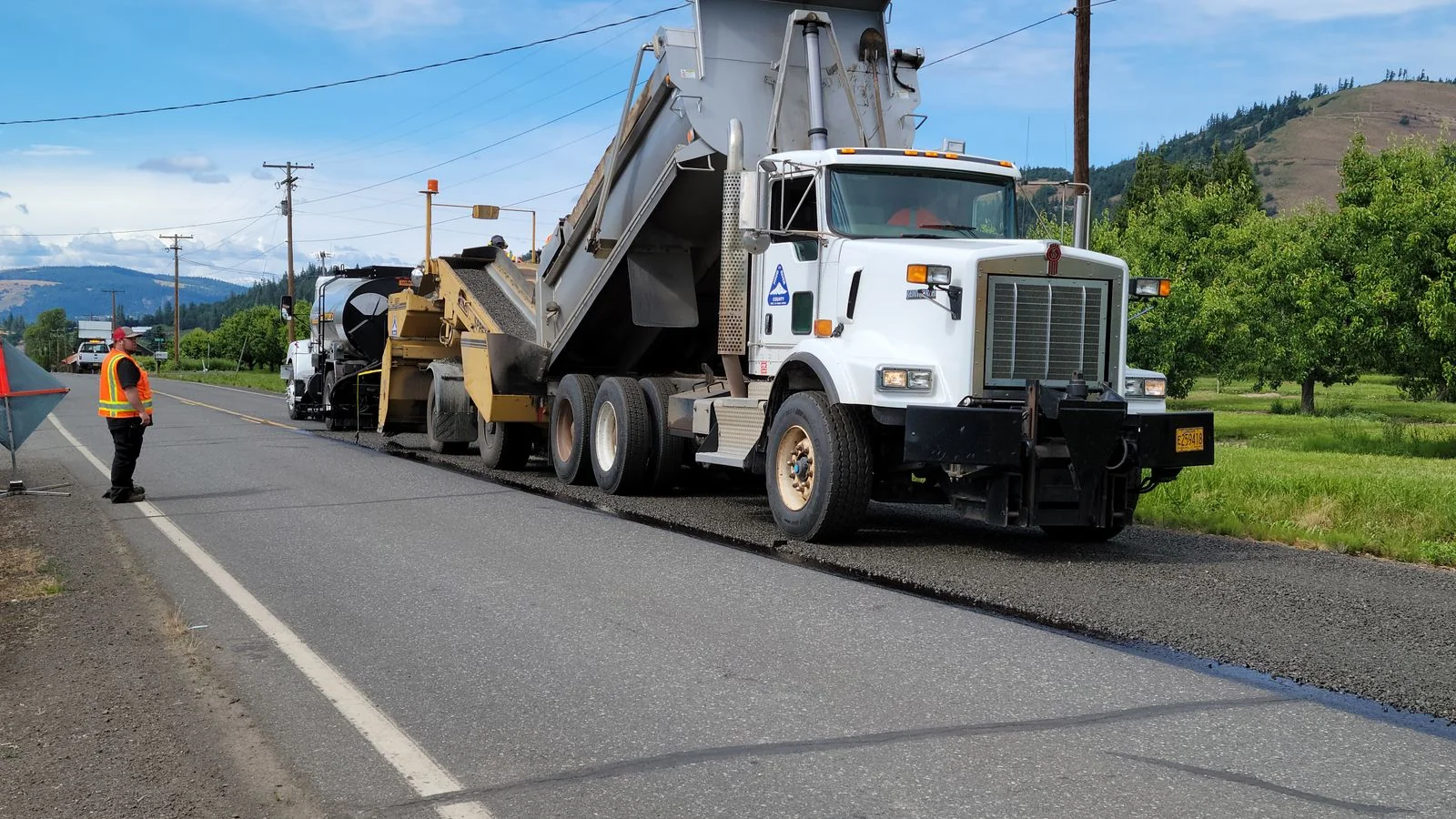
Ask a hundred homeowners how they picked their last contractor and one answer swamps the rest: they read the reviews first. Survey after survey on local hiring lands in the same place, with the overwhelming majority checking online reviews before they call and most trusting those reviews nearly as much as a word-of-mouth referral. For a trade where the product sits in the open, in the front of the house, where every neighbor and every passing car can see it, that pattern is not a minor marketing detail. It is the whole game.
Paving is unusual that way. A plumber’s best work is hidden in a wall. Yours is the first thing a visitor drives over and the last thing they see leaving. That visibility cuts both ways, and it is exactly why reputation management for paving contractors deserves a real system instead of an occasional glance at your Google stars. Here are the six moves that decide whether the driveway everyone can see works for you or against you.
Paving is judged on work everyone can see
Think about how public your product is compared to almost any other trade. A new asphalt driveway is a statement at the curb. Neighbors notice it, compare it to their own, and ask who did it. When it looks sharp, you get referrals you never asked for. When it pools water, cracks early, or fades to gray in a year, that too is on display for everyone on the street, and the unhappy owner has a review box and a phone camera to make it permanent.
This public quality raises the stakes on every single job. A hidden repair that goes slightly wrong might never generate a complaint. A visible one generates a photo. So the first principle of reputation work for pavers is that quality control and reputation control are the same activity. Every driveway is a billboard that will either sell the next job or warn people away from it, and the review attached to it outlives the crew that laid it. Treat the finish work, the cleanup, and the final walkthrough as reputation events, because that is precisely what they are.
The final walkthrough is where most of your future rating is quietly decided. A crew that packs up and leaves without explaining what they did, how to care for the surface, and when it is safe to drive on hands the homeowner an information vacuum, and anxious people fill vacuums with worry. A crew that spends five honest minutes walking the driveway, pointing out the work, setting cure-time expectations, and inviting questions turns that same nervous buyer into a confident one, and confident buyers write generous reviews. The identical job can earn five stars or three depending entirely on how it ends, which is why the last ten minutes on site deserve as much care as the first pass of asphalt.
Claim and command every profile
You cannot shape an impression you have not claimed. Start with Google Business Profile, which drives the most local paving decisions, then move to Yelp, Angi, the Better Business Bureau, Facebook, and the regional directories that rank in your market. Complete each one fully, with an accurate service area, real hours, a clear list of services from residential driveways to commercial lots, and photos of finished work rather than stock images.
Half-finished or unclaimed listings cost you twice. They look neglected to a buyer who is already wary of contractors, and they hand the story of your business to whoever chooses to post. A claimed, complete profile lets you respond, correct, and present the work you are proud of. It also keeps your details consistent everywhere, which matters more than it sounds, because a service area that reads one way on Google and another on Angi makes you look careless to buyers and unreliable to the AI tools now reading those listings to decide who to recommend. Consistency is not busywork. It is a trust signal a machine and a homeowner both notice, and it is the quiet backbone of reputation management for paving contractors.
The Season-Two Signal changes how you manage reviews
Here is the pattern that trips up more pavers than any other, and the model that fixes it. Most trades get their reviews within days of the job. Paving does not. The problems that generate angry reviews, spider cracking, edge crumbling, standing water, premature fading, tend to show up a season or two after the crew has gone home and the check has cleared. I call this the Season-Two Signal: the delayed feedback loop where the review that defines a job arrives months after you have moved on and forgotten the customer’s name.
The Season-Two Signal has a hard consequence. If you only ask for reviews at the moment of completion, you capture the honeymoon glow and miss the real verdict, and you have no relationship left when the delayed complaint lands. Managing it means staying in contact past the job. A short check-in message after the first freeze-thaw cycle or the first hot summer, a quick note asking how the surface is holding up, does two things at once. It catches a small problem while it is still a warranty fix rather than a public complaint, and it reopens the door to ask a now-genuinely-satisfied customer for the review that counts. Reputation management for paving contractors that ignores the Season-Two Signal is managing only half the timeline, and it is the wrong half.
Working the Season-Two Signal takes almost no effort, just a system. Put a reminder on the calendar for a few months after each job, or after the first hard freeze or first scorching stretch, and send a two-line message asking how the driveway is holding up. If the answer is good, you have earned the right to request a review at the exact moment the surface has proven itself, which is far more persuasive than one written before the asphalt was tested. If the answer is bad, you have caught a small crack or a drainage issue while it is still a quick warranty visit rather than a public complaint. Either way you win, because you turned a delayed, uncontrolled feedback loop into a scheduled touchpoint you own. The contractors who do this convert a season of silence into either a strong review or a saved reputation, and often both.

How should you answer a bad paving review?
Sooner or later a review lands that stings, whether it names a real problem or a misunderstanding you thought you had resolved. There is a short window, the first day or two, when a calm, specific, public reply can turn that complaint into a demonstration of how you stand behind your work. Let the window pass and the review becomes the only account a future buyer ever reads.
Reply fast, never defensively, and always for the audience rather than the reviewer. Acknowledge the specific issue, resist the urge to argue the technical details in public, state what you did or offered to do, whether that was a repair, a reseal, or a return visit, and invite the person to continue offline. Paving complaints often involve real warranty questions, so showing that you honor the work in public reassures every future reader who is quietly wondering what happens if their driveway develops a problem next spring. A defensive, argumentative reply does the opposite, telling every prospect that a dispute with you means a fight. The measured response is not just good manners. It is the single most persuasive thing a nervous prospect can see.
It helps to remember who is really reading. For every reviewer, dozens of future customers will scan that exchange while deciding whether to trust you with their own driveway. When they see you answer a hard complaint by honoring a warranty or returning to fix an edge, they read it as proof that hiring you is safe even if something goes wrong. That reassurance is worth more than a spotless score, because every buyer knows outdoor work faces weather and time, and what they are really trying to learn is whether you will stand behind the job when it does. A calm, accountable reply answers that question better than any marketing claim you could write.
Turn happy driveways into a steady review engine
The strongest protection against the occasional delayed complaint is a steady stream of positive reviews that keeps your average high and pushes any single problem down the page. Steady is the operative word. A cluster of reviews in one month followed by a long silence reads as staged, both to buyers and to the platforms. A consistent trickle reads as a healthy, active business, which is exactly what an anxious homeowner wants to hire.
Build the ask into two moments, not one. Ask at completion when the driveway is fresh and the owner is delighted, and ask again after that first season when the surface has proven itself and the Season-Two Signal has come back positive. Make it effortless with a texted link and a specific prompt, and never buy reviews, pay for them, or filter out unhappy customers, since all three violate platform rules and put your listings at risk. Nudge memory when you ask, because “it helps other homeowners to hear what we did and how the driveway held up” produces reviews that name the neighborhood, the job, and the durability. Those specifics persuade the next reader and feed the exact language AI answer tools reuse when they recommend a paver. Every one of those reviews is a driveway working a second shift as a salesperson.
Focus that effort where it moves the most work. Google Business Profile drives the bulk of local paving decisions, so it earns the first and hardest push, with Facebook and Angi close behind depending on your market. Do not scatter yourself trying to win on every platform at once. Build a strong, active presence where your buyers actually look, and let the others follow. And if you are starting from a thin profile with only a handful of reviews, do not be discouraged by the slow first weeks. Reputation is built like a driveway, one careful layer at a time, and the base you lay in the first season is what carries the traffic in the years after. A steady, honest cadence of two or three new reviews a month compounds into a rating that quietly wins jobs you never had to bid on.
Do this for a year and the math turns in your favor: the visible work that once exposed you becomes the visible proof that sells for you, and the next homeowner comparing driveways on the street finds your name attached to the one they wish they had.