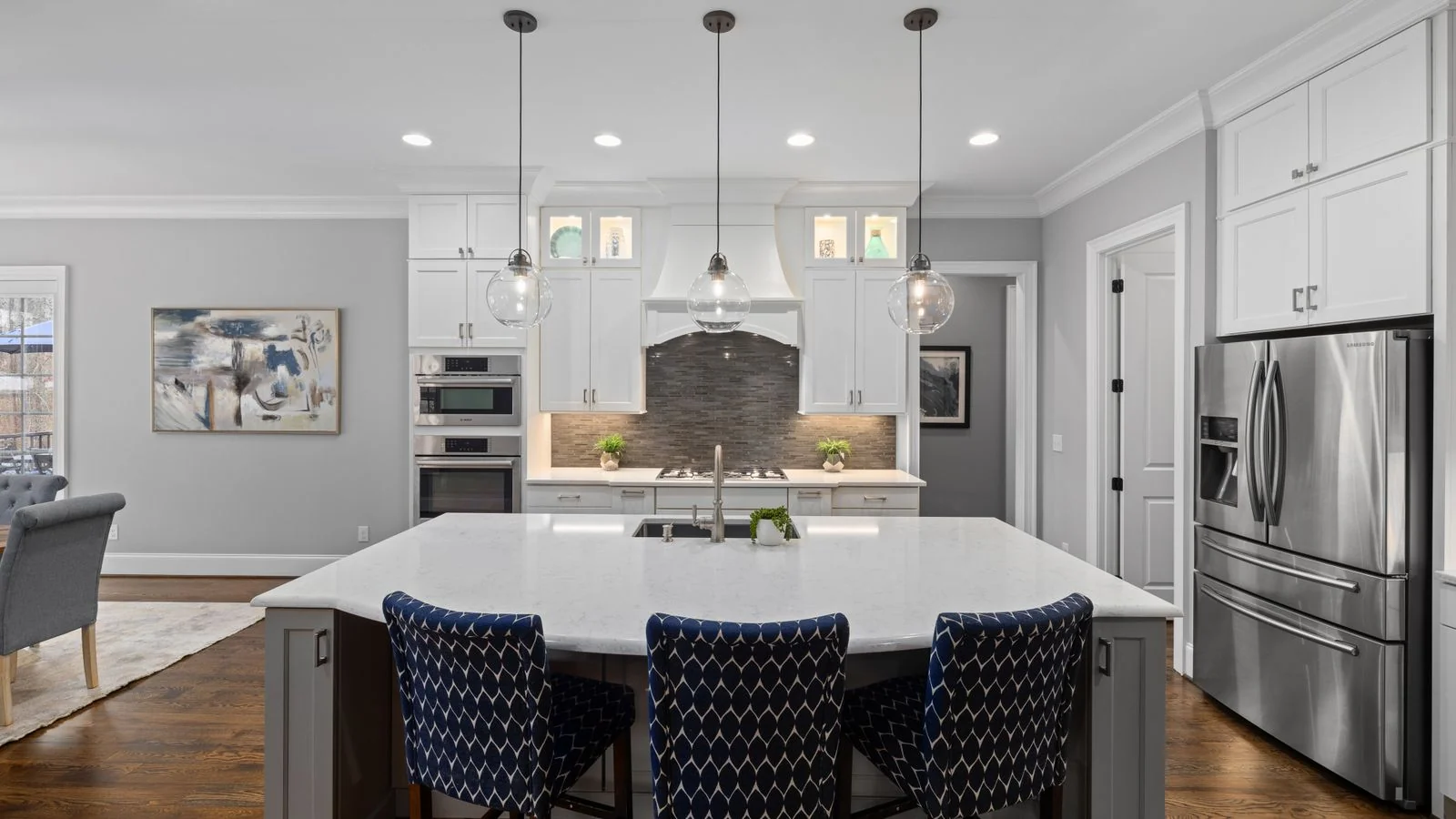
It is Tuesday morning. You finished a kitchen last week that the client cried over, in a good way. The photographer sent the gallery. Your office manager asks whether you should “send something to the paper.” You open a blank document, type your company name, and write a paragraph that begins “Founded in 2011, we are a full-service design-build firm serving…” and then you stop, because you know nobody is going to read that, and you are right.
That paragraph is the reason most remodelers have never been in the local paper. The home editor at your daily gets pitches from every contractor, realtor, and furniture store in the county. She deletes the ones that start with the company and reads the ones that start with a house. A press release for kitchen remodelers works when it is built around a project, a number, and something a reader can take away, in that order. Everything else in this guide is detail on how to do that.
Why does a kitchen reveal get covered when a company announcement does not?

Editors think in stories, and a story needs a person and a change. “Local firm opens second showroom” has a company and no change anyone outside the company cares about. “Family of five gains a kitchen that fits after a 1978 galley came down” has a person, a before, an after, and a reason to look at the photo. The editor can picture the page. That is the whole test.
The kitchen is the room with the most built-in interest. Zonda’s annual Cost vs. Value report has put the minor kitchen remodel at or near the top of its resale-return rankings for years, which gives editors a hook every time the new edition drops. Houzz’s yearly renovation study has found kitchens to be among the most common projects homeowners take on. Readers are either planning one, paying off one, or living in a kitchen they resent. The demand for kitchen stories is there. The supply of remodelers who know how to package one is small, which is your opening.
There is a second reason the reveal works and the announcement does not. Coverage is the product. A single story in the local daily’s home section, with your company named and linked, is what Google and AI assistants use to decide you are a real business in a real place with a real specialty. When someone asks ChatGPT for a kitchen remodeler in your town, the model is looking for third-party mentions it can verify. A press release nobody ran gives it nothing. A release that became a story gives it exactly what it needs.
The Reveal-Cost-Lesson release, defined
Here is the structure we use for every remodeler release we write, and the name is deliberate so you can hand it to whoever writes yours. A Reveal-Cost-Lesson release has three load-bearing elements, and if any one is missing the release is not ready to send.
The Reveal is one finished project, described in terms a reader can see. Not “a transitional kitchen with quartz surfaces” but “the wall between the kitchen and dining room came down, and the island that replaced it seats six.” Name the neighborhood if the client allows it. Name the era of the house. A 1920s bungalow and a 1990s colonial are different stories, and the editor’s readers know which one they live in.
The Cost is the real budget range, stated in the release. Remodelers hate this part. Editors love it, because the number is what readers are searching for and what makes the story useful rather than decorative. You do not have to give the exact invoice. “The project came in between $85,000 and $95,000, including appliances” is enough. A release with no number reads as an advertisement. A release with a number reads as reporting.
The Lesson is the one thing the homeowner would tell a friend who is about to start. “We should have ordered the range four months earlier.” “The walk-in pantry mattered more than the second oven.” “Living without a kitchen for eleven weeks was harder than the budget.” This is the paragraph editors quote, because it is the paragraph readers remember.
Put those three in place and the rest of the release writes itself. Leave one out and you are back to the paragraph that starts with your founding year.
Write the headline before you pick the project

Most remodelers pick the prettiest job and then try to write a headline for it. Do the reverse. Write five headlines using the Reveal-Cost-Lesson shape, then go find the project in your portfolio that fits the strongest one. This keeps you from falling in love with a job that photographs well but has no story.
A working headline for a press release for kitchen remodelers has a house, a change, and often a number. “A 1962 ranch in Maplewood loses its wall and gains a kitchen that seats eight, for under $90,000.” Long, yes. Editors do not care about length in a headline. They care about whether it tells them the story in one breath. Your subject line in the email should be the same sentence.
Now the five angles that get run, with the headline shape for each. The budget reveal is the most reliable: a real project, a real cost, a homeowner willing to talk. The era restoration is the second: a kitchen in a house old enough to have history, with a before photo that makes readers wince. The accessibility remodel is the third, and it is under-pitched: a kitchen rebuilt for a homeowner in a wheelchair, or for aging parents, with the specific changes named. The disaster recovery is the fourth: the kitchen after the pipe burst or the fire, with the insurance angle handled plainly. The seasonal timing story is the fifth: what a remodel started in January looks like by Thanksgiving, pitched in October when editors are planning holiday home pages.
Each of those has a person and a change. None of them starts with your company.
What goes in the body, paragraph by paragraph
Paragraph one is the Reveal in two sentences, with the neighborhood, the house, and what changed. Paragraph two is the Cost, with the range and the biggest line item named. Paragraph three is a quote from the homeowner, which is the Lesson in their words. Paragraph four is a quote from you, and this is the only place your company appears in the first two hundred words. Make the quote about the project, not about your values. “The hardest call was the structural beam. We spent two weeks with the engineer before we touched the wall” is a quote an editor can use. “We are committed to exceeding client expectations” is not.
Paragraph five is the practical detail a reader planning a remodel would want: the timeline in weeks, the permit situation, whether the family moved out, what the homeowners did for meals. This paragraph is why the story gets saved and shared. Paragraph six is the boilerplate, three sentences on who you are and where you work, with a link.
Attach photos as files, not embedded in the email body, and name them by room and angle. Send four: one wide after, one wide before from the same angle, one detail, one with the homeowners in the space if they agreed to it. Editors run the before-and-after pair almost every time it exists and almost never run a story without it.
Keep the whole release under 400 words. If the Lesson is strong, it will get pulled into a longer feature by a writer who calls you. That call is the goal, and a short release with a real story gets it more often than a long release that tries to be the feature itself.
Where to send it (and who actually opens it)
The local daily’s home or real estate editor is the first send, and the name matters. “editor@” addresses are read by an intern, if at all. Find the person whose byline sits on the last three home stories and email her directly, with the headline as the subject line and the release pasted in the body, not attached. Photos attached. No PDF.
The regional lifestyle magazine is the second send, and its lead time is longer. A story you pitch in September runs in January if it runs at all. The pitch is the same release with a note that you can provide additional photos and a homeowner interview.
The local morning show’s producer is the third send, and this one surprises remodelers. Morning television needs visual segments, kitchens are visual, and a homeowner standing in a finished kitchen talking about the pantry is a segment. Producers are reachable, they need content every weekday, and a remodeler who can supply a house and a homeowner is useful to them.
The trade press is the fourth send. Remodeling, Kitchen and Bath Design News, and Qualified Remodeler all run project features, and a placement there is read by other contractors, by manufacturers who might refer work, and by the AI models that decide whether you are an authority in the category. A trade placement does not bring homeowners to your door. It brings the credibility that makes the local story easier to get next time.
Timing the send around the season
Home editors plan around the calendar, and a press release for kitchen remodelers that lands in the right week gets read differently than the same release landing in the wrong one. January is resolution month: readers are planning, editors are running “should you remodel this year” pieces, and a budget reveal fits. Spring is the busiest period for home sections, with real estate coverage crowding out projects, so pitch harder or wait. September and October are the strongest window for kitchen stories, because editors are building holiday content and want kitchens that will host Thanksgiving. Pitch the era restoration or the seasonal timing story then.
Send on a Tuesday or Wednesday morning. Monday inboxes are full, and Friday sends get buried by the weekend. Follow up once, a week later, with a one-line note and one new photo. Do not follow up a third time on the same story. Send a different story in six weeks instead.
Here is the next step. Open your portfolio and find the one kitchen from the past year where the homeowner would talk on the record and the before photo exists. Write the headline first, using the house, the change, and the number. Then write the release around it in under 400 words, with the Reveal in paragraph one, the Cost in paragraph two, and the Lesson in the homeowner’s quote. Send it Tuesday morning to the home editor by name. That is one afternoon of work, and it is the afternoon that separates the remodelers who have been in the paper from the ones who have been meaning to.