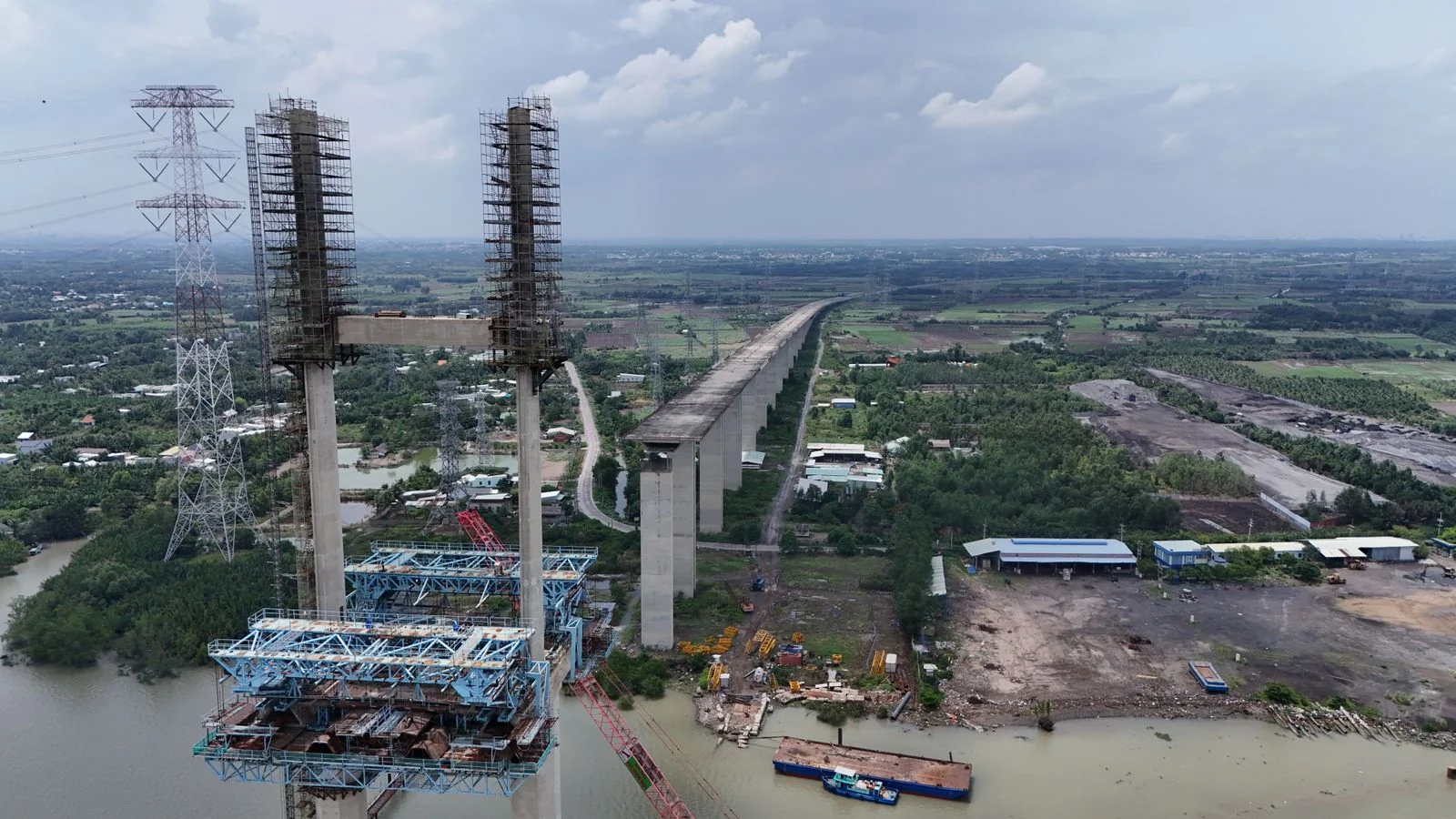
Who gets to announce the bridge, the firm that designed it or the agency that paid for it? Ask that at most engineering firms and you get a shrug, and the shrug is why the trade press runs three paragraphs on the owner’s ribbon cutting and never prints your name. Infrastructure is public work. The owner holds the contract, the funding announcement, the public information officer, and the media list. Your firm holds the calculations, the drawings, and the two hundred meetings that got the thing built. A press release for civil engineering firms has to close that gap. It has to be a document the owner will sign, the trade editor will lift numbers from, and a local reporter can read without a glossary. Most releases do none of the three.
The stakes are larger than a clipping. Public agencies select engineers on qualifications, so a selection committee’s opinion of your firm forms from what its members have read before the RFQ opens. The newer audience is a machine. When a facilities director asks an AI assistant which firms have delivered pump station rehabs in her state, the assistant answers from indexed text. A release that went out under the owner’s name alone teaches the model that the agency did the work.
Why most civil engineering press releases die in the owner’s inbox

Start with the clause everyone has read and nobody has used. Almost every professional services agreement with a public owner says the consultant shall not issue press releases about the project without the owner’s prior written approval. Marketing coordinators read that as a prohibition. It is a process step. The public information officer on the other side of that clause is judged on how good the agency looks, and a draft that leads with the public benefit and gives the agency top billing is a gift to that person. A draft that opens with “Acme Engineering is proud to announce its role” reads to the PIO as vendor marketing, and vendor marketing gets a polite non-answer.
Timing kills the second batch. Firms draft their release after the ribbon cutting, once the photos are in. By then the owner’s own release has been out for a week and the trade editor has filed the item with the owner’s numbers and no consultant credit. The news window on a milestone is a few days wide. A draft that arrives after it closes is a different and much duller story: a firm congratulating itself.
The third failure is authorship. The release gets written by someone who was not on the project, working from proposal boilerplate, so it says “innovative solutions” where it should say “precast deck panels placed in nine days.” Editors cannot use adjectives. They can use a span length, a contract value, a schedule delta, and if the project manager did not put those into the draft, it fails on the trade desk no matter how the owner feels about it.
The Three-Desk Read
Every press release for civil engineering firms passes across three desks before it produces anything, and it has to survive each of them, in order. I call this the Three-Desk Read, and it doubles as a drafting sequence. Desk one is the owner’s public information office, which decides whether the release exists at all. Desk two is the trade desk: the regional ENR editor, the news desk at ASCE’s Civil Engineering magazine, Roads & Bridges, Water Environment & Technology, Civil + Structural Engineer. That desk decides whether the item is news to other engineers. Desk three is the metro desk, the local daily, the public radio newsroom, the TV assignment editor, which decides whether the public will care.
Each desk lifts a different part of the page. The PIO lifts the agency’s name, the public benefit, the funding source, and the official’s quote. The trade editor lifts scope, dollars, method, and any first. The metro editor lifts what changed for a driver or a ratepayer: the detour that ended, the boil-water advisory that lifted, the lanes that opened. A release that gives each desk its own paragraph, in the language that desk uses, can run in all three places from a single draft.
The drafting order runs in reverse of how most firms write. Write the owner’s paragraph first, because if it does not clear desk one nothing else matters. Write the numbers paragraph second, with the project manager at the keyboard. Write the lead and the headline last, for the metro desk, once you know which fact on the page is the most public one. Then read the whole thing three times, once as each desk, and cut whatever that reader would cut.
What counts as news on a civil engineering project?
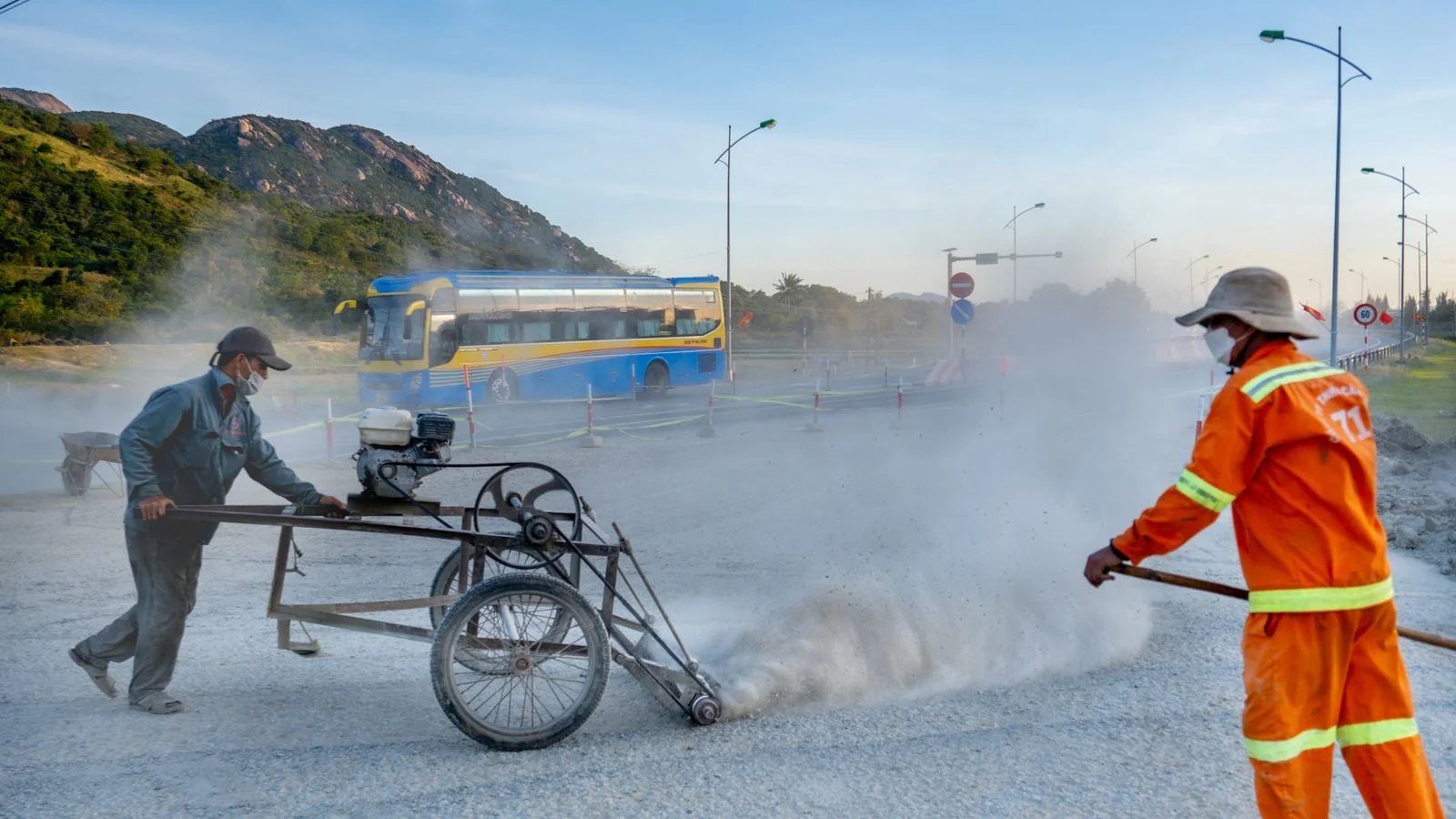
A hook has a date, a place, and a number. If your proposed announcement lacks any of the three, it is not news yet. Contract awards qualify when the value is public record and the owner is willing to see it in print. Notice to proceed and groundbreaking qualify because they carry a date and a schedule. Construction milestones qualify when they come with a picture: a girder set over a live interstate, a tunnel boring machine breaking through, a deck pour that ran overnight. Substantial completion and opening reach the metro desk, because a bridge opening changes someone’s commute on a specific morning.
Awards qualify with a caveat. An ACEC Engineering Excellence Award or an ASCE Outstanding Civil Engineering Achievement award is news in the trade press, but it is news about the project, not the plaque, so the release still needs the project’s numbers. Technical firsts qualify if you can define the first with precision: the first use of a named method by that owner, in that state, at that scale. “One of the most complex” does not survive an editor who has covered forty bridges. Storm response moves fastest of all. A firm that fielded rapid bridge inspections after a flood has a story the metro desk wants that week.
What does not qualify: a new website, a rebrand, a “proud to be part of the team” note on a project the owner announced last month. Staff news belongs on the people pages of the trade magazines. One story per release. An editor who receives a release announcing a completion, an award, and two promotions will run none of them.
Clear the owner’s desk first
Ask at kickoff, not at completion. The right moment to raise publicity is the first coordination meeting, when you propose adding communications milestones to the schedule the same way you add submittals: a joint announcement at notice to proceed, a milestone release at the major visual event, a completion release at opening. Framed as a schedule item, the request is routine. Framed as a favor after the fact, it competes with everything else on the PIO’s desk.
Give the owner the top line. Put the agency in the headline or the first sentence, describe the public benefit before the engineering, and leave a quote slot for the agency’s official with a suggested draft they can rewrite. Offer both structures: a joint release under both logos, or the owner’s own release with a paragraph on your firm’s role that you supply. Many agencies prefer the second, and it costs you nothing as long as your firm is named with its role and its city. Where federal money is involved, say so. Agencies have every incentive to publicize Bipartisan Infrastructure Law dollars, and a release that credits the funding source travels further on the owner’s own channels.
Be exact about what your firm did. Engineer of record and prime consultant mean specific things, and a PIO knows the difference between the firm that designed the bridge and the firm that did the borings. Claim the role you held and never imply construction where you provided design. Overclaiming is the fastest way to lose the PIO for every future project, and word travels between agencies. Settle photo rights at the same time, because a drone shot from the contractor’s photographer needs a credit line and permission, both easier to get before the ribbon than after.
Write the lead for the metro desk and the body for the trade desk
The shape of a working press release for civil engineering firms is fixed, and the fixed shape is a feature, because editors read hundreds and know where to look. Headline: place, change, number. “Cedar River Bridge Reopens Two Months Early” tells a metro editor everything in seven words. Dateline, then a lead paragraph that says what happened, where, when, who benefits, and what it cost. The lead must make sense to someone who has never heard of your firm and never will, because that is who the metro reporter writes for.
Second paragraph: your firm’s role in one sentence, with scope. Third paragraph: the numbers, dense. Span length, structure type, lane-miles, cubic yards, million gallons per day, the design storm, the schedule against the baseline, the method that produced the schedule. Explain any term a general reader would trip on with a short appositive, so “mechanically stabilized earth walls” becomes “mechanically stabilized earth walls, which use layers of reinforced fill in place of a conventional concrete retaining wall.” The trade editor skips the appositive and the metro reporter depends on it. Fourth: two quotes. Fifth: what happens next, because that sentence is your excuse to send the next release. Then a boilerplate kept to facts, then a media contact who answers the phone.
Three hundred fifty to five hundred words. One page. If the draft runs longer, the numbers paragraph is carrying narrative that belongs in a case study on your site, and a link is the fix. Match the owner’s numbers to the dollar and the foot. The trade editor will have both releases open, and a discrepancy draws the one phone call you do not want.
Quotes engineers give versus quotes editors print
The quote most firms write is the one most editors cut: “We are thrilled to have partnered with the county on this important project.” It carries no information, and a reader can tell the marketing department wrote it. A quote earns its place when it says something the narrative voice could not: a judgment, a reason, a tradeoff. Why this method and not the obvious one. What the hardest constraint was. Engineers say those sentences in coordination meetings every week. Get the project manager on the phone for ten minutes, ask what surprised her, and transcribe.
Give the owner’s official the public-benefit quote and your engineer the technical quote, and keep them in those lanes. When the county engineer talks about downtown businesses and your project manager talks about staging precast panels, each quote reads as real. Attribute with full name, credential, and title.
Close the page with a fact box. Owner, engineer of record, contractor, other consultants with roles, contract value, funding source, notice to proceed, completion. Trade editors build their project listings from those fields, and the same block hands the AI assistants that read indexed releases a clean statement of who did what, which is the thing you most want them to learn.
A sample press release for a hypothetical firm
Every name, place, number, and quote below is invented. The structure is the point.
FOR IMMEDIATE RELEASE

Cedar River Bridge Reopens Two Months Early, Restoring 18,000 Daily Trips Between Milburn and Oak Ridge

MILBURN, Ohio, Sept. 4, 2026. The Cedar County Engineer's Office reopened the Route 41 bridge over the Cedar River today, two months ahead of the contract schedule and eleven months after the 1958 structure closed for replacement. The new bridge carries about 18,000 vehicles a day and restores the direct route between Milburn and Oak Ridge that drivers lost to a 14-mile detour last October.

Harlan Ridge Engineering of Columbus served as engineer of record for the $23.6 million replacement, delivered under the county's first design-build contract with Stonebrook Constructors. Federal bridge formula funds covered about 80 percent of the cost.

The 420-foot, three-span structure replaces a two-lane steel truss rated in poor condition in 2019. Harlan Ridge's design uses full-depth precast concrete deck panels, which let crews place the deck in nine days rather than the six weeks a cast-in-place deck would have required. The bridge adds a 10-foot shared-use path and raises the low chord four feet above the 1997 flood of record.

"Once we committed to precast panels, the schedule question became a logistics question," said Maria Okafor, PE, project manager at Harlan Ridge Engineering. "We staged all 84 panels at a yard two miles away so the river crossing stayed on the critical path for the shortest window we could manage."

"Every week this bridge stayed closed cost Milburn's downtown," said Cedar County Engineer Tom Reyes. "Opening early matters more to those business owners than any line in the contract."

Crews will finish seeding and guardrail work on the approaches through October under overnight single-lane restrictions.

About Harlan Ridge Engineering: a 65-person civil and structural engineering firm founded in Columbus in 1994, serving transportation and water clients across Ohio and Kentucky.

Media contact: Dana Lee, dlee@harlanridge.example, (614) 555-0142
Read it as each desk. The county is in the first sentence, the federal money in the second paragraph, and the official gets the human quote, so desk one signs. The trade desk gets span, structure type, deck method, schedule delta, contract value, and delivery method. The metro desk gets a reopened road and an ended detour in the first two sentences. Nothing in it is an adjective an editor would have to remove.
Send it where each desk reads
Distribution follows the same three desks. The owner goes first and goes widest, because the agency has the media list and the reporters who cover it. If the owner is issuing the release, your job is to make sure your paragraph survives their edit and that the version they post spells your firm’s name the way your website does. An assistant that reads “Harlan Ridge Engineering” on the owner’s site, “Harlan Ridge” on yours, and “HRE” on LinkedIn has three weak signals in place of one strong one.
The trade desk wants a direct email, not a wire notification. Find the regional editor at ENR, the news editor at the ASCE magazine, or the editor at the water trade that fits the project, and send the release in the body of the email with the photos linked and a subject line built from the headline. Do the same for your state ACEC chapter and ASCE section newsletters, which the people on selection committees read. The metro desk wants a short email to the assignment editor a day before the visual event, with the offer of site access and a safety-vested engineer who can talk on camera. Reporters cover what they can film.
The wire is the last step, and its purpose is the index rather than the inbox. Paid distribution puts the release on hundreds of indexed pages that search engines and AI assistants read, with your firm’s name and the project tied together in text the machines can quote back. That is why the fact box matters, and why the release should also live on your own newsroom page with the same wording. For a firm without a communications desk, this is the part a service like Instant Press handles. Whoever does it, a press release for civil engineering firms that reaches all three desks in order produces a named, indexed record of your work that outlasts the ribbon.
Picture a hypothetical forty-person firm in Dayton that designs a pump station rehab for a regional water district. At kickoff the project manager adds three communications milestones to the schedule. At completion the district issues the release with the firm’s paragraph and fact box intact, and the firm sends the same page to the ENR Midwest editor and to Water Environment & Technology the same morning. Six months later a facilities director two counties away asks an assistant which firms have rehabilitated aging pump stations in Ohio, and the answer names the district, the project, and the Dayton firm in one sentence, because that is what the indexed record says.