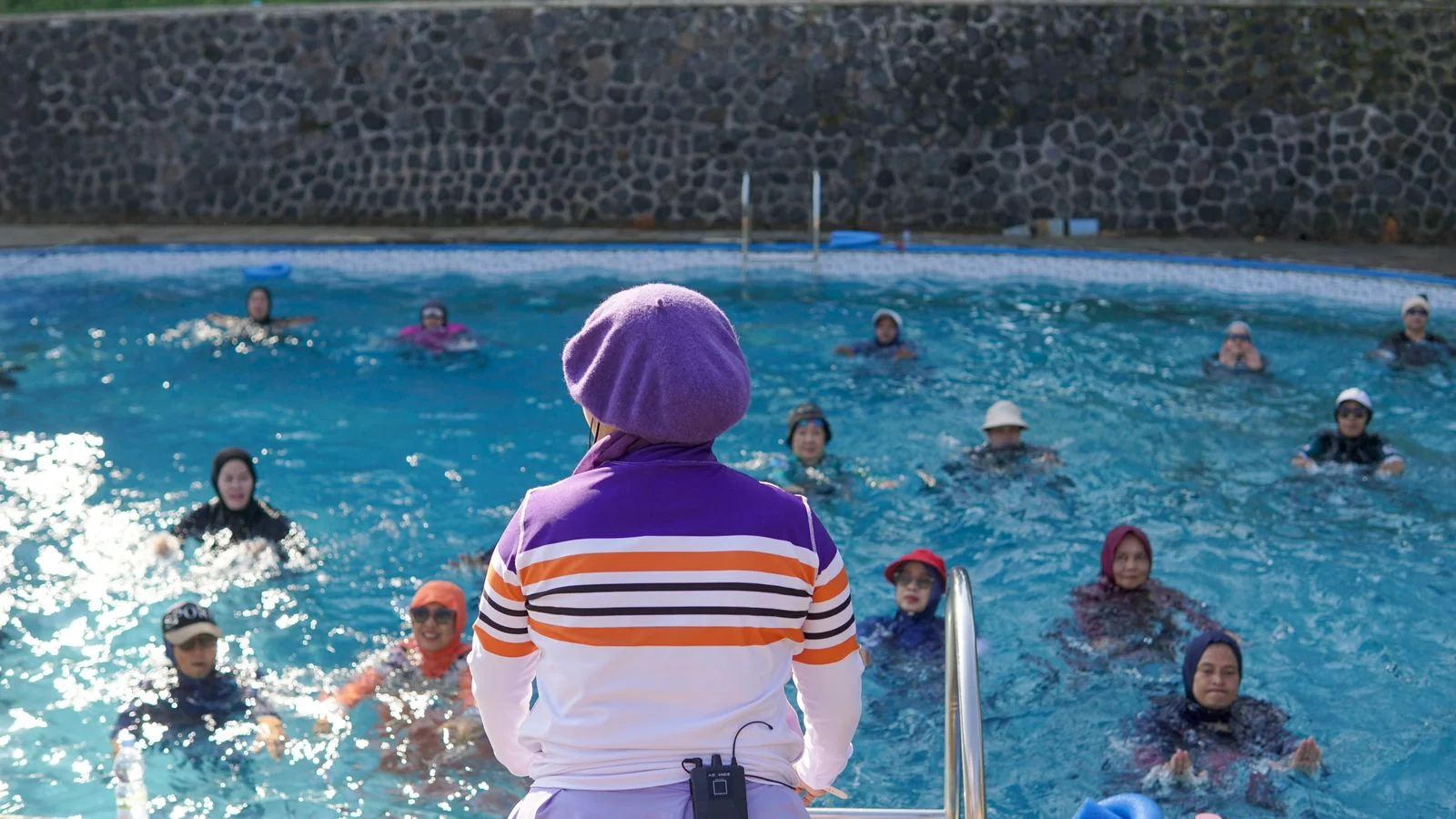
Every local newsroom in the country runs a water safety story in May, and most of them struggle to find somebody good to quote.
That is an unusual position for a local business to be in. Most sectors are trying to manufacture a reason for a reporter to care. Swim schools have the opposite problem: there is a guaranteed annual news cycle that requires exactly your expertise, it arrives at a predictable time, and you are almost certainly not on the list of people who get called.
Learning how to get press for swim schools is therefore less about inventing hooks and more about being present, prepared and reachable when the cycle comes around. Which means understanding the calendar editors actually work from.
The Drowning Calendar: when this coverage gets assigned
Local water safety coverage is not random. It clusters, and the clusters are predictable enough to plan against.
Late April through May is the largest window by a wide margin. Outlets run pre-summer safety pieces before pools and lakes open, and these are assigned two to four weeks ahead. This is where the bulk of available coverage sits, and where your pitch belongs.
Early June carries school holiday preparation content, often framed around what parents should do over the summer, which is a natural fit for lesson availability and readiness.
July and August produce reactive coverage. When a local incident occurs, reporters need a source within hours, and they call whoever is already in their contacts. You cannot pitch into this window. You can only already be in it, which is the argument for doing the April work.
September brings a smaller back-to-school window covering after school activities. January produces new year enrolment content and, in colder regions, ice safety.
The structural point is that the reporter writing May’s piece is looking for a source in April. A swim school that reaches out in June is arriving after the assignment closed, every year, and concluding that media does not work.
Lead with the thing parents get wrong
A reporter does not want a swim school owner saying swimming lessons are important. She wants a sentence that will make a reader stop.
The most useful one you have is that drowning does not look like drowning. Parents expect splashing, shouting and visible struggle, because that is what film and television show. Actual drowning in a child is usually quiet, close to vertical, lasts under a minute, and frequently happens within a few metres of an adult who is present and not alarmed. That gap between expectation and reality is genuinely useful public information and it is the kind of thing that gets quoted, because it changes what a reader will do this weekend.
You will have several more. What supervision actually requires, which is eyes on water rather than an adult in the vicinity. Why inflatable aids can make a child less safe by teaching a vertical body position. What a child can realistically do at four versus six. Why competent swimmers drown in open water, which is temperature and current rather than skill.
Write these down as short, self-contained explanations before you contact anybody, because being quotable is a preparation problem, not a personality trait.
The public health framing is worth knowing too. Drowning is among the leading causes of death for young children in most countries that track it, and paediatric bodies generally recommend lessons beginning around age one. Cite the organisation rather than a number you are unsure of, and let the reporter verify the figure herself. Getting a statistic slightly wrong in print is the fastest way to stop being called.
Pitch the access story, not the facility
Schools trying to get press for swim schools routinely pitch the wrong subject. New pool, new programme, new intake dates. None of those are news.
What is news is a change in who can get into the water. A programme for children with autism, with real detail on what you changed, meaning lighting, noise, one to one ratios, longer acclimatisation. Free or subsidised lessons in a neighbourhood where swimming rates are low, which in many countries breaks along clear demographic lines and is a genuine local story. An adult beginners class, because adult non-swimmers carry real shame and one willing to be interviewed is a compelling human piece. Accessible facilities where none existed.
The story in all of these is the gap, not your response to it. Pitch the gap, position yourself as the person addressing it, and a reporter has something she can build.
Bring a number if you have one that is genuinely yours. How many children on your waiting list. How many families you turned away last year for cost. How many adults in your first beginners cohort had never put their face in water. Practice numbers are legitimate and interesting provided you describe exactly what they measure and do not present them as research. A waiting list of a hundred and forty children is a local story about provision, and it is a figure only you have.
Do not invent or round these into something more impressive. A reporter will ask how you counted, and a number that dissolves under one question ends both the story and the relationship.
Write the safety guidance nobody else has localised
National water safety advice exists in abundance and is almost entirely generic. The gap available to you is local specificity, and filling it makes you the obvious regional source.
Every area has particular water risks that national guidance cannot address. A quarry that people swim in despite signage. A river with a current that looks calm at a specific bend. A stretch of coast with rip currents and no lifeguard after a certain date. A reservoir that is dangerously cold in July regardless of air temperature. Cold water shock is poorly understood by the public and kills competent adult swimmers, and the local version of that warning is genuinely useful information.
Write the guide to your area’s water. Where people actually swim, what the specific risk is at each place, what the water temperature does through the year, where lifeguard cover exists and when it stops, and what a parent should know before letting a teenager go to any of them.
This piece does several jobs at once. It is the most locally useful thing a swim school can publish, so it earns links and shares. It is exactly what a reporter needs when she is assigned the May safety story, which means she may use it as source material and call you. And it positions you as concerned with water safety rather than with selling lessons, which is the posture that gets a person quoted.
Update it annually and date it. Reporters check whether a source is current before relying on it.
Make yourself the source who is already in the file
The reactive July window is the most valuable coverage available and it cannot be pitched. Being in it requires groundwork.
In April, email the specific reporters who cover health, education and community at each local outlet. Not the newsroom address. Introduce yourself in four sentences: who you are, how long you have taught, the specific things you can speak to, and that you are available at short notice including weekends. Attach nothing. Ask for nothing.
Then say one useful thing they can use immediately, such as the drowning does not look like drowning point. You are not pitching a story. You are adding yourself to a contact list, and the useful sentence is what makes you memorable enough to be filed.
Follow up once in early May with a single line offering a lesson visit for photographs or filming. If they run something without you, read it and send a short note saying it was good. Reporters receive almost no non-transactional contact from local businesses and it is disproportionately effective.
Make the visit easy when she says yes
Swim schools convert interest into coverage at a higher rate than most local businesses, and then lose it at the logistics stage more often than they should.
Water is a restricted environment. A reporter or a camera operator cannot simply walk onto a poolside, and the constraints are real: child protection rules, other families’ consent, the physical danger of equipment near water, and the fact that most of your pool time is booked. A journalist who encounters three obstacles in a row will quietly drop the story for an easier one.
So decide your access arrangements before you pitch. Identify one specific class, at a specific time, where you can secure consent from every family present or where you can run a session composed only of consenting families. Know your venue’s rules on photography and whether you need permission from a leisure centre operator, because that permission can take days and will otherwise arrive after the deadline.
Have a fallback that needs no consent at all. An empty pool with an instructor demonstrating, or a poolside interview with the water in shot, gives a producer usable pictures with none of the complications. Offering that alongside the full option makes a yes considerably more likely.
Then handle the practicalities: humidity ruins equipment, so warn a camera operator. Lenses fog. Sound is difficult in a tiled hall. Mentioning these unprompted marks you as somebody who has done this before, which is exactly the impression that gets you called again.
Handle the sensitive version well
At some point a reporter will call you about a local drowning, and how you handle that call determines everything afterwards.
Be available and be careful. Speak about prevention in general terms and never about the specific incident, which you do not have facts on. Do not speculate about supervision, because a family is reading. Do not mention your school’s services. Offer the general safety guidance a parent can act on and nothing else.
If you have taught the family involved, say you cannot comment for privacy reasons and offer to point her to a national body instead. Declining well earns more long-term standing than any quote.
Prepare for the follow-up question too, which is almost always whether lessons would have prevented it. The honest answer, that formal instruction substantially reduces risk in young children without eliminating it and that supervision remains the primary protection, is both accurate and quotable. The self-serving answer damages you with the reporter and with any reader who has lost somebody.
Decide your position on filming during a sensitive week as well. Broadcast crews will ask for footage of a lesson to accompany a drowning story, and some schools reasonably decline because the juxtaposition distresses current families. Either answer is defensible. Having decided in advance is what stops you agreeing to something at short notice that you regret.
In the end, the way to get press for swim schools is to be useful before you are interesting. The schools that get regular coverage are not the ones with the best pitch. They are the ones who were already in the file in April, answered the phone in July, and never once tried to sell a lesson package during a story about a child who died.