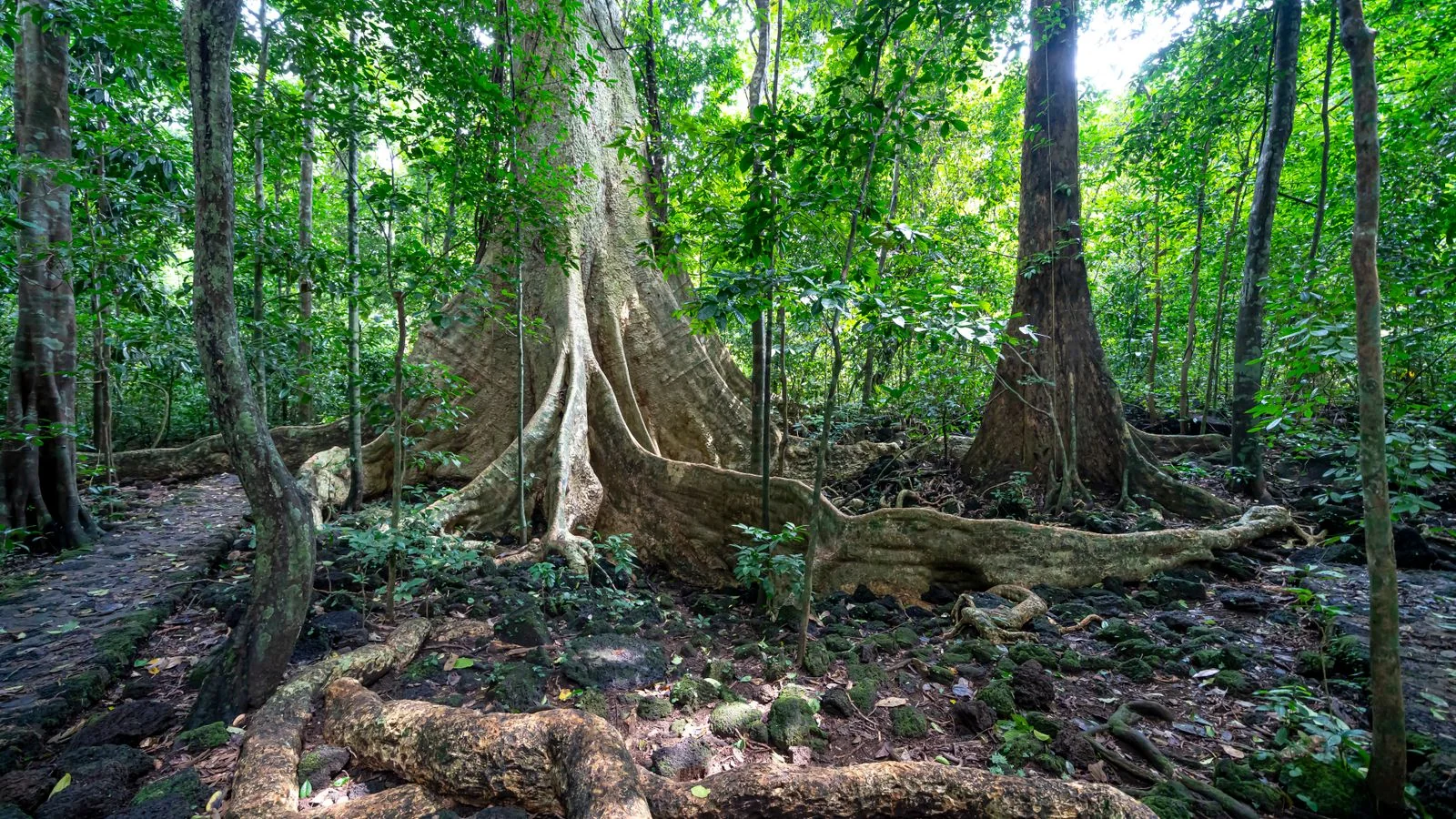
In early 2017, Smithsonian’s April issue carried a travel story about a single tree. Ben Crair, a journalist, had pitched senior editor Jennie Rothenberg Gritz on Thimmamma Marrimanu, a giant banyan about 100 miles north of Bangalore whose canopy spreads across nearly five acres and whose age runs past 550 years. Gritz later took his cold pitch apart line by line for Nieman Storyboard, in a piece published November 14, 2017. What sold her was not the tree’s size alone. Crair tied the banyan to fig wasps and co-dependent evolution, which fit the magazine’s “Evotourism” issue, quoted a biologist who had measured India’s giant banyans, and noted that his trip was already booked. The story ran online as “The Biggest Tree Canopy on the Planet Stretches Across Nearly Five Acres.”
Gritz summed up the gap between that pitch and the rest of her inbox in six words: “We want a story, not a topic.” If you are a founder, researcher, museum director or brand trying to work out how to get featured in Smithsonian magazine, that sentence is the whole game. The rest of this post is about turning what you have (a discovery, an archive, a product, a place) into something an editor there can picture on the page.
What Smithsonian Magazine Publishes in 2026

Start with the format, because it shapes everything else. The magazine’s 2026 media kit lists seven print issues this year: January/February, March, April/May, Summer, September/October, November and December. The kit puts average print circulation at 700,000 and total print audience at 2.1 million. Online, smithsonianmag.com averaged 5.1 million monthly unique visitors in the third quarter of 2025, according to the same kit, citing Google Analytics.
Those two audiences are not the same people. The kit reports a median print reader age of 61. Online, 28 percent of readers are 18 to 34. A story that plays to a retired history buff reading a long feature on the couch reads differently from a Smart News item someone finds through search at lunch. Know which one you are aiming for before you write a word, because the answer to how to get featured in Smithsonian magazine changes with the reader you want.
The print magazine organizes around four pillars: travel, history, science and the arts. The 2026 calendar leans hard on America’s 250th anniversary. April/May is a “Travel & Planet Positive” issue, the Summer issue was built around American innovations, and September/October paired travel with conservation. Online themes followed the same thread, with “250 Places to Celebrate America” in January and “Celebrating 250 Years of American Innovation” in June.
The website is a broader target with more doors. Its main sections include Smart News, History, Science, Innovation, Arts & Culture, Travel and At the Smithsonian, along with a daily Photo of the Day. Smart News runs shorter, faster pieces split by subject, including science, travel and ideas and innovations. The site also publishes a run of email newsletters (a weekday digest, art and culture, discoveries and history, a monthly wildlife and science letter, a museum collections letter, and Photo of the Day) and a podcast, “There’s More to That.” Each of those is a place your work can surface, and each has its own pace.
Here is the practical read. Print features take time, travel and a narrative arc. Website pieces can turn on a new finding, an anniversary or a collection reveal. If your news is a peer-reviewed result out next month, think Smart News. If your story is a decade-long restoration project with a central character and a place readers can visit, think print.
Why Do Most Expert Pitches Miss Smithsonian?
Most pitches that land on a Smithsonian editor’s desk are about something worth covering. That is the problem. Gritz put it this way in the Storyboard piece: “They’re often stories that should be told, but they’re not being framed as good stories.” A new study on coral bleaching is a topic. A marine biologist racing to freeze coral sperm before a single spawning night is a story.
Experts and companies tend to pitch credentials. They lead with the size of the grant, the patent count, the institution’s founding year. Smithsonian editors want what Gritz called “something surprising and narratively interesting.” A pitch that reads like an annual report gets filed with the rest.
There is a structural reason this matters more here than at a trade outlet. Smithsonian’s audience does not need your industry to be relevant to their work. They read for wonder, for history that rearranges what they thought they knew, for a place they can imagine standing in. Your story has to earn attention on curiosity alone.
The second miss is the wrong sender. The magazine’s own submission pages say it accepts unsolicited proposals from “established freelance writers.” That is a clear signal. A company’s PR team filling in the form with a product announcement is not the audience those forms were built for. Your realistic path to a feature usually runs through a writer who pitches the story, with you as the source, the location or the subject.
That changes your job. You are not pitching the magazine so much as making your story impossible for a good freelance science or history writer to pass up, then making their reporting easy. Crair had a booked trip and a local biologist ready to help. Supply that kind of access and you have handed a writer half a pitch.
The third miss is timing. A print magazine with seven issues a year plans well ahead, and the 2026 calendar shows how themed issues shape what gets commissioned. A conservation story pitched for the September/October travel and conservation issue after that issue has closed will wait for another year, or never run.
Run Your Idea Through the Three-O Test

Here is a filter we call the Three-O Test: Object, Oddity, Occasion. A story that has all three has a real shot at Smithsonian. A story missing one usually reads as a topic.
The Object is the concrete thing at the center: a tree, a shipwreck, a letter, a fossil, a machine, a person whose life you can follow. Smithsonian is a magazine tied to a family of museums, and it thinks in objects. Crair’s pitch had one you could photograph from a drone. If your story is “our approach to soil health,” it has no object yet. If it is “the 1930s seed vault in a Kansas basement that our team reopened last spring,” it does.
The Oddity is the surprising fact that makes a reader stop. It is the thing Gritz means by “novel and colorful.” For the banyan, the oddity was the scale (nearly five acres from one tree) plus the strange partnership with fig wasps. Ask yourself what a curious reader would repeat at dinner. If the answer is a statistic only your field cares about, keep digging. If you cannot find an oddity, you may have a good trade-press story and not a Smithsonian one, and that is fine to admit.
The Occasion is the reason to run it now. For Crair, it was the Evotourism issue and a trip already on the calendar. For you, it might be an anniversary, a newly opened site, a published paper, an exhibition, or a theme from the magazine’s own editorial calendar. The 2026 calendar made America’s 250th the loudest occasion of the year, and stories about American invention, places and history had a built-in hook. An occasion is what lets an editor slot your story into a specific issue instead of an open file.
Run your idea through all three before anyone writes a pitch. This is the step most guides on how to get featured in Smithsonian magazine skip. Say you run a small bioacoustics startup that has recorded whale song off Maine for nine years. The Object is the hydrophone array and the archive of recordings. The Oddity might be a shift in song structure your data shows, if a scientist can stand behind it. The Occasion could be a paper going to press or a museum exhibit featuring the recordings. With those three in hand, a freelance science writer has something to sell. Without them, they have a press release.
The test also tells you which door to try. A story strong on Oddity and Occasion but light on narrative often fits Smart News. A story heavy on Object and character, with travel built in, fits a print feature. A story tied to a Smithsonian museum, a collection or a research center may suit At the Smithsonian.
One more check: can the story be told in about four paragraphs? Gritz said “around four paragraphs or one page sounds about right for a pitch.” If your Three-O summary needs three pages of background before it makes sense, it is not ready.
Get Your Story to the Right Door
Once the story passes the Three-O Test, decide who carries it in. There are two honest routes.
The first is a freelance writer who already publishes in Smithsonian or in outlets with a similar sensibility. Read bylines on smithsonianmag.com in your subject area, follow the writers whose work you admire, and offer them the story with the access already arranged: interviews, site visits, archive time, photographs you have rights to. You are not asking them to cover you. You are offering a reporting opportunity with an Object, an Oddity and an Occasion attached. Be clear that they own the story and the editor decides the angle. Writers remember sources who are generous and get out of the way, much as Gritz said of writers: “If people are nice, you want to work with them more.”
The second route is the magazine’s own forms, if you or someone on your team is an established writer with published clips. Smithsonian runs separate submission forms for the print magazine and the website, both on smithsonianmag.com. The magazine says the form gives “the most direct and timely access to our editors,” that it cannot promise a reply, and that editors will be in touch if they want the story. Use the form for the outlet you are aiming at, keep the pitch to about a page, and lead with the story rather than your résumé.
Whichever route you take, line up the parts editors look for. Have one expert ready to speak on the record who is not on your payroll. Have images or a photographer’s access cleared. Know the dates: when the paper publishes, when the exhibit opens, when the site welcomes visitors. Check the media kit’s editorial calendar against your occasion and pitch with time to spare.
Then think past the feature. A single Smithsonian story can be cited for years, and it often feeds the sources that AI answer engines draw on when someone asks about your field. A clear, accurate story in a trusted outlet is part of how your work gets described back to people. If you want help building the source list and access package that makes freelance writers say yes, Instant Press works on exactly that kind of earned coverage.
Pick the one story in your work that passes the Three-O Test, and the next Smithsonian writer who needs a five-acre tree of their own may find it waiting with you.