When a branch cracks over a homeowner’s driveway at ten at night, what do they do before they call anyone? They search. They type “is my tree going to fall” and “how much does emergency tree removal cost” and “will insurance pay for a tree on my house,” and they read whatever comes up, forming an opinion about who knows what they are talking about long before they dial a number. If your company is not part of that reading, you are not in the running, no matter how good your crew is. That is the entire case for content marketing for tree service companies: your customers are already researching, and the only question is whether they find you or your competitor.
Here is what makes this an unusual opportunity. In most industries, content marketing is a crowded arms race where everyone publishes and standing out is hard. In tree care, almost nobody publishes anything useful. The typical tree service website is a phone number, a stock photo, and a list of services, with not one real answer to the questions homeowners are actually asking. That silence is your opening. When an entire local market fails to answer the obvious questions, the first company that answers them well captures the search, the trust, and the calls, with almost no competition to beat.
Call it the Storm-and-Season Content Engine. The idea is to build a steady supply of content around the two things that drive tree-service demand, the calendar and the weather, and to mine your own job sites for the raw material so it is sustainable. This piece shows you what to publish, when, and how to turn a single day of work into a week of content that earns the call.
Why tree services ignore content and lose the search

Tree service owners ignore content for understandable reasons. The work is physical and seasonal, the days are long, and marketing feels like a distraction from the real job of running crews. So the website goes up once, says the minimum, and never changes, while the owner assumes that good work and word of mouth will carry the business. For a while it does. But it leaves an enormous amount of demand on the table, because word of mouth only reaches people who already know someone who knows you, and search reaches everyone else.
The cost of that silence is invisible, which is why owners tolerate it. You never see the homeowner who searched “dead tree removal cost near me,” read a competitor’s helpful page, and called them instead, because you were never in that conversation. You just quietly lose jobs you never knew were available. Multiply that by the hundreds of tree-related searches happening in your market every month, and the content you did not publish becomes the biggest silent leak in the business.
The reframe that fixes this is to see content not as marketing fluff but as the modern version of being the knowledgeable person people ask. You already answer these questions all day, at estimates and on the phone. Content marketing for tree service companies simply captures those answers once and lets them work for you around the clock, reaching the researching homeowner at the moment of decision instead of hoping they happen to know your name. It multiplies the expertise you already have.
The questions homeowners actually search
The foundation of your content is the real questions homeowners ask, and you already know them because you hear them constantly. The most valuable ones cluster around fear, money, and timing. Fear questions: is this tree dead or dying, is that lean dangerous, could this tree fall on my house, is this one diseased and will it spread. Money questions: how much does tree removal cost, what makes a removal expensive, will my insurance cover a fallen tree, is a dead tree my responsibility or my neighbor’s. Timing questions: when is the best time to trim or remove, how do I prepare my trees for storm season, what do I do right after a tree comes down.
Each of these is a person at a specific decision point, and a specific, honest answer captures them. Do not write vague filler about “the importance of tree care.” Write the piece that answers “how can I tell if a tree is dead and needs to come down” with the actual signs you look for, or the piece that explains what really drives removal cost so a homeowner understands the estimate before you send it. Specificity is what makes content useful, and usefulness is what earns trust and the call.
Answering the money and insurance questions especially sets you apart, because most companies avoid them, and homeowners are desperate for straight talk. A clear, honest explanation of what removal costs in your area and how the insurance process works positions you as the trustworthy expert precisely where your competitors are silent or evasive. You are not giving away business by being transparent; you are earning the trust that wins it.
The storm-and-season content calendar
Tree service demand is driven by the calendar and the weather, so your content calendar should be too. This is the engine’s core insight: publish content that matches what people are searching for at each point in the year, and you meet demand at its peak instead of publishing into a void. Map your content to the seasons your market actually experiences.
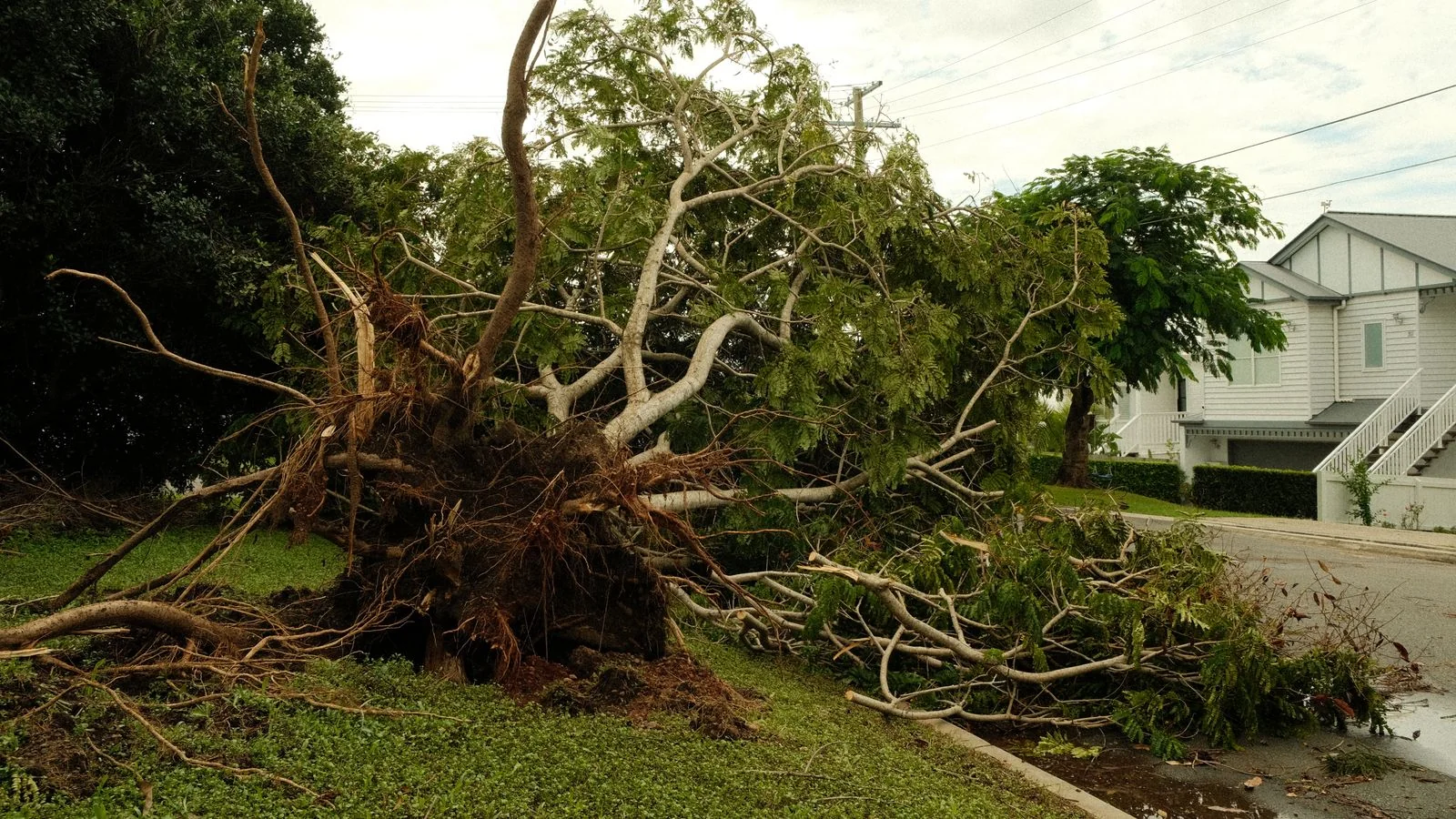
The rhythm looks like this. Before storm season, publish on preparing trees for high winds, spotting the dead or weak limbs that fail first, and what to do if a tree comes down. Through the growing season, cover trimming timing, tree health, disease and pest warnings relevant to your region’s species. In fall, address leaf-drop cleanup, dormant-season pruning, and preparing for winter storms or ice. After any major storm, move fast with content on assessing damage safely, the danger of approaching a fallen tree or a hung limb, and how to avoid the out-of-town scam crews that follow every storm. That post-storm content is gold, because search explodes in the days after severe weather and a homeowner in crisis will call the company whose calm, expert guidance they just read.
The point is to be present in search when the searching happens. A generic evergreen piece is fine, but a piece that lands the week your region is bracing for a storm or recovering from one captures demand at its absolute peak. Tie your publishing to the storm-and-season rhythm and every piece works harder, because it arrives exactly when your market is looking for it.
Turn a job site into a week of content
The reason most tree services cannot sustain content is that they treat it as separate work piled on top of an already full day. The engine solves this by mining the work you already do. Every job site is a content goldmine, and one visit can produce a week of material across formats if you capture it while you are there.
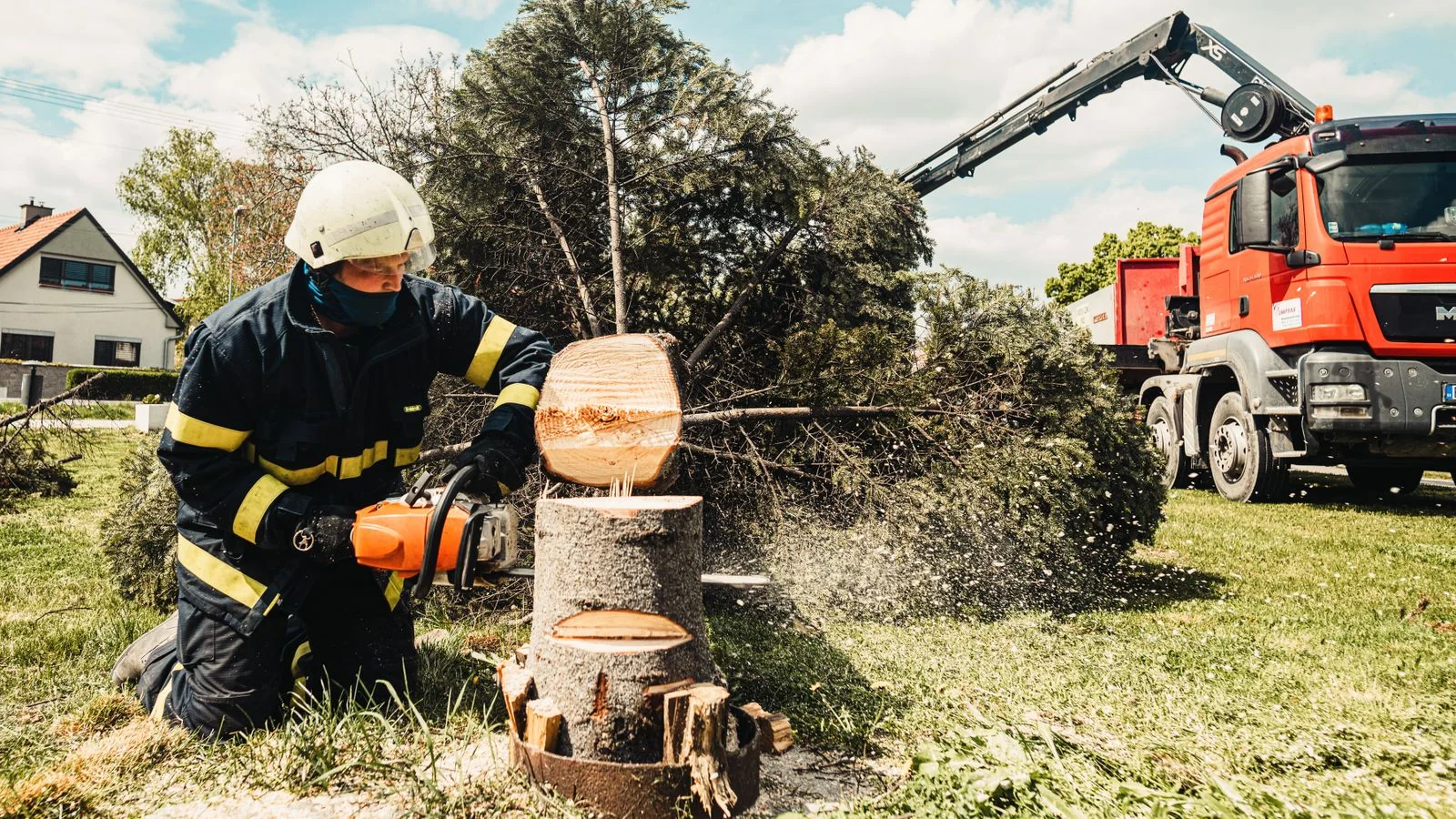
Here is how one removal becomes many pieces. Before you start, shoot a short clip explaining what makes this tree a hazard and why it needs to come down; that is a video and the basis of a written answer to “how do I know if a tree is dangerous.” During the job, capture the technical moments, the rigging, the crane, the precise cuts, which become content that proves your competence. After, film the clean result and the ground protection you used, which demonstrates professionalism. Photograph the before and after. From that single site you now have a video, a written post, a set of photos, and a real example to reference in other content, all without a single extra trip.
Assign one person on the crew to capture, or make it your own habit, and batch the editing and posting for a quiet evening. The work is already happening; you are simply documenting it. This is what makes content marketing for tree service companies sustainable instead of aspirational: the raw material is free, abundant, and generated by the business itself. You are not inventing content; you are harvesting it from jobs you were doing anyway.
Content that AI answer engines cite
More homeowners now ask an assistant instead of only a search bar: “is this tree dangerous,” “how much should tree removal cost,” “how do I find a good arborist near me.” The assistant answers by pulling from sources it judges specific, credentialed, and locally grounded, and being the source it cites puts your name in front of the customer pre-trusted. Content marketing for tree service companies now includes writing in a way these engines can use.
The good news is that content built to genuinely help a homeowner is already most of the way there, because the machines reward the same clarity and specificity that humans do. Answer real questions directly and completely. State your credentials, like an ISA Certified Arborist qualification, within your content so the engines can identify your authority. Reflect your actual service area so the local grounding is clear. Structure answers so the useful part is easy to extract, with a plain question and a direct response. Do this and your content becomes the material an answer engine reaches for when someone in your market asks about a dangerous tree or a removal cost, which is visibility no ad can buy and your silent competitors will never earn.
The local distribution that matters
Publishing is half the job; getting the content in front of your local market is the other half, and for a tree service the distribution that matters is local and practical, not viral. Your own website is the anchor, because it is where search sends people and where the answer engines look, so every question you answer should live there as a real page. From there, you push the same content where your community actually gathers.
The channels that pay off are the local ones. Post your storm-response and safety content to neighborhood groups and community pages where homeowners share warnings and recommendations, especially right after severe weather when your calm expertise is exactly what people need. Share job videos on the platforms where before-and-after tree work performs, since the transformation is inherently watchable. Build relationships with the local referral partners, landscapers, real estate agents, and property managers, who can pass your useful content to clients facing a tree decision. The goal is not a huge national audience; it is saturating your specific market with proof that you are the knowledgeable, trustworthy local expert. Do that consistently, tie it to the storm-and-season rhythm, and the researching homeowner who is already searching will keep finding you at the moment they are ready to call, which is the entire point.