
Seventy-one percent. That is the share of consumers who use Google at some point while searching for a local business, according to BrightLocal’s Small Business Marketing Report 2026, published October 21, 2026. The same survey of 1,002 US owners of businesses with 1 to 50 employees found that just 22% of those owners believe Google sends them most of their customers. They ranked it fifth, behind word of mouth (35%), social media (33%), AI tools (23%) and direct website traffic (22%).
That gap is the story of small business search this year. Owners feel confident (84% told BrightLocal they are very or fairly confident customers can find them online), while their customers keep doing something the owners discount. The SEO statistics for small business below are grouped by the decision they inform, every figure carries its source and date, and the last section turns them into a single score you can use to decide what to fix on Monday.
A note on sources. Most local figures come from BrightLocal’s 2026 research series (consumer panels of 1,002 and 1,227 US adults, plus the owner survey). Click data comes from SparkToro and Ahrefs. Numbers that reached us through secondary roundups are flagged.
Where local customers search in 2026
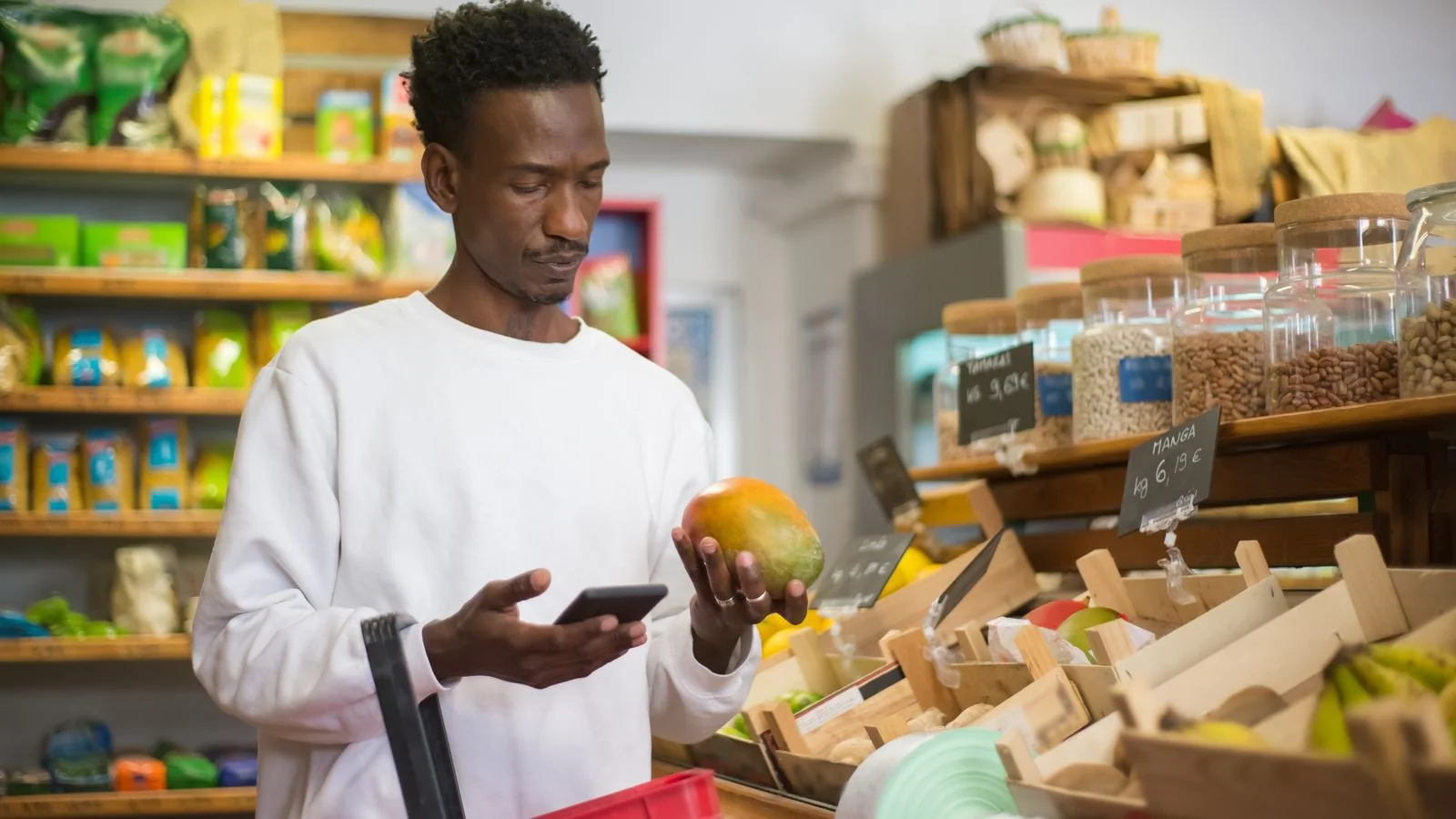
Local search is a phone habit. BrightLocal’s Consumer Search Behavior 2026 found that 73% of local searches start on a mobile device, 19% on a computer and 8% on a tablet. In the 2025 edition of the same study, 46% of consumers said they “always” or “often” add “near me” to local queries, which tells you how people phrase intent when they are standing on a sidewalk.
Google still owns the first move. In the 2026 consumer data, 52% of people started their most recent local search on Google Search and another 9% on Google Maps. The next closest starting points were social media at 9% and AI tools at 8%. But the first click is seldom the last one: 75% of consumers used more than one channel during that search.
Two numbers describe how short the window is. According to BrightLocal’s 2026 consumer research, 72% of people look at three or fewer businesses before deciding, and 75% decide in under 30 minutes. If your business is not in the first handful of options a person sees, the decision tends to happen without you.
| Local search behavior | Figure | Source |
|---|---|---|
| Searched online for a local business in the past three months | 84% | BrightLocal, 2026 |
| Local searches that start on mobile | 73% | BrightLocal Consumer Search Behavior, 2026 |
| Started most recent local search on Google Search or Maps | 61% | BrightLocal, 2026 |
| Used Google at any point in the search | 71% | BrightLocal SMB Marketing Report, 2026 |
| Used more than one channel | 75% | BrightLocal, 2026 |
| Considered three or fewer businesses | 72% | BrightLocal, 2026 |
| Decided in under 30 minutes | 75% | BrightLocal, 2026 |
The takeaway: the search starts on a phone, touches Google and ends fast. Someone who hears about you from a friend will often search your name to find your hours or your number.
Clicks are shrinking, and AI is absorbing them
The rest of the web is getting fewer visits from Google, and that changes how you read your traffic reports. SparkToro’s 2026 zero-click study, built on Similarweb’s US clickstream panel for January through April 2026, found that 68.01% of Google searches ended without a click. In 2024 the figure was 60.45%. Rand Fishkin called it the fastest acceleration of zero-click behavior in a decade.
AI Overviews are the most visible cause. Ahrefs re-ran its 300,000-keyword study using December 2025 Search Console data and found that the presence of an AI Overview correlated with a 58% lower click-through rate for the top-ranking page. In the first version of that study (March 2025 data) the drop was 34.5%. The damage reaches down the page: position two lost 50.8%, position three lost 46.4% and even position ten lost 19.4%. Ahrefs pointed to similar findings from Seer Interactive, which measured organic CTR declines between 49.4% and 65.2%.
How often do these summaries appear? Semrush tracked AI Overviews on 6.49% of queries in January 2025, saw them peak at 24.61% in July 2025 and settle at 15.69% by November 2025 across more than 10 million keywords. For local queries the rate looks higher. Whitespark’s 2026 local ranking research reported AI Overviews on 68% of local searches, compared with 39% for the classic local pack. Treat that one with care, since it reached us through secondary roundups, but the direction matches everything else.
There is a nuance that matters for a corner bakery or a plumbing company. Fishkin wrote that local business queries, branded searches and high-intent transactional searches continue to benefit from SEO. The informational blog post that used to bring you curious visitors is the traffic most at risk. The “plumber near me” search that ends with a phone call is the traffic most worth protecting.
For the wider picture on AI summaries, our Google AI Overviews statistics roundup tracks the national numbers in more depth.
How do you measure SEO results when clicks fall?

If 68% of searches end on Google, then website sessions undercount your search visibility by design. A customer who sees your Google Business Profile, taps the call button and books a job never touches your site. Your analytics dashboard records nothing. Your phone records a customer.
This is why the profile metrics matter more than they used to. BrightLocal’s 2026 owner survey found that 85% of small businesses now have a Google Business Profile and 63% manage it themselves, but only 35% said they keep an active presence there. That leaves a large number of profiles that exist and do no work. In the 2025 edition of the same report (a broader sample of businesses with up to 250 employees), 89% of SMBs said they invest in organic SEO while only 40% said they had a dedicated business website.
So what should you track? Calls, direction requests and website taps from your profile. Branded search volume in Google Search Console, which tells you whether more people are looking for you by name. Review count and review recency. And, more and more, whether AI tools mention you when someone asks for your category in your city. That last one has no dashboard yet, so you have to ask the tools yourself and write down the answers each month.
The owners who feel their marketing is not working may be measuring the wrong layer. BrightLocal found that 25% of owners think more marketing won’t make a real difference, and 28% say it feels too technical to do more. Some of that frustration comes from staring at falling session counts while the phone keeps ringing.
Reviews decide the shortlist
If search gets you onto the list, reviews decide who gets the call. The review numbers in the 2026 data are the sharpest in this whole set of SEO statistics for small business, because they describe thresholds rather than tendencies.
| Review behavior | Figure | Source |
|---|---|---|
| Consumers who read reviews for local businesses | 97% | BrightLocal LCRS, 2026 |
| Use Google to read local reviews (down from 83% in 2025) | 71% | BrightLocal LCRS, 2026 |
| Only use a business rated 4 stars or higher (up from 55%) | 68% | BrightLocal LCRS, 2026 |
| Only use a business rated 4.5 stars or higher (up from 17%) | 31% | BrightLocal LCRS, 2026 |
| Only care about reviews from the last three months | 74% | BrightLocal LCRS, 2026 |
| Won’t use a business with fewer than 20 reviews | 47% | BrightLocal SMB Report, 2026 |
| Small businesses with fewer than 20 reviews | 47% | BrightLocal SMB Report, 2026 |
| Rejected a business for a review-related reason | 65% | BrightLocal Consumer Search Behavior, 2026 |
Read the 4.5-star line twice. In one year, the share of consumers who demand a 4.5 rating almost doubled. A 4.3 that felt safe in 2024 now loses a third of the room.
The recency line may be the most actionable number on this page. Three-quarters of consumers discount reviews older than three months. A business with 140 reviews and nothing new since spring looks, to that buyer, like a business that may have closed or slipped. A steady trickle of new reviews beats a big pile of old ones.
When consumers explained which factor decided who they contacted, BrightLocal’s 2026 data put clear and complete information first (32%), the best or most reviews second (30%) and clear pricing third (29%). Two of those three are things you control today, on your profile and your site, without buying anything.
Small business owners are misreading the data
Put the owner survey next to the consumer surveys and three gaps appear.
The first is the Google gap already covered: 71% of consumers use Google during local searches, while 22% of owners rank it among their top two acquisition channels. The second is the review gap. Almost half of consumers set a floor of 20 reviews, and almost half of small businesses fall below it. The third is the confidence gap. BrightLocal CEO Myles Anderson put it this way when the report launched: “When 84% of owners feel confident in their online presence, yet nearly half fall short of basic review thresholds and seven out of 10 consumers rely on a Google ecosystem that businesses under-prioritize, confidence becomes a blind spot.”
None of this means owners are wrong about word of mouth. The point is that the recommendation tends to end in a search, and the search is where the referral gets confirmed or lost. Ninety-eight percent of owners in the BrightLocal survey make their own marketing decisions, which means the fix seldom needs approval from anyone. It needs an hour a week.
AI search statistics for small businesses
AI moved from novelty to habit in one survey cycle. BrightLocal’s Local Consumer Review Survey 2026 found that 45% of US consumers used ChatGPT or another AI tool for a local business recommendation in the past year, up from 6% the year before. That made AI the third most used source for local recommendations, behind Google and Facebook and ahead of Yelp and Tripadvisor. Adults aged 30 to 44 led adoption at 64%. Those over 60 trailed at 24%.
The single-search view is smaller. In BrightLocal’s July 2026 consumer data, 23% of people used an AI tool during their most recent local search, 8% started there, and 31% said they use AI for local recommendations at least monthly. Among AI users, only 18% felt ready to contact a business based on the AI recommendation alone. Most of them go check reviews, listings and websites before calling. Those checks run through the same assets local SEO has always built.
| AI and local search | Figure | Source |
|---|---|---|
| Used AI for a local recommendation in the past year | 45% | BrightLocal LCRS, 2026 |
| Same measure one year earlier | 6% | BrightLocal LCRS, 2025 |
| Use AI for local recommendations at least monthly | 31% | BrightLocal, 2026 |
| Started most recent local search on an AI tool | 8% | BrightLocal, 2026 |
| Small businesses working on AI visibility | 65% | BrightLocal SMB Report, 2026 |
| Owners confident they appear in AI search, having checked | 54% | BrightLocal SMB Report, 2026 |
| Average rating of businesses ChatGPT recommends | 4.3 stars | SOCi Local Visibility Index, 2026 |
The SOCi Local Visibility Index adds two warnings. It found that being recommended by ChatGPT for a local query is about 30 times harder than ranking in Google’s local results, and that fewer than half of the businesses leading Google’s local results also appear in AI recommendations. Ranking well on Maps does not guarantee you a mention in a chatbot. And Google is folding AI into the default experience: the company said at I/O 2026 that AI Mode had passed 1 billion monthly users, according to Search Engine Land’s coverage of the SparkToro study.
If you want the tactical side of this, our guide to AI search for local businesses walks through what these tools read when they recommend someone.
The Storefront Score: turn these numbers into a priority list
Statistics are only useful if they change what you do next. So here is the framework we use at Instant Press when a local client asks where to start. We call it the Storefront Score. It takes six checkpoints from the data above and weights each one by the share of customers the research says it touches. The bigger the share, the more points a checkpoint carries, and the higher it sits on your fix list if you fail it.
| Checkpoint | Pass condition | Weight | Statistic behind the weight |
|---|---|---|---|
| Fresh reviews | At least one new review in the last 90 days | 74 | 74% only care about reviews from the last three months |
| Google presence | Active, complete Google Business Profile | 71 | 71% use Google during local searches |
| Rating floor | 4.0 stars or higher | 68 | 68% only use businesses rated 4 stars or more |
| Review count | 20 or more reviews | 47 | 47% won’t use a business with fewer than 20 |
| AI mention | Named when you ask ChatGPT for your category in your city | 45 | 45% used AI for local recommendations |
| Clear info | Hours, services and prices visible on profile and site | 32 | 32% chose based on clear, complete information |
The math is simple. Add the weights of every checkpoint you pass, divide by 337 (the total of all six weights) and multiply by 100. Then sort the checkpoints you failed from highest weight to lowest. That sorted list is your work order.
Here is a worked example. A neighborhood bakery has an active profile, a 4.6 rating, a website with a full menu and prices, 14 reviews, no new review since June, and no mention when we ask ChatGPT for the best bakery in its town. It passes Google presence (71), rating floor (68) and clear info (32), for 171 points. Divided by 337, that is a Storefront Score of 51. The work order reads: fresh reviews first (74), review count second (47), AI mention third (45). In practice, one review request card at the register solves the first two at once, which is why the score is worth running before anyone buys software.
A score below 50 tends to mean the business is losing customers it already earned through referrals. Above 80 means the basics are covered and it is time to think about AI visibility and earned media, the inputs that feed both Google’s results and chatbot answers.
Which statistics should you stop quoting?
Some of the most repeated SEO statistics for small business are old, and a few were never as solid as they looked. A good rule: if a roundup cannot name the study, the sample and the year, leave it out of your planning.
The “46% of Google searches have local intent” line traces back to a Google comment reported in 2018. The figure that “76% of people who search for something nearby on a smartphone visit a business within a day” comes from Google research published years before AI Overviews existed. Neither has to be wrong today, but neither describes 2026 behavior, and both get recycled as if they were fresh. Use the 2026 BrightLocal and SparkToro figures above instead, and check the publication date on any stat before it goes into a pitch deck or a budget.
The same caution applies to the AI numbers. BrightLocal sells local SEO software and its samples are US adults recruited through SurveyMonkey. Its 45% figure counts anyone who asked an AI tool once in the past year. Read it as a strong signal about direction and a weaker signal about the size of the shift for your own customers.
Next year’s numbers will matter less for how many people search and more for which answer engine they trust to do the choosing.