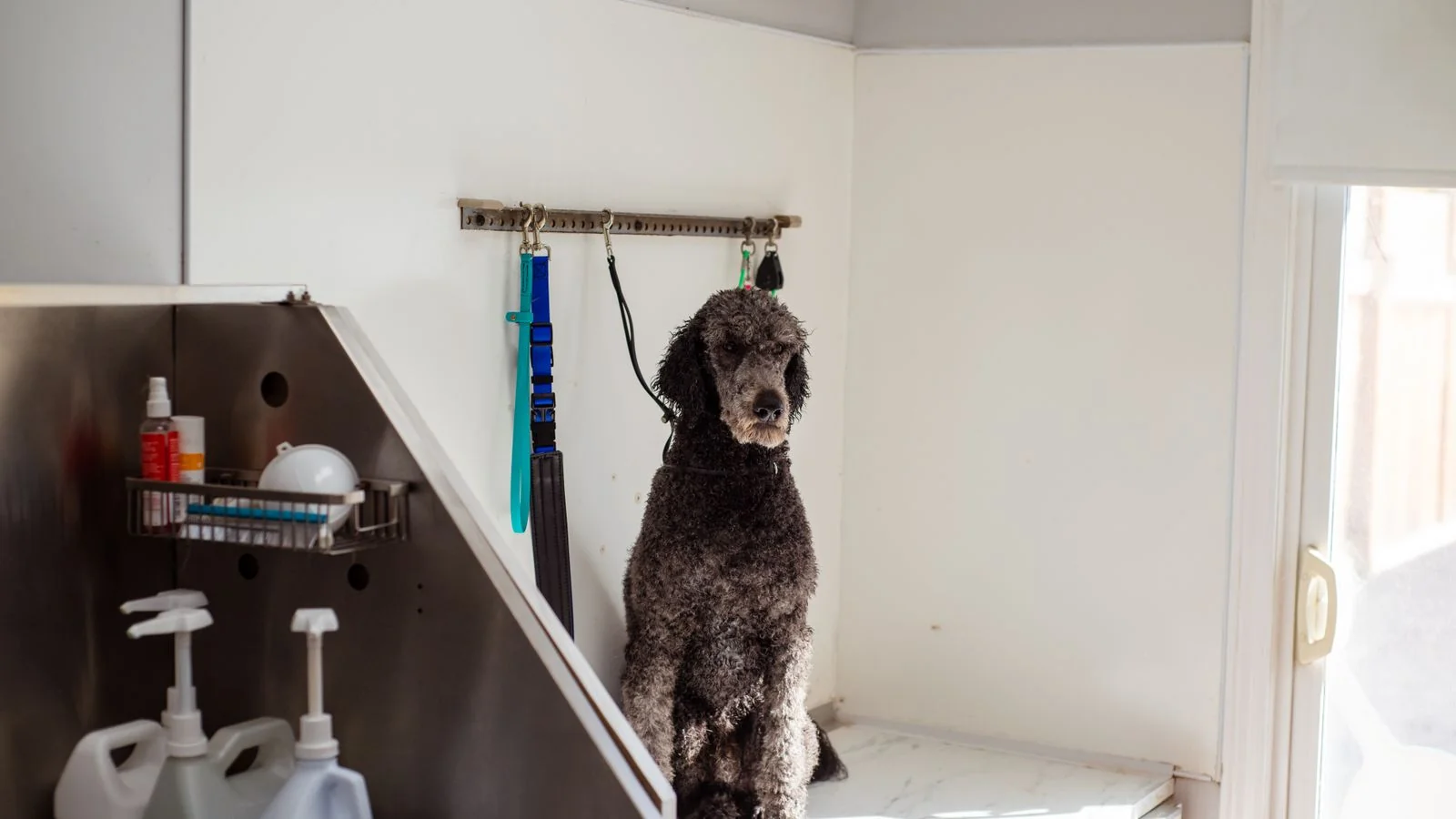
It is Saturday afternoon and a client has just picked up her cockapoo. She is quiet at the counter. She pays, she leaves, and ninety minutes later a post appears in a local dog owners’ group with eleven hundred members, two photos, and the words “would not recommend.”
You have until roughly Monday morning before that post becomes the permanent answer to the question “who should I use.”
Almost everything that determines how this ends happens in the next two days, and most groomers spend those two days doing the wrong things: drafting long replies, explaining coat types, asking friends to comment, or saying nothing at all and hoping it drops off the feed.
The Incident Window
There is a predictable shape to how a grooming complaint spreads, and it has a window.
For roughly the first forty eight hours, the story is contested. The owner has told her version, people are reacting, and your version is still expected. Readers in that window are genuinely undecided, and a short, warm, non-defensive response from you changes a large share of their minds. The complaint stays a disagreement between two accounts.
After that window closes, the story sets. The post stops collecting new comments, but it stops with an unanswered accusation attached to your business name, and that is the version that gets screenshotted, linked, searched and repeated for years. Anything you post on day five reads as damage control rather than as your side of it.
I call this the Incident Window, and the reason it deserves a name is that groomers consistently misjudge it in the same direction. The instinct after a bad handover is to wait. Wait for emotions to cool, wait until you have thought it through, wait to see if it blows over. Every one of those instincts is correct for a private dispute and wrong for a public one.
The rule that follows is simple enough to put on the wall. Respond inside the window, briefly. Resolve outside it, thoroughly.
What to actually say inside the window
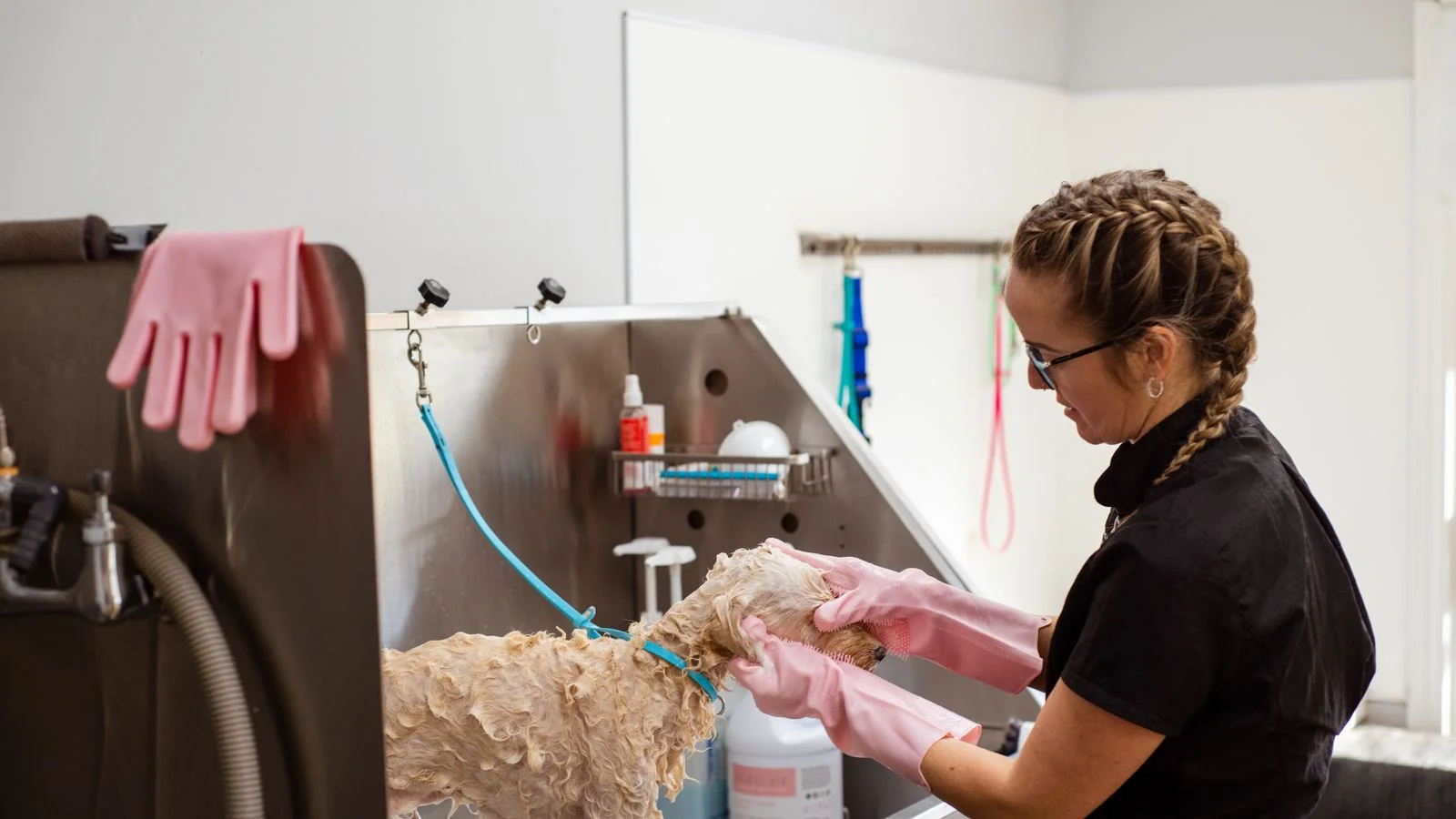
The content of the reply matters less than groomers think. The shape matters enormously.
A reply that works is three sentences. It acknowledges that the owner is upset. It says you have reached out directly. It stops. It does not explain matting, it does not mention the dog’s behaviour, it does not reference the intake conversation, and it absolutely does not include the phrase “as I explained at drop-off.”
Here is why that restraint is not weakness. Every technical explanation you give in public is heard by non-experts as an excuse, because the audience has no way to evaluate it and every way to notice your tone. The owner who reads “her coat was badly matted and a shave-down was the only humane option” hears you blaming her dog and, underneath that, blaming her. So does everyone else in the group, including the forty people who were considering booking with you.
The same information delivered privately, with photographs from intake, lands completely differently. It is now a professional explaining a decision to one person rather than a business defending itself to a crowd.
So: public brevity, private thoroughness. The public reply exists to demonstrate character to bystanders. The private conversation exists to actually solve it.
Build the documentation habit before you need it
Most grooming disputes are memory disputes. The owner remembers being told the coat would be trimmed. You remember explaining that the matting was too tight and a short cut was the only option that would not hurt. Both of you are sincere. Neither of you has evidence.
The fix is boring and it works: photograph every dog at intake, particularly any dog with matting, skin irritation, ear condition, overgrown nails or an existing injury. Ten seconds per dog. Store it by date and name.
Then get agreement in writing for anything that will visibly change the dog. A short form or even a text message that says “confirming we agreed on a shave-down due to matting” converts a future argument into a closed question. Groomers who adopt this almost universally report that the disputes do not merely become winnable, they mostly stop happening, because the act of confirming in writing forces a clearer conversation at the counter.
Keep your no-go criteria consistent too. If you will not groom a dog above a certain matting severity, or will not attempt a hand-strip on an aggressive dog, decide that once and apply it to everyone. Inconsistent standards are how a refusal turns into a discrimination story.
Handle the price and frequency complaints properly
A whole category of grooming complaints is not about the groom at all, and treating them as service failures makes them worse.
Price is the most common. Owners compare a mobile groomer, a chain and an independent salon and see three numbers with no explanation of what differs between them. When the number surprises them they express it as a complaint about value, and the instinctive response, which is to itemise what you did, reads as defensive.
The better response is to explain the variable they have not considered, which is time. A doodle in poor condition is three hours of work. A well-maintained one is ninety minutes. Same salon, same groomer, different job. Once an owner understands they are buying time rather than a haircut, the price stops being arbitrary and starts being a consequence of something they control.
Frequency complaints follow the same shape. An owner told their dog needs a groom every six weeks hears an upsell. An owner shown what happens to that specific coat at ten weeks, and told plainly that the alternative is a shave-down they will not like, hears a professional.
The way to stop both complaints happening is to move the conversation earlier. Quote a range rather than a number at the first enquiry, explain what moves the price within that range, and assess the coat before committing. Most disputes about cost are actually disputes about an expectation nobody set.
Publish this reasoning somewhere public as well, on your site or a pinned post. Every owner who reads it before booking is an owner who will not be surprised at the counter, and a public explanation does the work once rather than forty times a month.
Where your reputation actually lives
Groomers tend to watch Google and ignore the surfaces that drive more of their bookings.
Google matters for discovery. Someone new to the area searches, sees a local pack, and picks from three names. Volume and recency dominate there, and a salon with forty reviews loses to a salon with three hundred regardless of quality.
Local Facebook groups matter more, and almost nobody manages them. In most towns, a handful of dog owner groups function as the real referral engine for grooming. A recommendation thread in one of those sends more bookings than a month of search traffic. Being present in those groups as a helpful member, long before you need goodwill, is the highest-return reputation work available to a salon.
Nextdoor and neighbourhood apps sit close behind, skewing older and more local, with a long memory.
And then there is the surface that has appeared in the last few years and that almost no salon has checked: what an assistant says when someone asks it to recommend a groomer in your town. Those answers are built from a compressed reading of your reviews, your website, any press coverage and any forum discussion about you. A recurring service complaint across platforms tends to survive that compression even when your overall rating looks healthy.
Go and ask. Open ChatGPT, Perplexity and Google’s AI results, ask each for a dog groomer in your town, and see whether you are named. If you are not, the gap is almost always a shortage of third-party sources rather than a shortage of stars.
Build review volume before you need it
Everything above is defence. This is the part that decides whether the defence ever gets tested in public.
Grooming salons chronically under-collect reviews relative to their client volume, and the reason is structural rather than lazy. The handover is busy, the client is holding a lead and a card and a dog that wants to leave, and asking feels like an imposition at exactly the wrong moment. So most groomers never ask, and end up with forty reviews after six years and two thousand clients.
That number is the problem. A salon with forty reviews sitting at 4.6 drops to 4.4 with one angry one-star, and the drop is visible. A salon with four hundred reviews absorbs the same review without moving. Volume is the only defence that works automatically, and it has to be built in the quiet months because you cannot build it during a crisis.
The mechanics that work are unglamorous. Ask by message rather than in person, sent the same evening while the owner is still pleased with how the dog looks. Send one link, to one platform, chosen for them, because a choice of three platforms produces no reviews at all. Ask every new client after their second groom rather than their first, when they have decided you are their groomer. And ask consistently rather than in bursts, because recency is weighted and a wall of reviews from eighteen months ago reads as a business that peaked.
There is a second benefit that groomers underestimate. Review count and recency both feed local search ranking, so the same work that protects you from a bad review also determines whether a new client finds you at all. It is the rare piece of reputation work that pays twice.
One thing to avoid: never incentivise. A discount for a review breaches most platform policies, and a filtered or removed batch of reviews does more damage than never having asked.
Give the story a competitor
The last fix is the one that changes the shape of the whole problem rather than managing its symptoms.
A salon with no public presence beyond its reviews has exactly one story attached to its name, and whatever the most recent complaint says, that is the story. A salon with a body of visible work, local coverage and a recognisable voice has many stories, and any single complaint is read against all of them.
This is why photographs are worth more to a groomer than to almost any other trade. Your work is visual, your buyers are emotional about the subject, and a consistent stream of before-and-after images of real client dogs answers the quality question before anyone reaches your reviews. It also gives a local reporter something usable, which matters because grooming is a soft-news category editors genuinely want: rescue makeovers, senior dog care, seasonal coat advice during a heatwave, the economics of a small salon on a high street.
One piece of local coverage does something no review can. It is a source outside your control saying you are good at your job, and it outranks the angry post in search for years.
Photograph your intakes this week, and write the three-sentence reply template now, while nothing has gone wrong. The window is too short to draft it from scratch on a Saturday afternoon.