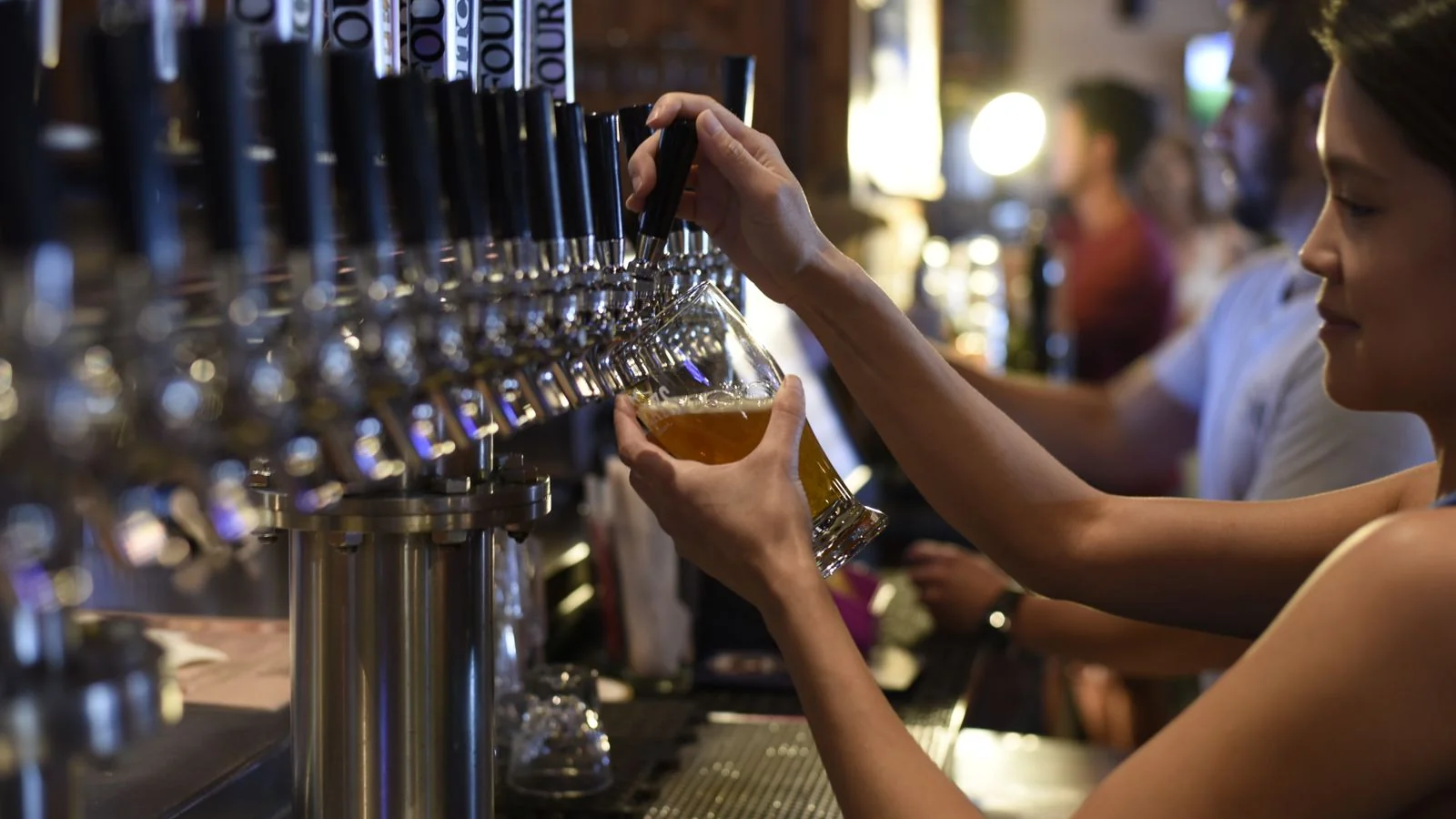
The reviews that damage a brewery almost never mention the beer.
Go and read your last fifty one-star and two-star reviews across every platform. Count how many are about flavour. In most taprooms the answer is somewhere between two and six. The rest are about waiting forty minutes for a table nobody told them was reservable, a bartender who made somebody feel stupid for asking what a gose is, a dog policy that changed without warning, a card machine that failed, a birthday party that took over the patio, parking, noise, a kitchen that closed earlier than the website said.
Brewers spend their lives on the liquid and get judged on the queue. That gap is uncomfortable and it is also good news, because service problems are far more fixable than palate disagreements.
Your worst reviews are not about the beer

The first fix is to stop reading your reviews as beer criticism and start reading them as an operations report.
Take a quarter of reviews, put every negative one in a spreadsheet, and tag each by cause: wait time, staff interaction, pricing, cleanliness, policy confusion, noise, food, temperature or comfort, and actual beer quality. Then count.
What comes out of that exercise is almost always three recurring causes carrying seventy percent of the damage, and none of them require a brewer to change anything about brewing. A taproom that fixes its two worst service failures usually watches its average climb without touching a recipe.
This reframing matters because the instinctive brewer response to a bad review is defensive and technical. Somebody says the pale ale was bland and the brewer explains bitterness units. Meanwhile the same reviewer said they waited twenty five minutes to order, which is the thing that actually made them write the review, and nobody addressed it.
The four surfaces where brewery reputation lives
Breweries think they have a reputation. They have four, on four surfaces, with four different audiences, and confusing them is the second most common mistake in the category.
The first surface is Google. This is where people who have not decided where to go make their decision. Volume and recency matter more than anything, the average is displayed next to your name in maps and in search, and a single recent one-star sits at the top of the pile for weeks. Google is your acquisition surface.
The second surface is the beer platforms: Untappd above all, with BeerAdvocate and RateBeer still carrying weight for certain audiences. These are populated by enthusiasts rating individual beers, not your business. Scores here influence whether serious drinkers seek you out and whether bottle shops and beer bars take your product.
The third surface is the general hospitality platforms: Yelp, TripAdvisor, Facebook. These skew toward visitors, tourists and groups, and they weight food and service more heavily than beer. If you have a kitchen or a patio, this surface matters more than you think.
The fourth surface is new and most breweries are not watching it at all: AI answers. When somebody asks an assistant which breweries to visit in your city, the response is a synthesis of everything above plus articles, forum threads and guides. It compresses years of sentiment into three sentences, and those three sentences are increasingly the first impression.
Fix three is to actually monitor all four rather than the one that happens to email you. Most breweries watch Google because Google notifies them, and are unaware of what their Untappd page or an AI summary currently says.
Untappd is a search engine now
Untappd started as a social check-in app and quietly became the place beer drinkers look things up. Visitors browse it before choosing a taproom. Bar buyers glance at it before taking a keg. Its data gets scraped, summarised and repeated well beyond the app.
Two things follow from that.
The first is that your brewery page is a storefront you probably have not maintained. Claim it. Check that the address, hours and description are right. Keep your tap list current if you use the venue tools, because a visitor who arrives for a beer that ran out three weeks ago writes a bad review about accuracy, not about beer.
The second is that you need to understand the rating distortion before it demoralises you. Untappd averages skew hard by style. Pastry stouts, fruited sours and hazy IPAs collect high scores. Pilsners, bitters, helles and anything brewed to a traditional spec collect lower ones, because the scoring population rewards intensity and novelty. A brewery whose identity is clean lagers will sit below a brewery making dessert beer, and this says nothing about quality.
Fix four is to stop optimising for that number and start optimising for the reviews with sentences in them. A three-point-two average with fifty comments praising your helles is worth more than a three-point-nine with no text, both commercially and for how AI systems describe you, because sentences are what get summarised and scores are not.
Never argue with a taste rating. It reads as insecurity to every future customer scrolling past. Respond only when a check-in reports something factual and fixable: served warm, wrong glass, flat pour, off flavour that suggests a line cleaning problem. Those responses are useful and they signal competence.
Answer the service complaint, not the palate
Fix five is a response discipline, and it is the one with the highest return per minute spent.
Write the reply for the next reader, not the reviewer. The person who left the one-star is usually gone. The person who matters is the one reading it three weeks from now while deciding where to take visiting family, and that person is assessing whether you seem like a business that handles problems.
That means short, specific, unemotional, and containing a fact. “You waited too long on Saturday and that is on us. We added two people to the bar on weekend evenings from this month and moved to table service on the patio.” That response makes the complaint historical. It tells the next reader the problem was real and is over.
What fails: thanking them for the feedback and inviting them to reach out privately, which reads as a script. Explaining why they were wrong, which reads as hostile regardless of tone. Litigating the specifics of a night four weeks ago, which makes you look like the person keeping score.
Respond to positive reviews too, briefly, and not to all of them. A brewery that only ever appears under complaints looks like a brewery whose only interaction with customers is damage control.
Set a rhythm and hold it. Twenty minutes, twice a week, one person, every platform. Reputation damage compounds through neglect more than through any single incident.
When a rating brigade starts
Occasionally something goes badly wrong. A staffing incident, a political association, a viral complaint, a dispute with another brewery, a comment somebody screenshots. Ratings drop fast from people who have never visited.
Fix six is having decided what you will do before it happens, because the decisions are bad when made at ten at night by a founder reading their phone.
Report obviously fake reviews to each platform with specifics, and expect a low success rate. Platforms remove reviews from accounts with no visit history and reviews that name individual employees abusively. They generally do not remove reviews because the subject disputes them.
Do not respond to each one. A brigade is not fifty conversations, it is one event, and answering individually amplifies the volume and drags the thread out. If a public statement is warranted, make one, in one place, and link it.
Say the true thing plainly. If you got something wrong, say what happened, what you did, and what changes. If the claim is false, say so once, without heat, with whatever evidence exists. Both of those age well. Silence and corporate hedging both age badly.
Then let it decay. Review platforms weight recency, and a brewery with real review volume absorbs a bad week within a month or two. A brewery with forty total reviews does not, which is the entire argument for the next fix.
Build the reviews that outnumber
Fix seven is the only durable defence, and it is boring: volume, gathered continuously, before you need it.
A taproom with eight hundred Google reviews at four point six cannot be meaningfully damaged by a bad night. A taproom with ninety reviews at four point three can be moved half a star by one angry group. Volume is insulation, and insulation has to be installed in advance.
Ask in person, at the right moment, which is when somebody has just said something nice out loud. Train the bar team to hear that moment and respond to it. A QR code on the table does a fraction of the work of a bartender saying it would genuinely help if they posted that.
Never offer anything in exchange. Incentivised reviews violate platform terms, and in several jurisdictions they violate consumer protection law. The exposure is real and the practice is unnecessary, because a busy taproom generates more than enough goodwill to convert.
Target Google first, because it carries the most weight for people who have not chosen yet. Point enthusiasts toward Untappd. Ask visiting groups for TripAdvisor if tourism is part of your trade.
Staff behaviour is a reputation system
Every fix above is downstream of one thing: what actually happens at your bar.
Most brewery reputation problems trace to a single recurring interaction. A bartender who is dismissive about non-beer drinkers. A door policy applied inconsistently. A pattern of groups being seated slower than couples. Somebody who is short with people asking basic questions.
This is a management problem wearing a marketing costume, and no response strategy repairs it. Read the tagged reviews from that first exercise, find the interaction that keeps appearing, and address it as a staffing and training matter.
Craft beer carries a specific risk here that is worth naming. The culture rewards expertise, and expertise curdles into gatekeeping without much effort. A customer who feels judged for ordering the light one writes a review that costs you more than any flavour complaint, and they write it about a feeling rather than a beer, which is why the brewer reading it never recognises the problem.
Watch what AI says about you
The last surface is the one nobody is monitoring, and it is becoming the first impression.
Once a month, ask the major assistants what they know about your brewery. Which breweries should somebody visit in your city. Whether yours is worth going to. What your best beer is. Whether you are family friendly or dog friendly. Whether you have food.
Write down what comes back. You are checking two things: whether you appear at all, and whether what is said is true. Wrong hours, a closed second location, a kitchen you no longer run, a policy that changed, a description drawn from a review cluster that no longer reflects the business.
Errors here are correctable but only indirectly. You fix them by correcting the underlying sources: your listings, your site, recent articles, and the balance of recent reviews. That is slow, which is exactly why you want to know about a wrong summary now rather than after a year of it being the first thing anybody reads.
The breweries that come out of the next few years with intact reputations will be the ones who understood early that their taproom is reviewed on four surfaces at once, and that the fastest way to win on all four is still to fix the wait at the bar.