Robert Mondavi opened his winery in Oakville in 1966, and within twenty years the most valuable thing in Napa Valley was not a vineyard. It was a surname that Americans had learned to trust before they knew what Cabernet Sauvignon tasted like. He spent decades doing something most winemakers still consider vulgar: he put himself in front of the wine, relentlessly, in public, and he talked about California wine in a way ordinary people could follow.
Randall Grahm did a stranger version of the same thing at Bonny Doon in the early 1980s, building a following through newsletters so peculiar that people subscribed for the writing and bought wine as a side effect.
Neither of them had better vineyards than their neighbours. They had names their neighbours did not have, and the names did commercial work that the vineyards could not.
The label is not the brand
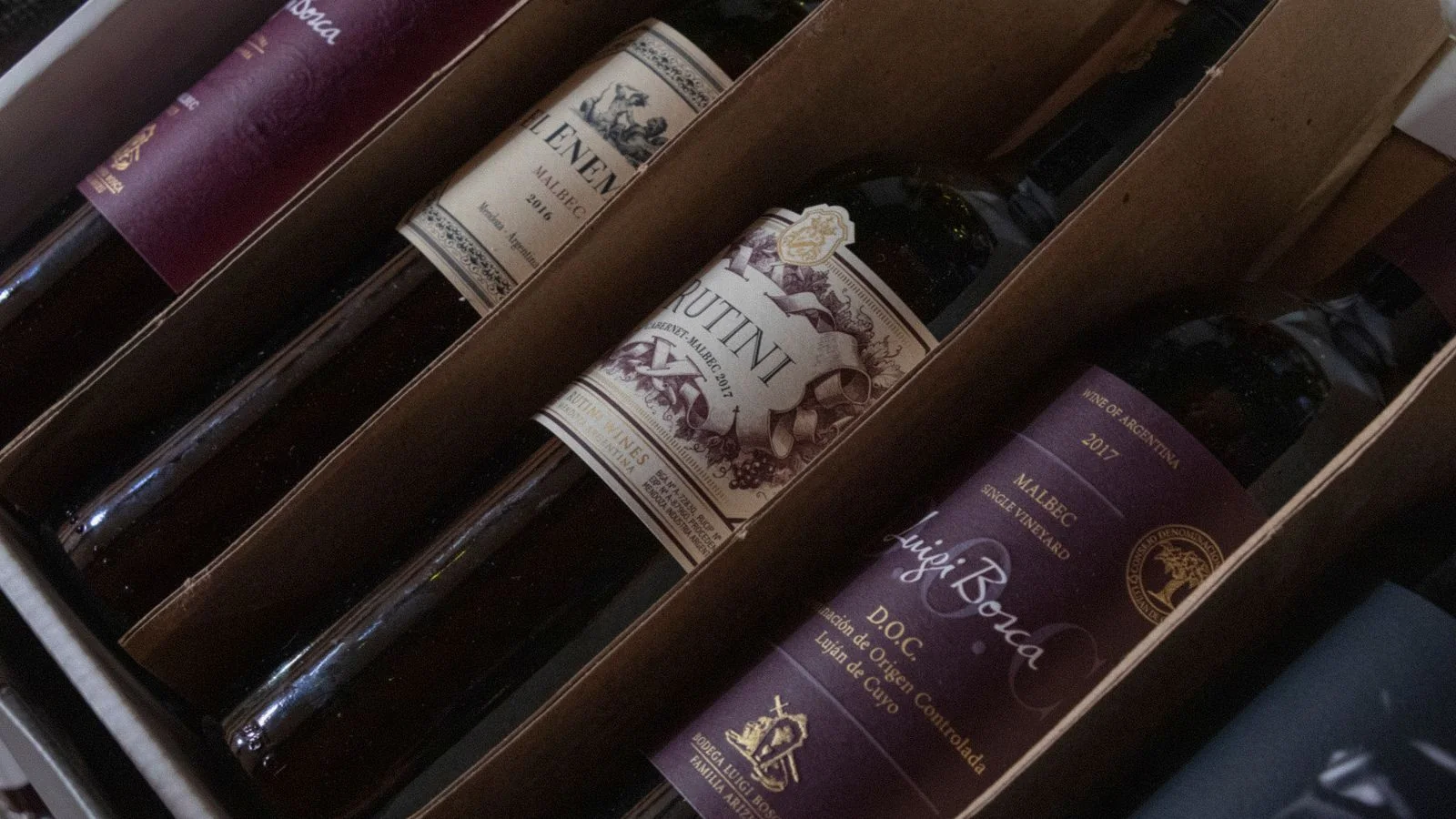
Walk into a decent wine shop and look at what a buyer is up against. Four hundred bottles. Maybe sixty of them from your region. A price band with fifteen wines inside it, all with serif type, a drawing of a building or a hill, and a name that could belong to anybody.
The buyer resolves this in under a minute using whatever shortcut is available. A recommendation from the shop. A score sticker. A region they trust. Or a name they have encountered before, attached to a person they have some feeling about.
That last shortcut is the only one you control and the only one your competitors cannot copy. Anybody can hire a designer. Anybody can chase a score. Nobody else can be you, with your vineyard, your decisions and your twenty years of specific opinions about picking dates.
This is why personal branding for wineries is not vanity. It is the cheapest available answer to the shelf problem, and the one that keeps working when the score is average and the design is fine.
Pick the person who carries the story
The first move is choosing, and most wineries either avoid the choice or make it badly.
Avoiding it looks like a website with a team page and no protagonist, marketing that says the winery believes things, and social accounts posting sunsets. That produces nothing, because people do not form attachments to entities.
Making it badly looks like choosing the owner because they own it, when the owner is a financial partner who has never picked fruit and cannot answer a question about malolactic fermentation without help. Buyers detect this quickly and it damages more than it builds.
Choose on two criteria. First, can this person speak about the wine with real authority, from direct involvement, without a script? Second, will they still be here in five years? Continuity is the criterion wineries underweight, and it is expensive to get wrong. A brand built on a winemaker who leaves takes the goodwill with them.
In a family operation, the answer is usually obvious and usually the person least comfortable with it. In a larger operation, it is often the winemaker rather than the proprietor, and that arrangement works as long as the winemaker’s employment is secure enough to justify the investment.
One person. Not three. A winery with three faces has none, because attention does not divide, it dissipates.
Say something specific about how you farm
The second move is the substance, and here is the framework. Call it the Winemaker’s Three Claims: a place claim, a practice claim, and a person claim. Each one has to be specific enough to be checked.
The place claim is where the fruit comes from, at a resolution finer than the appellation. Not Sonoma County. A named vineyard, a block, an elevation, a soil type, an aspect, a planting year. “Thirty-eight-year-old head-trained Zinfandel on decomposed granite at 1,400 feet” is a place claim. “Estate grown in beautiful Dry Creek Valley” is a brochure.
The practice claim is what you do differently and why, stated as a decision with a trade-off. Whole cluster percentages and your reason. Picking on flavour rather than numbers, and what that costs you in some years. Neutral oak because you do not want to taste the barrel. Dry farming, and the yield you accept for it. No fining, and what that means in the glass. The trade-off is the part that makes it credible. Any winery can claim minimal intervention. A winery that says it dropped a third of the crop in a hot year and explains the reasoning is saying something.
The person claim is why you, specifically. The path in. What you did before. Who you learned from. What you got wrong early and changed. This is the part winemakers resist hardest because it feels self-indulgent next to the vineyard, and it is the part that makes the other two memorable.
Three claims, each checkable, each repeatable by somebody else in a sentence. If a sommelier cannot retell your claims to a table after hearing them once, they are not yet claims.
Show up where wine buyers already are
The third move is distribution, and wineries consistently choose the wrong rooms.
The instinct is consumer social media, which is the most crowded and least efficient surface available to a small producer. It rewards frequency, which you cannot sustain during harvest, and it reaches people who mostly cannot buy your wine where they live.
The rooms that matter are narrower. Sommeliers and buyers, because one of them placing your wine puts it in front of a hundred people a week with an implicit endorsement. Wine writers and regional critics, who are chronically short of producers who return calls and say interesting things. Trade tastings, where being remembered by twenty buyers beats being seen by twenty thousand strangers. Podcasts and newsletters in the wine space, which have small audiences composed almost entirely of people who buy wine deliberately.
Then your own list, which is the most valuable channel you have and the one most wineries treat as a shipping notification system. A newsletter written by the person, in their voice, about what actually happened this season, is the single highest-return personal branding asset in this industry. Grahm proved that four decades ago and remarkably few producers have copied the method.
Local and regional press deserves a specific mention because wineries underuse it. A winery is a farm, a manufacturer, an employer and a tourism business, which means the business desk, the agriculture writer, the features editor and the travel section all have a legitimate reason to run you. Give any of them a person with opinions and numbers and you will be covered.
Worth being precise about what makes a winemaker quotable, since that is the mechanism. Reporters covering agriculture and climate need somebody who will say what actually happened on the ground this season, in numbers, without a communications filter. Harvest dates moving. Yield in a drought year. What smoke exposure cost. What a heat spike did to picking decisions. Most producers give a cautious non-answer because they fear sounding negative about a vintage they still have to sell. The one who gives the real number becomes the person that reporter calls every year, and a decade of being the quoted expert in your region builds a name that no advertising budget replicates.
The same logic applies to trade press. Publications covering viticulture and winemaking are short of practitioners willing to describe a technique in enough detail to be useful, because detail invites criticism. Supplying it is how a winemaker becomes known to other winemakers, which is how somms and buyers hear your name from a source they already trust.
Build the searchable record
The fourth move is making the name findable, and this has changed meaningfully in the last two years.
When somebody hears your name at a tasting and searches it that evening, the results should establish who you are within the first screen. A site page for the person, not just the winery. Interviews. Articles. A speaking or judging record. A profile on the trade platforms sommeliers use.
What has changed is that a growing share of that first impression is now a summary written by a machine rather than a list of links. Ask an assistant who makes the wine at your winery, or who the notable producers in your appellation are, and the answer will be assembled from whatever text exists about you across the open web.
If nothing exists, the machine says nothing, and saying nothing about you while naming three of your neighbours is a commercial outcome. If the text that exists is old, the machine describes a version of you from 2019.
The practical response is to make sure the person is written about in places other than your own site, and that the three claims appear consistently across those places. Consistency matters more than volume here. A model resolving contradictory descriptions tends to hedge, and hedging reads as unremarkable.
Protect the name once it exists
The fifth move is maintenance, and it has two parts.
The first is continuity. Once a winery is identified with a person, that association is an asset with a balance sheet value, and it should be treated accordingly in employment terms, in succession planning and in any sale. Wineries have been bought and then quietly hollowed out when the name walked, and buyers of the wine notice before the accountants do.
The second is consistency of voice. A personal brand survives disagreement and dies of blandness. The producers who built lasting names were opinionated in public and stayed opinionated, and the ones who sanded themselves smooth for a distributor’s comfort became indistinguishable from the four hundred bottles on the shelf.
Consider what this looks like in practice. A producer decides that the person carrying the brand is the winemaker, not the proprietor. She commits to three claims: forty-year-old vines on a named ridge, dry farmed with the yield loss that implies, and a winemaker who came to wine from soil science and says so. She writes eight newsletters a year in her own voice, does four trade tastings, takes every call from a regional writer, and lets sommeliers ask her anything. Five years later a buyer in a shop three states away recognises the name on the back label and picks it over a wine with a higher score.
That is the whole mechanism. It is slow, it is unglamorous, and it is the only part of a winery’s marketing that appreciates. Every other line in the budget depreciates the moment it is spent. A label refresh is worth less each year. A trade ad is worth nothing the week after. A name, built patiently on three claims that hold up, is worth more in year ten than in year five, and it is the single asset that survives a bad vintage.