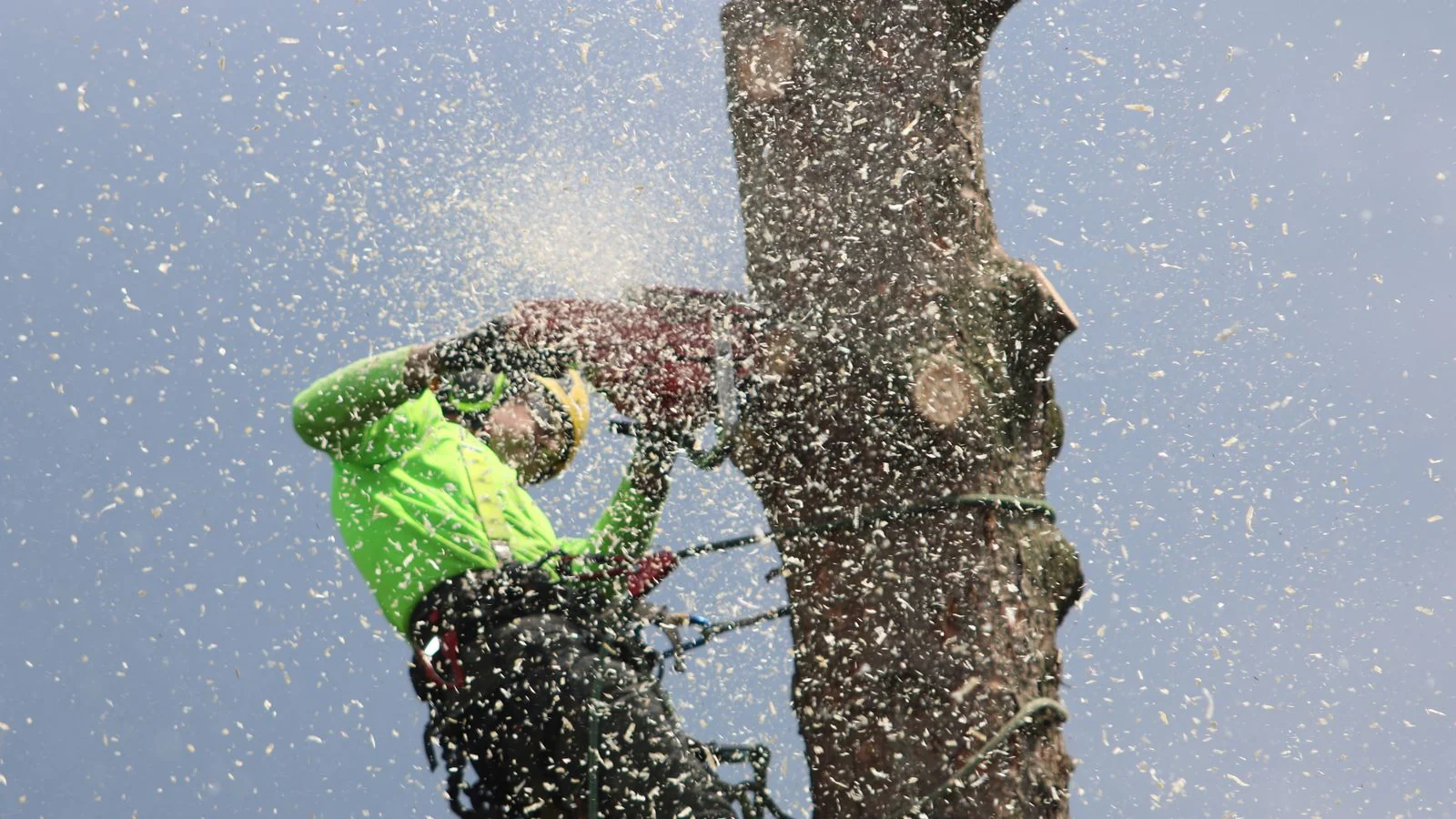
The most dangerous thing a tree service sells is not the tree work. It is the decision a homeowner has to make about whom to trust with a running chainsaw fifty feet in the air, next to their roof, their power lines, and their kids’ swing set. That decision terrifies people, and they cannot resolve it by looking at your truck, because every tree service in town has a truck, a chipper, and a website that says “licensed and insured.” What resolves it is trust in a specific person, and that is why personal branding for tree service companies is not a nice-to-have. It is the answer to the one question that decides who gets hired.
Here is the counterintuitive part. Tree work looks like the ultimate commodity, judged on price and availability, and most owners resign themselves to competing there. But the high stakes are exactly what make a personal brand so powerful in this trade. When the downside of choosing wrong is a crushed roof or an injured worker on your property, a homeowner will pay more and wait longer for the person they trust. The fear that makes this business feel like a race to the bottom is the same fear that lets a trusted, visible expert charge a premium and stay booked.
Call it the Arborist Authority Stack. It is the set of layers that turn an anonymous crew into a trusted local name: a visible owner, a claimed specialty, real credentials, proof of the work, a safety identity, and the referrals and press that follow. Stack them and you stop being one more number in a search result and become the arborist people ask for by name. Here is how to build each layer.
The commodity trap tree services fall into
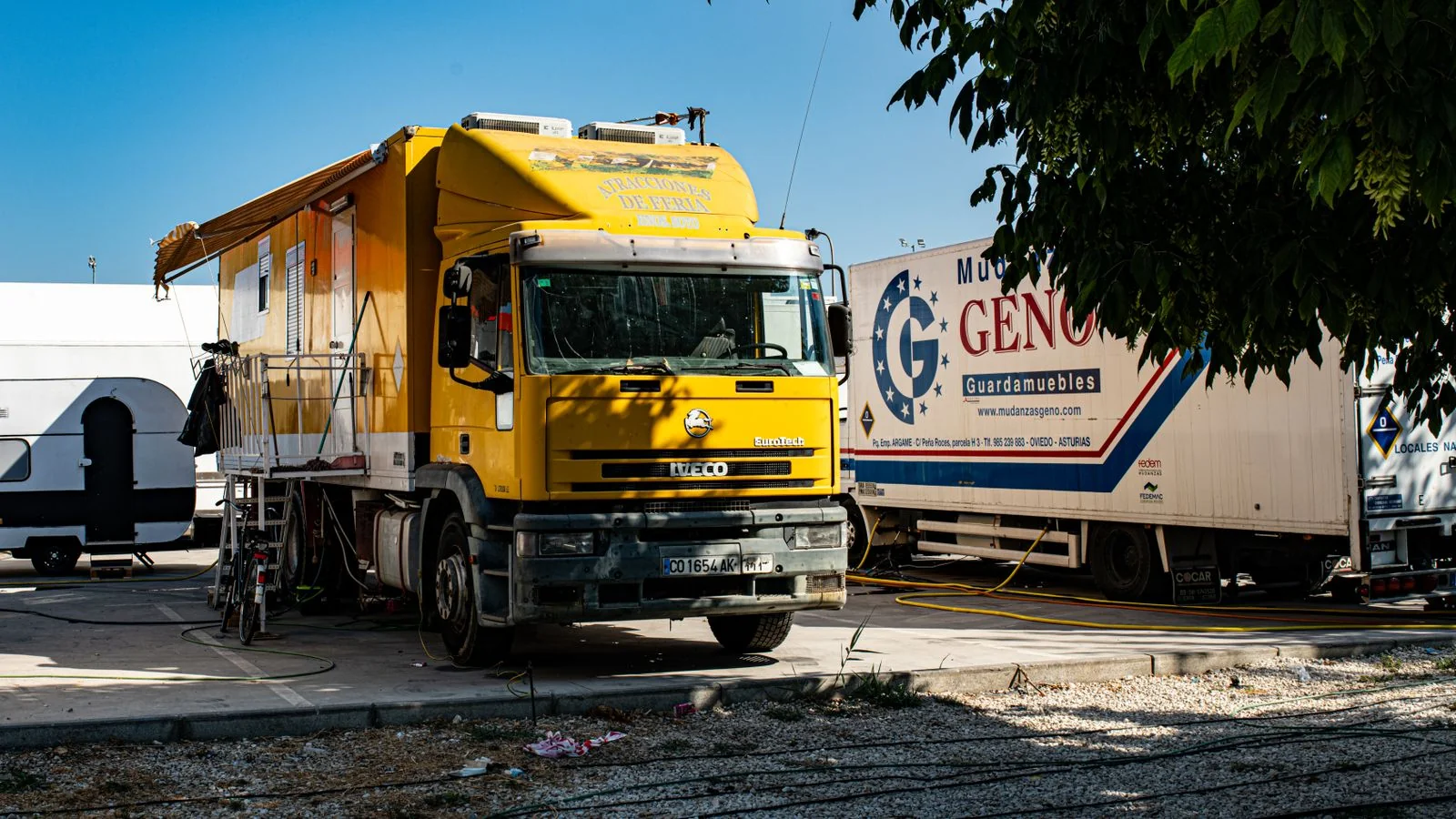
Most tree services present themselves as interchangeable, and then wonder why customers treat them that way. The website leads with the same stock photos, the same list of services, the same “free estimates” and “fully insured” claims every competitor also makes. Nothing about it answers the homeowner’s real question, which is not “do you remove trees” but “are you the crew that will do this safely and not wreck my yard or disappear with my deposit.” When you look like everyone else, price is the only thing left to compare, and you have handed the customer a reason to shop you down.
The trap tightens because the anxious customer, unable to tell the safe expert from the reckless one, defaults to the cheapest bid or the first one available, which trains the whole market to compete on price and speed. Owners feel this pressure and respond by cutting their bids, which cuts their margins, which cuts the investment they could make in equipment, training, and safety, which makes them look even more like the low-end crews they are trying to escape. It is a downward spiral, and it is entirely a branding failure, not a service failure.
The way out is to stop competing as a company and start being a person. A named owner with a visible face, a clear specialty, and real credentials breaks the commodity frame instantly, because the homeowner suddenly has something to evaluate other than price. Personal branding for tree service companies is the lever that pulls you out of the trap, because it replaces “which of these identical trucks is cheapest” with “I want that specific expert.”
Why buyers pick a name they trust with a chainsaw
Understand what the customer is actually buying and the branding strategy becomes obvious. They are not buying tree removal. They are buying the confidence that a competent, insured professional will take a large, dangerous object off their property without damaging anything or hurting anyone. That confidence is a feeling, and feelings attach to people, not logos. A homeowner can feel confident about a named arborist they have seen explain their work; they cannot feel much of anything about “ABC Tree LLC.”
This is why the named owner wins the high-stakes job. When your face, your name, and your expertise are visible and consistent, the customer transfers their trust to you specifically, and that trust is what overcomes the fear. They are not hiring a company they found; they are hiring the arborist they have come to believe in. Every layer of the Authority Stack exists to make that transfer happen faster and more completely than it does for the anonymous competitor.
The trust also travels in ways a company name cannot. When a neighbor asks who took down that big oak so cleanly, the answer “that was Dave, he is an ISA Certified Arborist and he really knows what he is doing” carries a person’s reputation, which is repeatable and sticky. “Some tree company, they were okay” carries nothing. A personal brand turns every good job into a referable name, and in a trade where a single trusted recommendation can outweigh a dozen ads, that is the whole ballgame.
Pick the arborist angle you become known for
You cannot be known for everything, so claim the lane where your expertise runs deepest and let it define your name. Association is what gives a personal brand its pull: when people connect you to a specific competence, you become the obvious call for it. A tree service owner known as “the big-removal and crane specialist,” or “the tree-health and preservation expert,” or “the storm-damage responder,” has an identity that sticks, while a generalist known for nothing in particular stays forgettable.
Choose the angle where your genuine skill meets your market’s need. If you excel at the hazardous, technical removals other crews subcontract out, own that reputation for handling the jobs nobody else will touch. If you know tree biology and can save a tree others would cut, become the arborist who preserves rather than just removes, which appeals to a whole segment of homeowners who love their trees. If your region gets hammered by storms, be the reliable, honest storm-response name people call before the out-of-town chasers roll in.
Owning an angle does not narrow your business; it focuses your reputation. You still do the full range of work, but your public identity, the thing attached to your name, is sharp and memorable. A homeowner who remembers you as “the arborist who saved my neighbor’s oak” will call you for a removal too, because depth in one visible specialty reads as competence across all of them.
Credentials as brand
In a trade crowded with uninsured crews and weekend operators with a pickup and a rented saw, your credentials are not paperwork; they are the core of your brand, because they are the visible proof of the exact thing customers are afraid of. Lead with them. The ISA Certified Arborist credential, from the International Society of Arboriculture, is the recognizable professional standard, and stating it plainly separates you from the crews who cannot claim it. TCIA accreditation, from the Tree Care Industry Association, signals a company run on safety and professionalism. Proof of liability and workers’ compensation insurance, stated clearly, answers the homeowner’s nightmare scenario about who pays if someone is hurt on their property.
Make these credentials a visible, repeated part of your identity, not fine print buried on a page nobody reads. Say your certification in your videos, put it in your bio, mention it when you explain a job. A homeowner who hears you casually reference why an ISA Certified Arborist approaches a removal a certain way is being reassured at the precise point of their anxiety. The credential becomes part of the story you tell about your work, which is far more persuasive than a logo in a footer.
Credentials also feed the machines that now recommend businesses. When an AI answer engine assembles a reply to “how do I find a qualified arborist near me,” it favors sources that name verifiable qualifications. A personal brand built on clearly stated, real credentials is exactly the kind of entity these systems can identify and cite, which means the trust-building you do for humans doubles as visibility with the AI tools people increasingly ask.
Show the dramatic work
Tree work is inherently visual and dramatic, which hands you a content advantage most trades would envy. A large technical removal, a crane lift over a house, a precise piece of rigging that drops a limb exactly where it should go, these are genuinely compelling to watch, and filming them with the owner narrating turns raw spectacle into a brand. People are drawn to the skill and the risk, and when you are the calm expert explaining what is happening and why, their fascination becomes trust in you.
You do not need a production crew, just a phone and the discipline to capture the work. Show a difficult removal and explain how you assessed the tree, planned the cuts, and protected the house. Walk through a tree you saved and why it was worth saving. Narrate a storm-response job and what makes a fallen tree dangerous to approach. The content is useful and honest first, and promotional almost never, because usefulness is what converts a viewer into someone who trusts you. Every piece proves your competence in a way no claim of “professional service” ever could.
Consistency beats polish here too. A steady stream of real, narrated work, posted regularly, builds the brand far more than a single glossy video, because reputation is built by repeated exposure. Show up often enough as the knowledgeable arborist who explains the dangerous, impressive work, and your name becomes the one that surfaces in your market whenever someone needs a tree handled.
Make safety a visible brand pillar
In this trade, safety is not just an operational concern; it is a brand message, because it speaks directly to the homeowner’s deepest fear about hiring you. Most tree services treat safety as invisible back-office practice. The owner building a personal brand makes it visible on purpose, because every demonstration of a safe, professional operation is a demonstration of exactly what the customer is paying for. Show the gear, the rigging, the ground protection, the planning. Explain why you do things the careful way even when it takes longer.
This visible safety identity does something powerful: it reframes your higher price as the obvious choice. When a homeowner understands that your crew is trained, insured, and methodical while the cheap bid is a couple of guys with a saw and no coverage, the price gap stops being a negative and becomes the reason to hire you. You are not more expensive; you are the one who will not put a tree through their roof or leave an injured worker on their lawn. Making safety a public pillar of your brand converts your professionalism from a hidden cost into a visible selling point.
Convert the brand into referrals and press
A visible personal brand is a referral and press engine, because a credible, named expert is precisely what other people want to point to. Referral partners like landscapers, real estate agents, property managers, and municipal contacts refer to a person they trust and remember. A tree service owner with a clear brand and real credentials is easy to refer, because the partner can hand off a name and a reputation rather than a generic vendor. Make yourself referable by being visibly the expert, and the referrals compound.
Press follows the same logic. Local media cover people and they need credible sources, and a tree care season brings reliable story hooks: storm safety, the risk of dead trees, what a heat wave or drought does to the urban canopy, how to choose a qualified arborist and avoid the scam crews that follow every storm. A named, certified arborist with a visible brand is the ready-made expert a reporter calls for those stories, and that coverage compounds your authority for free. The personal brand you build to win jobs doubles as the credential that earns media, and the media earns you more brand, each feeding the other.
The consistency that wins the local market
The reason most tree service owners never build a personal brand is not skill. It is that they post a few times, feel the effort, see no instant surge of calls, and quit right before the compounding begins. Personal branding for tree service companies rewards persistence above everything, because authority is built by showing up repeatedly over a long enough stretch that people start to recognize and trust the name.
Pick a cadence you can hold through your busy season, because that is when it matters most and is hardest to sustain. One genuinely useful post a week, held for a year, beats a burst of ten followed by silence, because the brand grows on reliable, repeated presence. A homeowner needs to encounter you several times before your name sticks. A referral partner needs to see you be credible more than once before they send a client. The payoff is real but back-loaded, and only the persistent reach it.
So build the stack, claim your angle, lead with your credentials, show the dangerous work, make safety visible, and protect a cadence you can actually keep. A local market is small enough for one trusted arborist to dominate, and right now the seat marked “the tree expert this town trusts” is almost certainly empty, because your competitors are all still hiding behind identical trucks. Step out from behind yours and take it.