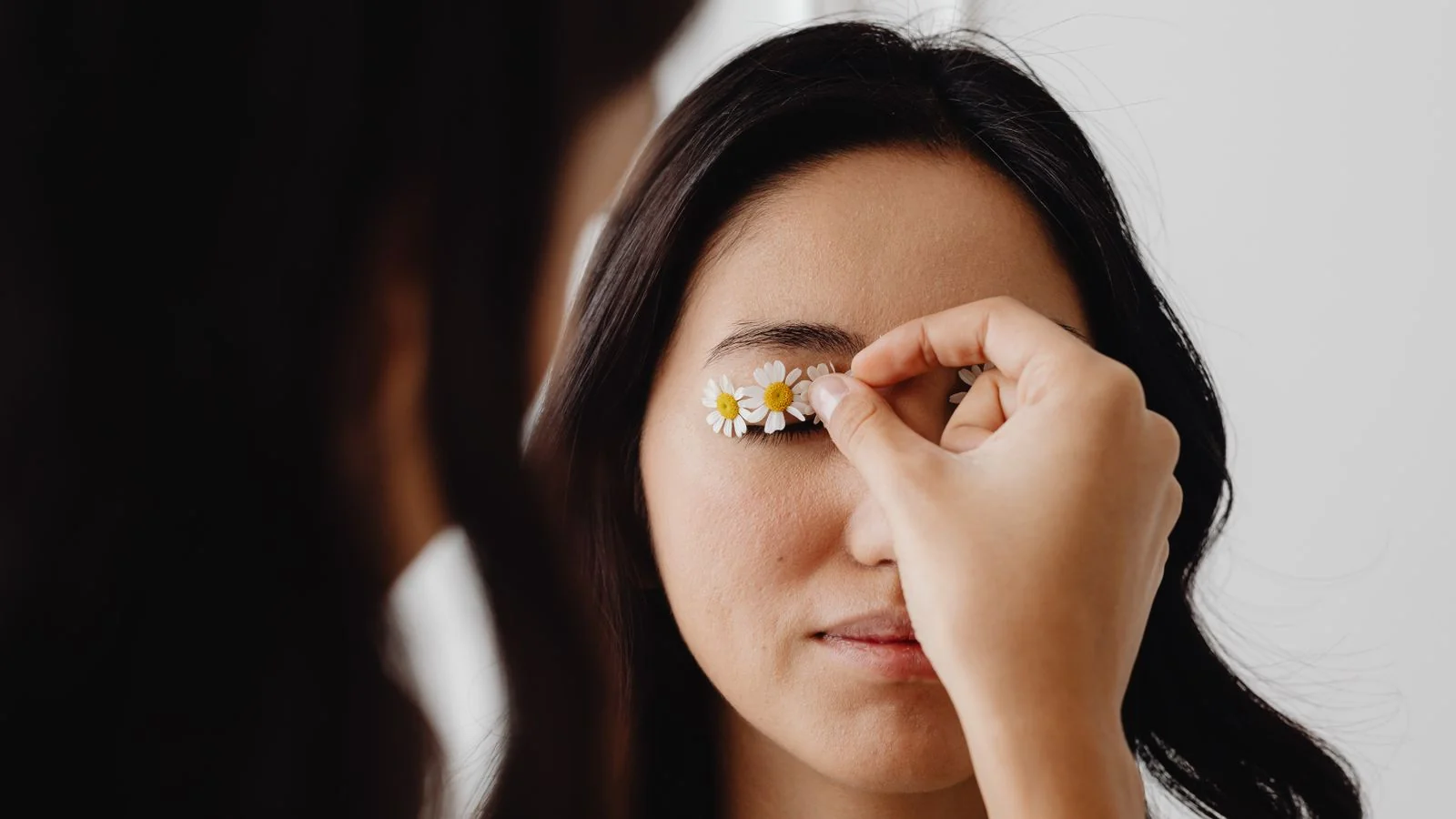
Yes, the artist should build the brand, not the studio. That is the answer to the question most owners are circling when they search this, and the discomfort they feel about it is the reason their marketing is not working.
A lash client is not loyal to a room. She is loyal to a specific person who knows that her left eye sits lower, who remembers she is going to a wedding in April, and whose mapping she has come to trust with her face. When that person moves to a studio nine minutes away, the client moves with her and does not think of it as a betrayal. She thinks of it as following her lash artist, because that is what happened.
Personal branding for lash studios is the work of accepting that and building around it instead of against it.
Whose name is on the booking?
Open your booking software and look at how clients search. In most studios the answer is that they search a first name. Not the business. Not the service. A first name, sometimes misspelled.
That is the entire strategic situation in one data point, and it is sitting in your own system.
The owners who do well with it lean in. They name artists on the website with individual pages. They let each artist run her own profile. They treat the studio as a stage rather than the act. The owners who do badly with it insist on a single branded account posting work with no attribution, which produces a feed nobody follows, no artist who stays, and a business whose only asset is a lease.
There is a second reason this matters now, and it has nothing to do with Instagram. Answer engines are increasingly where people ask “who is the best lash artist for hooded eyes near me,” and those systems respond with entities they can name and describe. A studio that presents as an undifferentiated salon gives a model almost nothing to work with. A studio that presents five named artists with five defined specialties gives it five hooks.

The Artist-Over-Studio Ladder
Here is the model I use with beauty operators who want a real name rather than a follower count. Five rungs, in order, and skipping one collapses the ones above it.
Rung one is refusal, meaning the thing you will not do. Rung two is naming, meaning your work has a term attached to it. Rung three is process, meaning the invisible part becomes visible. Rung four is teaching, meaning other professionals learn from you in public. Rung five is citation, meaning your name appears on pages you do not own.
Most lash artists live on a rung zero that is not on the ladder: posting finished sets with a caption that says “volume set today.” That is a portfolio. A portfolio is necessary and it builds nothing, because every artist in your city has one and they are indistinguishable at thumbnail size.
Rung one: pick the thing you refuse to do
Authority begins with a boundary, not a service menu. The fastest way to sound like a professional rather than a vendor is to be publicly known for declining something.
You do not apply extensions to lashes too fine to carry them, and you say so on the day rather than taking the money. You will not do mega volume on a first appointment. You will not work over a lash lift inside a certain window. You do not do a set you cannot maintain, so you decline clients who will not commit to fills.
A refusal does three things at once. It signals expertise, because only people who understand consequences decline work. It filters your calendar toward the clients you actually want. And it gives strangers a memorable sentence about you, which is the raw material of word of mouth. Nobody repeats “she does great lashes.” People repeat “she told me my natural lashes could not handle what I asked for and she was right.”
Pick one. Say it on your site, in your consult, and once a month in public.
Rung two: name what you actually make
Unnamed work cannot be requested, recommended, or searched for.
If your approach to hooded eyes involves a specific mapping that opens the outer corner without adding length that will drag, that approach deserves a name. Not a gimmick, just a term a client can repeat to a friend and type into a search bar. “The lifted cat map.” “A five-week set.” “Maintenance volume.”
Naming is also the single highest-return move for visibility in AI answers, and almost nobody in this industry does it. A model producing an answer needs a noun to attach to a recommendation. Give it one, define it in the same words every time, and put that definition somewhere crawlable. Repetition of a consistent definition is what turns a phrase into an entity.
The test of a good name is whether a client can say it correctly to her sister three weeks later without looking it up.
Rung three: show the part nobody shows
Everyone posts the after. Almost nobody posts the reasoning.
The content that builds a lash artist’s name is the mapping drawn on tape before a single extension goes on, with a sentence explaining why the longest point sits where it does. It is the honest before, including the client who arrived with damaged natural lashes from somewhere else, and what you did instead of what she asked for. It is a fifteen-second clip of isolation at close range, which is genuinely fascinating to watch and which almost no one outside the trade has ever seen.
This works because it converts a service into a craft in the viewer’s mind, and people pay differently for craft. It also filters. A client who watches you explain why you refused to add length to a weak lash arrives already trusting the decision you are going to make.
If you do not want your face in frame, none of this requires it. Hands, tape, tweezers, and your voice or your captions are sufficient. Authority lives in the reasoning being visible, not in you being visible.
Rung four: teach in public
The rung where most artists stop, and the one that separates a busy chair from a name.
Teaching in public does not mean launching a course. It means answering the questions other professionals ask, where non-professionals can see you doing it. Retention troubleshooting. Adhesive behaviour in humidity. How to have the conversation with a client whose lashes will not support what she wants. Which corrections are worth taking and which are someone else’s liability.
When peers treat you as a reference, clients notice, because the signal is unmistakable even to someone who does not understand the content. It is the same reason a chef whose peers quote her fills a dining room.
This is also where studio owners get their return. An owner who hosts education, whose artists teach, and whose studio is where people go to learn becomes the destination employer in a market with chronic staffing problems. That is worth more than any advertising line item.
Rung five: get cited somewhere you do not own
Everything below this rung lives on platforms that can change their rules, throttle your reach, or disappear. The top rung is the part nobody can take.
Concretely: a quote in a local or trade publication about lash safety or adhesive sensitization. A guest segment on a podcast beauty professionals listen to. A named expert contribution to a piece about licensing changes in your state. A profile that lists you by name and specialty on a site with its own authority.
Third-party citation does two things. It is the strongest trust signal a stranger encounters, because you did not write it. And it is disproportionately what answer engines draw on when they produce a recommendation, because independent corroboration is exactly what those systems weight. An artist named on three credible outside pages is findable in ways an artist with forty thousand followers and no citations is not.
This rung is also the one most artists assume is closed to them. It is not. Reporters covering consumer safety, small business, and skilled trades are short of sources who can explain a technical thing in plain language, and lash work is full of technical things the public half-understands.
The practical route up is smaller than it sounds. Set an alert for cosmetology licensing changes in your state, because lash extension services sit inside licensing rules that get revised more often than people realise. When something moves, email the reporter who covered it with three sentences offering to explain what it means for clients, and nothing else. No pitch, no rate card, no attachment.
Then say yes to everything small. The trade podcast with four hundred listeners. The regional beauty association panel. The neighbourhood paper wanting two sentences about adhesive allergies. Each of these feels too minor to matter and each one makes the next one easier, because the first thing a reporter does before calling a stranger is check whether anyone else has quoted her.
Keep a page on your own website listing every appearance with a link. It takes ten minutes to build, it is the first thing anyone checks, and it is the artefact that converts a scattered set of mentions into something a stranger, or a model, reads as a track record.
What happens when your best artist leaves?
She will. Plan for the version where you keep something.
A studio that named her, hosted her, and taught alongside her keeps the studio’s reputation as the place that develops artists, keeps the clients who were attached to the room and the standard as well as the person, and keeps a professional relationship with someone who now refers overflow. A studio that suppressed her name for four years keeps a lease and a silent Instagram account.
The counterintuitive part is that the more generously you build your artists’ names, the less the departures cost you, because the studio’s own brand becomes about the standard rather than about any one pair of hands.
There is a commercial version of this worth stating plainly. Staffing is the binding constraint in this industry, not demand. A studio with a reputation for making artists visible has a hiring advantage over every competitor in its market, and that advantage compounds, because the artists who care about their own names are the ones who are good enough to have one. The owner who hoards attribution ends up competing for the artists nobody else wanted, which shows up in the work long before it shows up in the accounts.
Start with rung one this week. Write down the thing you refuse to do, put it in your consult script, and say it out loud to the next client who asks for something her lashes cannot carry. In six months that single sentence will have done more for your name than every set you photographed.