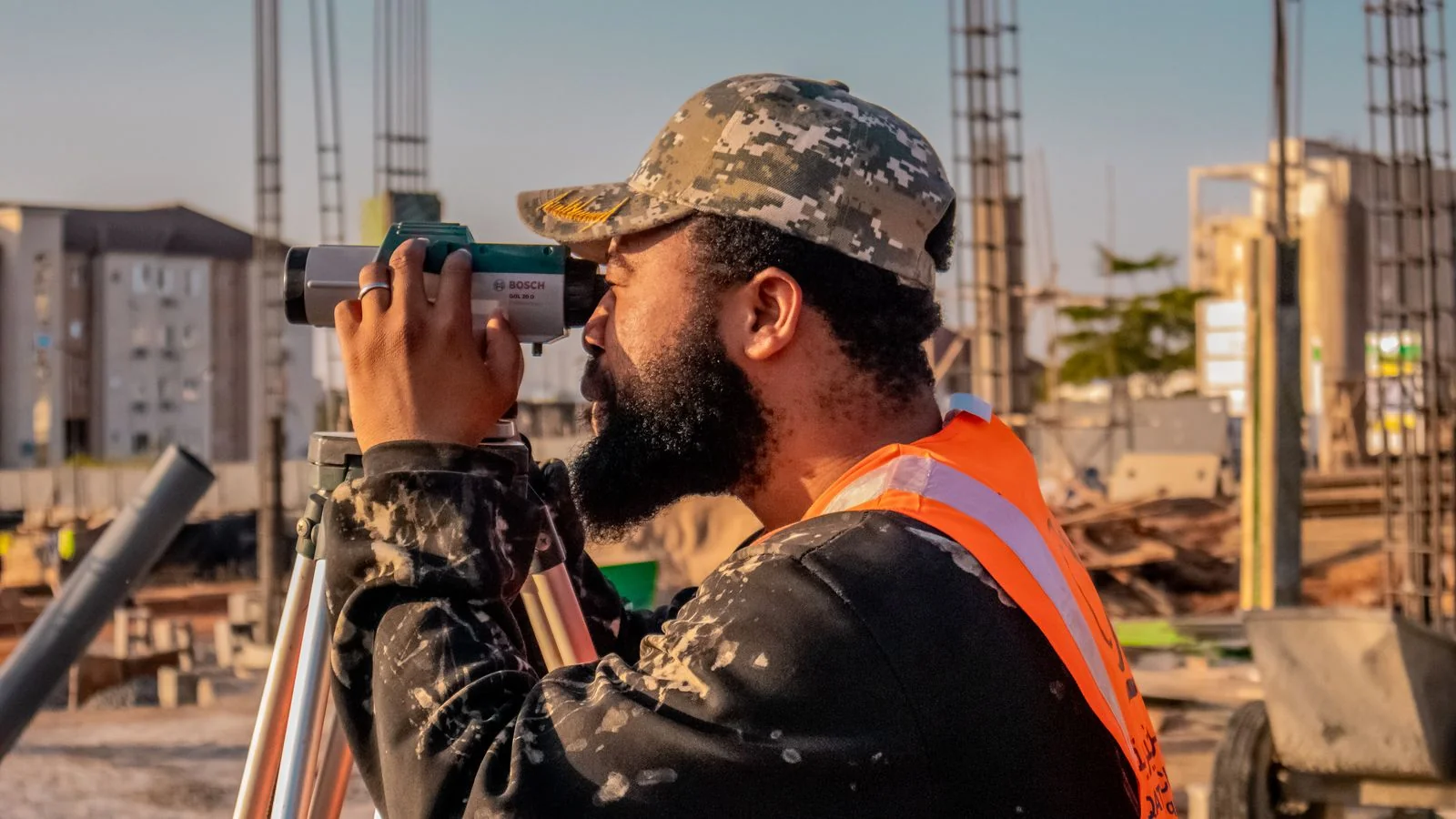
You are in the truck at 6:50 on a Thursday, coffee in the cupholder, scrolling the local news before the crew shows up. The top story is a boundary fight two towns over. A homeowner built a pool, the neighbor says the deck sits four feet over the line, and now there is a lawsuit and a video. The reporter quotes the neighbor, the neighbor’s attorney, and a real estate agent who explains that these disputes are more common than people think. The B-roll shows pink flagging on a lath and a rebar cap in the grass. Somebody set that cap. Somebody ran that line. That person knows more about the case than everyone quoted in the piece combined, and the reporter never called, because she had no idea a surveyor was a person you could call.
That is the public profile of the craft, and the reporter did not create it. Surveyors are the least visible licensed profession in the built environment. Architects have magazines. Engineers have failures that make the news. Surveyors have a plat in a drawer at the county recorder that nobody reads until something goes wrong, and by the time something goes wrong, the story has already been assigned to the lawyer. The work to get press for land surveyors is the work of making the reporter see that the person who set the cap is the only one in her story who has measured anything.
Why does nobody call the surveyor?

Three reasons, and they compound. The first is that surveyors do not appear on the reporter’s mental map of who explains things. Reporters build source lists from prior stories, and prior stories quote lawyers, agents, and county officials on property matters. If no surveyor has ever been quoted in her paper, she has no template for quoting one. You have to be the first, and the first is the hardest.
The second is that the profession trains you to speak in a way reporters cannot use. A surveyor asked about a fence says it depends on the controlling monuments and the record description. True, and unprintable. The reporter needs a sentence a homeowner understands, and the profession’s caution about giving an opinion without a full retracement reads to her as a refusal to talk.
The third is that most firms have no public face. The website lists services. It does not list a person, a phone, and a photo of someone willing to be on camera. A reporter with forty minutes until air will not fill out a contact form. She calls the attorney whose number is on the court filing, and the attorney is glad to talk.
None of those three is about the news value of what you know. Boundary disputes, easement fights, flood maps, drone surveys, historic monument recovery, the shortage of licensed surveyors: every one of them is a story reporters already write, badly, without you. Reporters want those stories. What they lack is a surveyor they can reach and understand.
The Bearing-and-Distance Pitch
Every call you write on a plat has a bearing and a distance, and a call missing either is meaningless. The same is true of a story pitch, and I use the pair, plus the point they start from, as a three-part test for anyone trying to get press for land surveyors. I call it the Bearing-and-Distance Pitch.
The Benchmark comes first. A benchmark is a fixed, public reference anyone can find. In a pitch, that means a fact the reporter can verify without taking your word for it: a recorded plat, a court docket, a FEMA map revision, a state board licensee count, a county’s adoption of a new parcel layer, a public hearing on a subdivision. If the story’s only source is your own job file, you have no benchmark, and the pitch will not hold. The rule also means you never breach a client, because the benchmark is public by definition.
The Bearing is the direction the story points: who gains and who loses if the benchmark is what it appears to be. A FEMA map revision that adds 300 parcels to the floodplain points at homeowners who now need flood insurance and an elevation certificate. A new state rule on drone surveying points at contractors who get faster site data and surveyors who have to certify it. Reporters write about consequences, and the Bearing is the consequence in one line.
The Distance is how close the story sits to the reader. A boundary dispute in another state is a curiosity. The same dispute on a street the reader drives every day is a story. That is why local and regional press is the right target for most surveyors, and why every pitch should name the road, the school district, or the county. The shorter the Distance, the less dramatic the Benchmark needs to be. A quiet fact next door beats a loud fact far away.
Run every idea through those three and drop any pitch missing one. A story with a Benchmark and a Bearing but no Distance is a trade-journal piece. A story with Distance and Bearing but no Benchmark is a rumor. A story with all three is a call the reporter takes.
Five stories that run every year
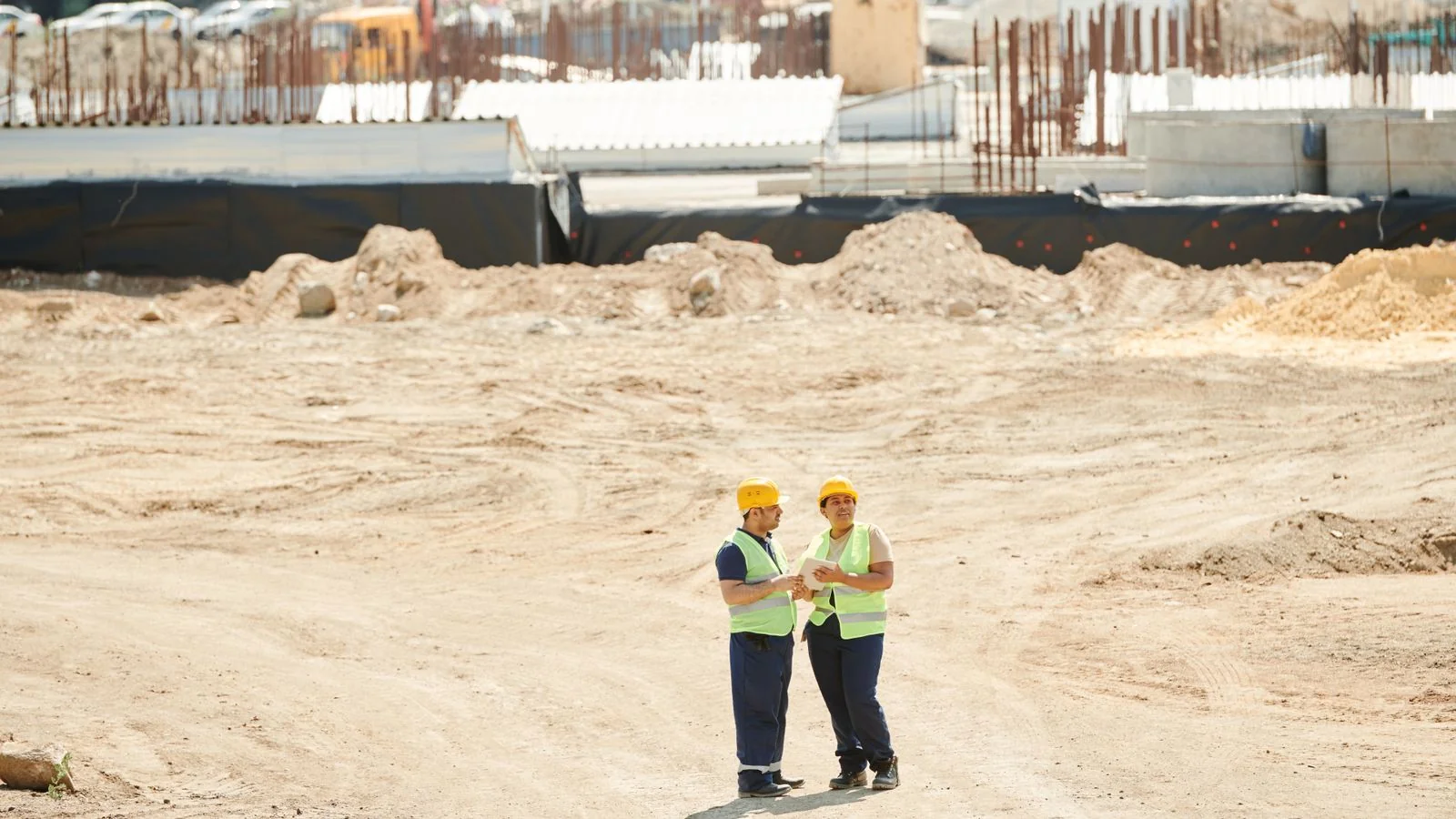
The profession produces the same five stories on a cycle, and each can be pitched with a Benchmark, a Bearing, and a Distance without touching a client file.
The boundary dispute is the obvious one, and the way into it is to comment on the public docket, never on your client’s survey. When a case hits the local court, pull the recorded plats for both parcels, look at what the record calls for, and offer the reporter a plain explanation of how a fence ends up eleven inches over a line both owners thought they understood. You are not saying who wins. You are explaining the mechanism, and nobody else in the story can.
The flood map story arrives whenever FEMA issues a preliminary map revision for your county, which is public and announced months ahead. Hundreds of homeowners learn at once that their lender will require flood insurance. The reporter needs someone to explain what an elevation certificate is, what it costs, and how a homeowner applies for a letter of map amendment. That is you, and the Distance is every affected street.
The technology story is the one reporters like most, because it comes with pictures. Drones, laser scanners, and GPS rovers photograph well. The Benchmark is a public project: a highway realignment, a bridge replacement, a downtown redevelopment where the scan data was part of a public submission. The Bearing is time and money saved for taxpayers. Keep the firm’s name in the caption and the explanation in the quote.
The historic monument story is the sleeper. Every county has original corners set in the 1800s, stones and pipes and blazed trees, and now and then a surveyor recovers one. Reporters love it. It is history, it is a treasure hunt, and it explains why the profession exists. The Benchmark is the original government survey notes, which are public. The Distance is the road that follows that line today.
The workforce story is the one your state society has been trying to get told for a decade: licensed surveyors retiring faster than new ones get licensed. The Benchmark is your state board’s own licensee data, which is public. The Bearing is longer waits and higher prices for anyone who needs a survey to close on a house. Pitch that one to the business reporter, not the features desk.
That is the list the title promised, and it is not the whole list. Easement fights over solar farms and pipelines, subdivision hearings, the county’s switch to a new parcel mapping system, the annual run of encroachment stories when spring fence-building starts: each one runs, and each one runs without a surveyor in it until you make the call.
Say it the way you would say it at the property line
When the reporter calls, she needs four things from you in the first two minutes, and the profession’s habits fight all four.
She needs a name. Not a spokesperson for the firm, a licensed surveyor with a title who will be quoted. Firms that worry about liability solve it the same way the Benchmark does: comment on the public record and on general practice, never on a specific client’s work. That leaves plenty to say.
She needs plain words. You would not tell a homeowner at the property line that the deed’s call is ambiguous as to the senior line. You would say the deed says one thing, the fence says another, and when they disagree, the older document usually wins. Say that to the reporter. You lose nothing in accuracy and you gain the quote.
She needs a most-likely answer. A surveyor asked how a fence ends up over the line wants to say it depends. Give her the honest most-common answer and one sentence on what would change it. She prints the answer, keeps the caveat, and calls you next time because you gave her something she could use.
She needs you now. Reporters remember the source who picked up on the first ring far longer than the one who promised a better answer tomorrow. Choose the two people in the firm who are best on the phone, put their names and direct lines on a page of your site labeled for reporters, and give each a short bio in English with no acronyms. That page, more than any pitch, is why attorneys get quoted and surveyors do not.
Make the first story the start of a beat
The first quote is worth little on its own. The value arrives when the next reporter, searching for background on a new dispute, finds your name in the last story and calls without being pitched. Getting there takes a week of follow-through most firms skip.
The day the piece runs, send the reporter a two-line note thanking her and naming one related story, Benchmark attached. Add the link to your for-reporters page. Post it once on LinkedIn with a sentence about the affected homeowners rather than the firm. Then find every outlet that covered land, property, or development in your area over the past year, the business journal, the public radio station, the county weekly, the state surveying society newsletter, and send each the same offer: a named expert, plain explanations, a phone that gets answered. A quote in a construction trade outlet reaches the engineers and developers who send you the work.
A newer reason to do this arrived with the chatbots. When a developer or a homebuyer asks ChatGPT or Gemini to name a licensed surveyor in your county with drone or flood certificate experience, the model builds its answer from what third parties have published about you. A firm quoted by name in two local stories and a trade outlet has a footprint the machine can verify and repeat. A firm with a clean website and no outside mentions gives it nothing to cite. That is why an agency like Instant Press treats press placement and AI-search visibility as a single job: the Benchmark you handed a reporter is the same evidence a machine needs. To get press for land surveyors now is also to get found by the tools clients ask first.
So go back to the truck on Thursday morning and the story about the pool deck four feet over the line. The reporter will write another one like it within the year, because she always does. When she pulls the docket and looks for someone who can explain how a line moves, whose name is she going to find?