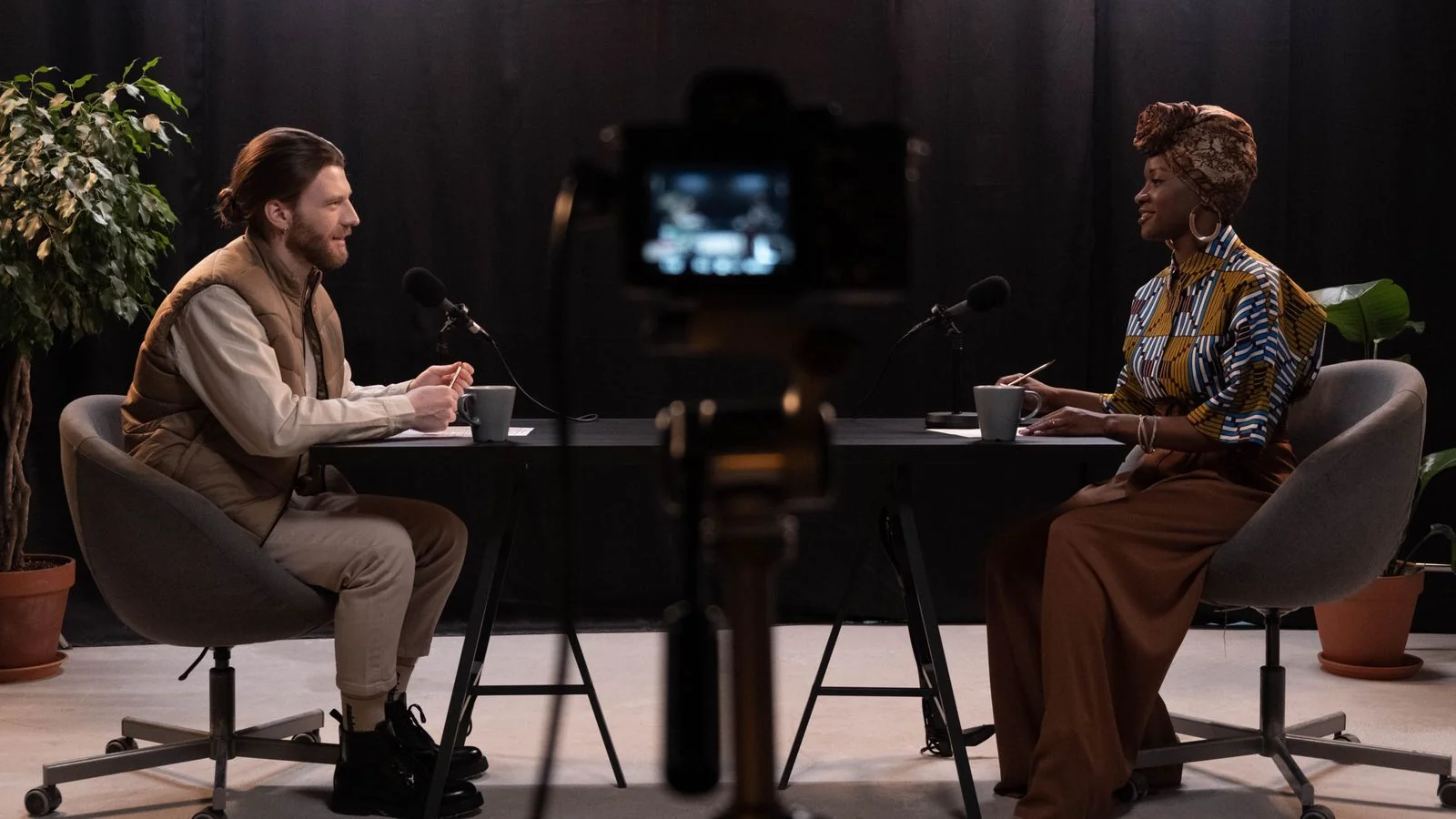
You get on The View the same way most guests get on any network talk show: a booker decides your story serves the day’s conversation, and someone they trust put that story in front of them. In practice that means a strong, timely reason to be there, a publicist, publisher, network or organization with a relationship to the show’s bookers, and proof that you can hold your own at a table of six opinionated hosts. Cold pitches from unknowns seldom work, but people with a sharp hook and real credentials do break through.
The stakes are worth understanding before you try. The View premiered in August 1997 as Barbara Walters’ idea, and in September 2026 it began its 30th season. ABC calls it America’s most-watched daytime talk show, and Nielsen figures reported by People put its season-to-date average at about 2.6 million total viewers. It airs weekdays at 11 a.m. Eastern on ABC and streams on Hulu and Disney+. The co-host lineup, Whoopi Goldberg moderating with Joy Behar, Sunny Hostin, Sara Haines, Alyssa Farah Griffin and Ana Navarro, has been together since 2022. That continuity means the hosts know each other’s rhythms, and you will be the one learning on the fly.
Here is how to get on The View, from who books it to how you prepare for a table that does not agree with itself.
How the booking process works
The show is executive produced by Brian Teta, and like every major daytime program it runs on a team of segment producers and talent bookers. The bookers are the people you are trying to reach. They fill the guest segments that follow Hot Topics, and they work from a mix of incoming pitches, ongoing relationships with publicists and publishers, and their own ideas about who the audience wants to hear from.
Look at a single week and the pattern is easy to read. In the week of October 19, 2026, the show hosted TV host Stephen A. Smith, actor Ice-T alongside author Collin Gosselin, and Lin-Manuel Miranda with his co-writer Eisa Davis. The following week brought author John Grisham, then Senator Mark Kelly paired with cookbook author Ayesha Nurdjaja. Almost every booking had a clear reason: a book out that week, a show premiering, a campaign underway. The View seldom books someone just because they are interesting. It books them because their reason to be on air lines up with the calendar.
That tells you who your messenger should be. Celebrities and authors arrive through publicists and publishing houses that pitch the show every season. Politicians arrive through their communications teams. Nonprofit leaders often arrive through their organization’s PR staff, timed to an awareness month or a major report. If you are a founder or executive with no existing relationship, your best route tends to be a publicist who already books daytime television and can vouch for you, or a partner organization whose news you are part of.
If you pitch on your own, keep it brief and make the reason obvious. Name the date your news breaks, the conversation it connects to, and the one thing you can say that no other guest that week can.
What makes a booker say yes
Bookers at The View are thinking about the audience first and the table second. The show’s own ratings announcements single out women 25 to 54 and women 18 to 49, which tells you who the audience is and who advertisers are paying to reach. A guest who speaks to their lives, money, health, family, work and the political stakes of the moment, has an easier path than a guest with a niche technical story.
The second filter is the table. The View is built on disagreement. The New York Times once called it the most important political TV show in America, and the Hot Topics segment that opens each episode is a daily argument among hosts with different politics, from Griffin, who worked in the Trump White House communications office, to Navarro and Hostin. A guest segment that gives several hosts something to react to is more useful to producers than one that only one host cares about.
The third filter is safety. Bookers need confidence that you will not freeze, ramble or say something that turns into the story instead of your message. Video of past interviews matters here more than any credential. If you have none, create some: a podcast appearance, a local TV hit, a recorded panel. Show a booker you can talk in tight, warm answers under pressure.
Put those three filters together and you have the real answer to how to get on The View. Your story has to matter to the women watching at home, it has to give more than one host something to say, and you have to look like a guest who will make the segment better rather than riskier. Most rejected pitches miss on the second filter. A founder pitches a product story that works as a one-on-one interview, and the booker cannot see how five other people join the conversation. Before you send anything, write down which two or three hosts would have the strongest reactions to your story and why. If you cannot name them, rework the angle until you can. A story about pay gaps, aging parents, school phone bans or the price of groceries gives the whole table something to argue about. A story about your software’s new feature does not, unless you tie it to one of those.
The Six-Seat Stress Test
Most media training assumes one interviewer. The View gives you up to six, each with a different worldview and a different reason to push on what you say. So I recommend a prep drill I call the Six-Seat Stress Test.
Write your three core messages first, the points you need the audience to remember. Then, for every seat at the table, write the hardest question that host might ask about your topic, based on how they have reacted to similar subjects on air. Watch a few weeks of episodes and the Behind the Table podcast, where the hosts go deeper on their own reactions, to calibrate. The moderator might steer you to the headline. A host who is a former prosecutor might test your facts. A host from the political right might challenge your premise from one side, and a host from the left from the other. A host who brings a personal, parenting or lifestyle lens might ask what your idea means for an ordinary family.
Then rehearse with six people, or one person playing six roles, firing those questions at you in random order with interruptions. The goal is not to win every exchange. It is to bridge each question back to one of your three messages in a sentence or two, without sounding defensive and without dodging.
The stress test catches the two failures that sink guests on panel shows. The first is answering only the friendly host and ignoring the skeptic, which reads as evasive on camera. The second is getting pulled into a fight on someone else’s topic, which turns your segment into a Hot Topics clip about the argument instead of your message. If you can stay warm, direct and on point when the toughest seat speaks, you are ready.
Prepare for a show where anything can happen
Even regular guest co-hosts describe The View as unpredictable. During Alyssa Farah Griffin’s maternity leave in early 2026, CNBC anchor Sara Eisen filled her seat for a stretch, and in remarks covered by Entertainment Weekly she said that working at the table was not quite what she expected after watching the show for years, praising how spontaneous it is. If a seasoned live television anchor found it different from what she saw at home, plan for it to surprise you too.
Build your answers short. Aim for 20 to 30 seconds per answer, then stop, because hosts will jump in. Practice handing the conversation back with a question or an invitation, which makes you seem generous rather than scripted. Know the day’s Hot Topics before you walk on set; read the morning headlines so you are not blindsided if a host ties your segment to the news.
Plan your look and your props with the producer. Ask what the segment will include, whether you will be at the table or in a separate interview area, and whether they want visuals. If you are promoting a book or product, the producer will handle the on-screen graphic in most cases. Your job is to mention it once, in passing, and let the conversation do the rest.
Last, have a plan for the clip. The View cuts segments for YouTube and social, and one exchange can travel far beyond the 11 a.m. broadcast. Assume every answer could become a 40-second video that strangers watch without context. Say nothing you would not defend in that form.
Build the credibility before you pitch
If the bookers are not interested yet, the answer tends to be that your story is not big enough or your profile is not clear enough. Both can change. Start with the media The View’s producers already watch: national print interviews, other network morning shows, top podcasts and respected trade publications in your field. Each appearance becomes proof that you are a safe booking and gives a publicist something to point to.
Time your push to a moment. A book release, a report your organization publishes, a cultural milestone or an awareness month gives a booker a reason to choose you this week instead of some other week. The calendar is the most underused tool in talk show pitching, and it is the one thing you control.
Write the pitch for a booker who reads hundreds of them. Open with the date and the hook in one sentence. Follow with who you are in one more, including the credential that makes you the right voice. Then give the booker the segment itself: the question the hosts will want to ask you, the surprising answer you will give, and why the audience at home will care. Link one clip of you talking on camera and stop. Anything longer than about 150 words gets skimmed, and anything attached gets ignored.
Send it well ahead of your moment. Talk shows plan guest segments days or weeks out, and a book release or report date that is already public gives a booker time to slot you in. Follow up once with something new, not a reminder.
Be honest with yourself about fit. Some stories belong on Good Morning America, a cable news hit or a podcast first, and a strong appearance there makes the next pitch to The View easier. Knowing how to get on The View includes knowing when you are not ready yet.
Keep your story human. The guests who land best on The View pair expertise with a personal reason for caring, something the hosts can connect to and the audience can feel. A statistic gets a nod. A story about why you started gets a conversation.
A booking that shows the formula
On October 1, 2026, with Sherri Shepherd sitting in as guest co-host, The View welcomed Amber Guild, president and CEO of Susan G. Komen. It was the first day of Breast Cancer Awareness Month. Guild discussed how her own breast cancer diagnosis shaped her mission to support patients and push research forward. The booking had every element in this guide: a nonprofit leader with a clear credential, a calendar moment that made the story urgent that week, a personal reason for caring that the hosts could connect to, and a topic that matters to the audience the show serves. She shared that episode with Harry Connick Jr., which tells you something else. With the right timing and story, a nonprofit CEO can share a stage with a celebrity on equal footing.