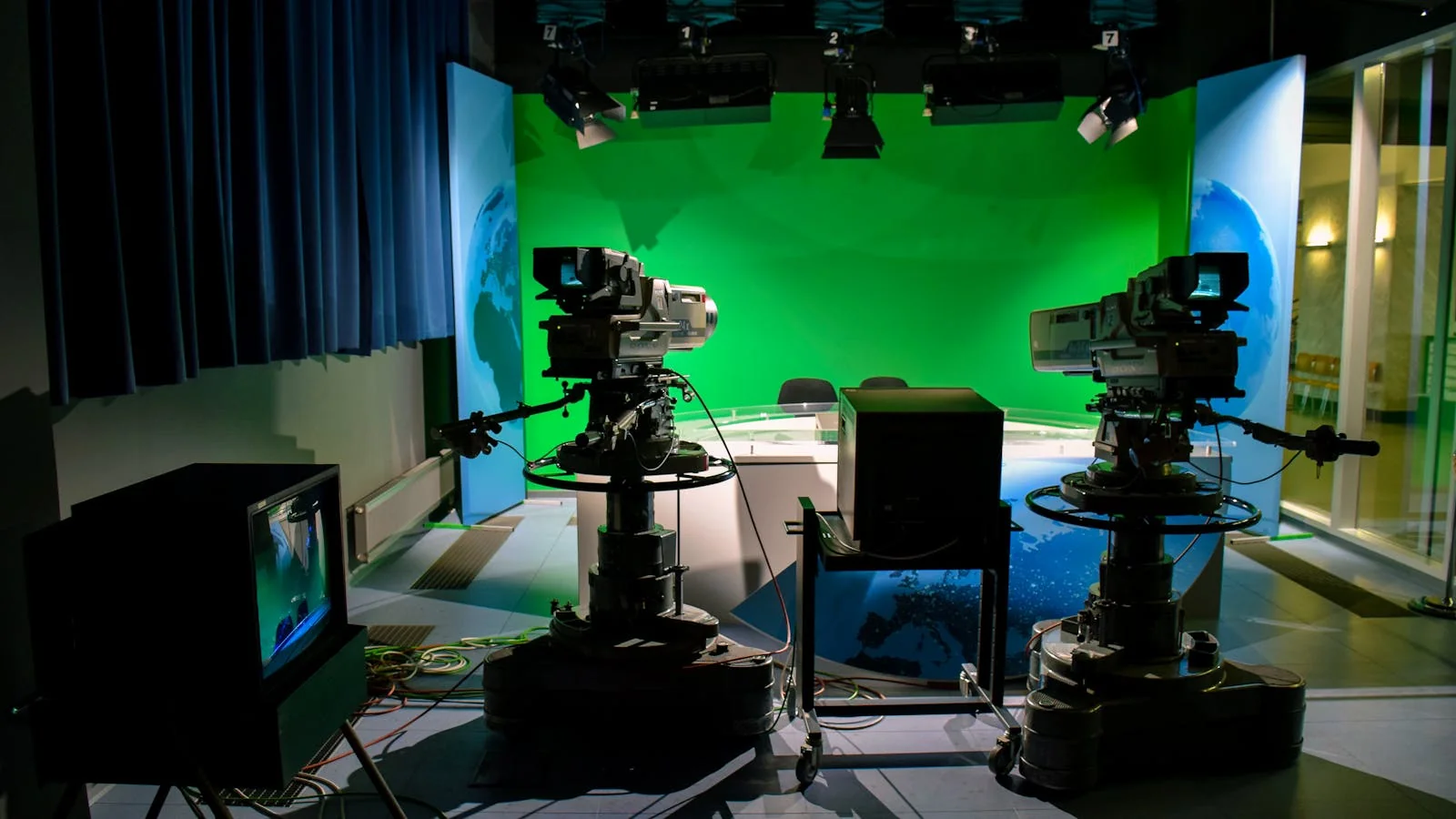
You watched Squawk Box this morning and the founder of a company smaller than yours, in a quieter category than yours, with a smaller round than yours, got six minutes with Andrew Ross Sorkin. You wrote down the producer’s name from the credits. You closed the laptop. You did not send the email. Why?
Because nobody told you how the booking actually works.
Here is what actually happens inside the CNBC newsroom each week. A producer team for each show holds a Tuesday morning meeting. They review pitch decks, news leads, guest carryovers from prior weeks, and a running list of regulars they want to refresh. By Wednesday at noon, they have a working week of guests for the next five trading days, with two or three swap slots held for breaking news. By Thursday at 4 PM, the swap slots are filled. By Friday morning, every show is locked.
That means there are roughly 12 to 18 expert guest slots booked across CNBC’s primetime and morning blocks each week, against an inbound volume of 350 to 450 pitches per producer team. The ratio is brutal. The pitches that survive share a very specific shape.
Why does CNBC pick this expert and not that one?
Three signals dominate the Tuesday booking meeting. The first is the news hook, meaning what is happening in the market that this guest can illuminate that today’s anchors cannot. The second is the production-ready signal, meaning the guest has done a remote hit before, has good lighting, has a wired internet connection, and will not get nervous on a hot mic. The third is the booker’s confidence that the guest will deliver a quotable line in the first 90 seconds, because a guest who buries the take past minute three gets cut from the next booking.
If you cannot evidence all three, you are not getting on. Most founders fail on signal two or three. Their pitch is built around signal one because they have read every guide on how to get on CNBC and they have all said “have a news hook.” A news hook gets you considered. The production signal and the quotable signal are what get you booked.
The fix for signal two is to have a 90-second remote sample of yourself on camera, well-lit, on Zoom or Riverside, that you can attach to any pitch. The fix for signal three is to write your TL;DR take into the body of the pitch in exactly the language you would use if the anchor asked the question on air. If your written take is dry, your on-air take will be drier.
What does a CNBC pitch actually look like?

The pitch that wins is roughly 110 words. The subject line is the news, not the guest. “Fed pivots, here’s the SMB lending data you have not seen” outperforms “Available expert: CEO of [Company] on Fed decision” by a factor I have watched on private analytics for three years.
The body opens with the take in the first sentence, fully formed. “30% of small businesses just pulled their Q3 expansion plans, and our $4.8B lending platform sees the delta in real time.” That is one sentence. It has a number. It has a category. It has a why-now. It implies a guest who can speak to it.
The second sentence introduces the guest in 12 words or less. “Jay Doe, CEO of [Company], has placed similar context for Bloomberg and the Wall Street Journal.”
The third sentence offers the production-ready hook. “Remote setup is studio-grade, hardwired Ethernet, available any morning this week between 6 and 10 AM ET.”
The fourth sentence is the closer. “Filing tomorrow if useful, or holding for next week if the data is better timed against the Fed minutes.”
That is the entire pitch. The release, the bio, the company background, the sample video, and the past-press list all live in a single PDF attached at the bottom. You do not put them in the email body. The producer skims the body in eight seconds and decides whether to open the PDF in the next 30.
When is the right time to send a CNBC pitch?
Pitches for the morning blocks (Squawk Box, Worldwide Exchange) land best between 3 PM and 5 PM ET the day before. The producer is sketching the next-day rundown during that window. Pitches that arrive after 7 PM are read but rarely re-routed.
Pitches for the daytime blocks (Squawk on the Street, Power Lunch, The Exchange) land best between 7 AM and 8 AM ET on the same day, when the producers are reacting to overnight news and looking for guests to add to the back half of the show.
Pitches for Closing Bell, Fast Money, and Mad Money are best Tuesday through Thursday morning before 10 AM. Friday afternoon is the dead zone. Sunday night is wasted; the inbox is full when the producer logs in Monday.
Use the producer’s name. Producer names are listed in the credits at the end of every segment and updated on LinkedIn faster than on the CNBC site. A pitch addressed to “the team” gets less attention than a pitch addressed to “Aly” or “Brent” or “Jen.” This is true for every show. The reason is human: people open emails addressed to them.
What kinds of guests does CNBC actually book?
Five categories dominate the expert guest mix.
The first is the founder with proprietary data. CNBC loves a chart you brought that nobody else has. A CEO of a fintech who can show what 4 million small businesses did with their checking accounts last week is more bookable than a McKinsey partner with the same opinion. Aravind Srinivas of Perplexity ran this play through 2024 and 2025, returning monthly with new query-volume data that nobody else could produce.
The second is the operator turned policy translator. If you ran supply chain at a major retailer and can translate the tariff news into shelf prices in 90 seconds, you are valuable. CNBC has booked the same retired logistics executives 40+ times because they deliver on cue.
The third is the bench economist. Independent economists and bank chief strategists get rebooked because they have a register that fits the network’s voice. If you are a founder, you are not in this category yet. You can become a version of it after enough hits.
The fourth is the contrarian with receipts. CNBC loves a guest who will go on air and say “everyone is wrong about this, and here is why,” provided the contrarian has been right at least once on the record. Vague contrarianism gets killed. Receipted contrarianism gets a recurring slot.
The fifth is the founder with a customer name nobody else will get on the record. If you can put a Fortune 100 CFO on speakerphone for the producer, you are uniquely valuable. This is the play most founders underuse. CNBC will trade a guest spot for access to a customer their reporters cannot get.
How do you turn one hit into a booking pipeline?
The first hit is not the win. The first hit is the qualifier. If you delivered, the producer’s team puts you in a Slack channel of “good bookings” that gets refreshed every quarter. Your job after the first hit is to make sure you stay in that channel.
Send the producer a one-line thank you within two hours of the segment. Not effusive. “Felt smooth, ready any time, here is one data point I did not get to that may be useful next week.” Attach the data point as a single chart, PNG, named clearly.
Within two weeks, send one more piece of original data, unsolicited, with no ask. The pattern signals you are a reliable source of fresh material. Sources who reliably feed producers good material get booked again. Sources who only show up when they want something do not.
Within 60 days, write a piece on your own site with an updated version of the analysis you delivered on air. Email the producer the link with a one-line note: “Closes the loop on the segment we did in May.” This gives the producer a reason to think of you when they are scrambling for a Q2 update.
Within 90 days, ask the producer to introduce you to one of the other producers on the floor, by name. This is the move that separates a one-hit founder from a CNBC regular. The introduction reads as professional, not pushy, because the relationship has already been earned.

Do publicists or agencies actually help?
Sometimes. Mostly they do not.
A good publicist has direct relationships with named bookers at named shows and gets your pitch read faster than a cold email. That is real. A good publicist also costs $8,000 to $20,000 a month and will not work on a contingency. If you have product-market fit and need to compress 12 months of media into three, a publicist is a tool.
A bad publicist sends mass emails to publicists@cnbc.com (which is not a real address) and reports back monthly that they have “made introductions.” The introductions are to other publicists. The producers never saw your name. You are spending $14,000 a month to be in a Mailchimp list of nobody who books anything.
The test for whether your publicist works is simple. Ask them to name the last three guests they have placed on a CNBC show, with the show name and the segment date. If they cannot do it in 60 seconds, you are paying for a slide deck.
The founder who got six minutes with Andrew Ross Sorkin last Tuesday did not have a publicist. He emailed the producer at 7:18 AM with a 94-word pitch and a single chart. The producer replied at 7:51. The segment ran at 8:12 the next morning. That is the actual path. Find your version of the chart, write your version of the 94 words, and send it on Tuesday at 7 AM next week.