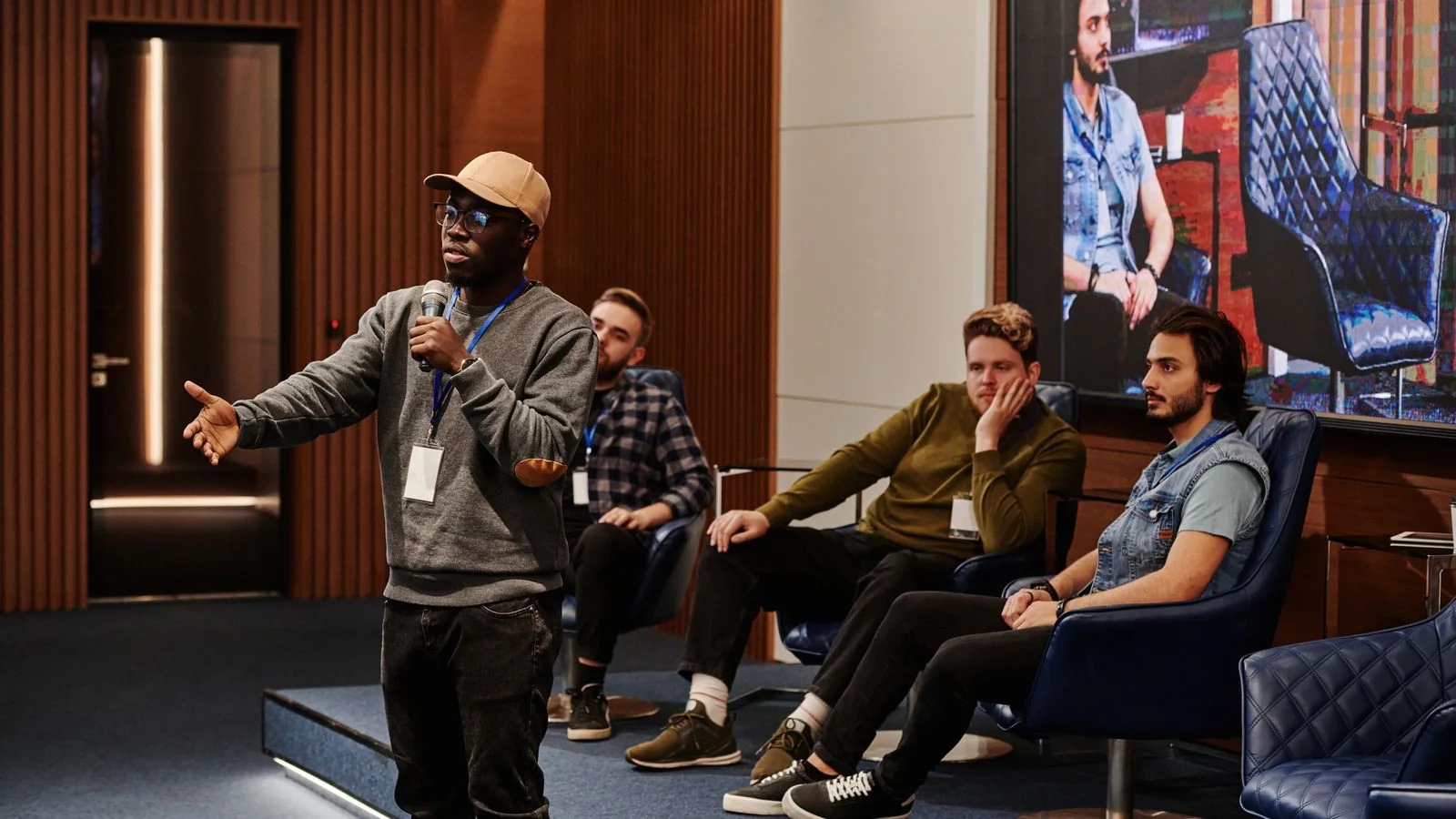
In 2019 I watched a friend with almost no public profile land a speaking slot at SXSW through the PanelPicker process, while better-known people in her field got passed over. She did not have the bigger audience. She had the better submission: a panel idea with a real tension in it, three named co-panelists who disagreed with each other on purpose, and a title that promised a fight worth watching. The bookers are not buying your résumé. They are buying ninety minutes that will not bore a room.
Why chase panels at all when you could just buy ads or post more content? Because a panel seat is borrowed authority. When an event puts you on stage next to recognized names, it transfers some of its credibility to you in front of an audience that already trusts the event’s judgment. A recorded session becomes a clip you use for years, a credential in your bio, and a signal to the next, bigger event that you belong on a stage. One good panel can do more for your standing than months of self-promotion, because the endorsement comes from someone other than you.
That experience reorganized how I think about getting on a panel show. The seat does not go to the most accomplished person. It goes to the person who makes the organizer’s job easier and the session more interesting. Here are five rules that follow from that, in the order you should apply them.
Rule one: solve the booker’s problem, not yours
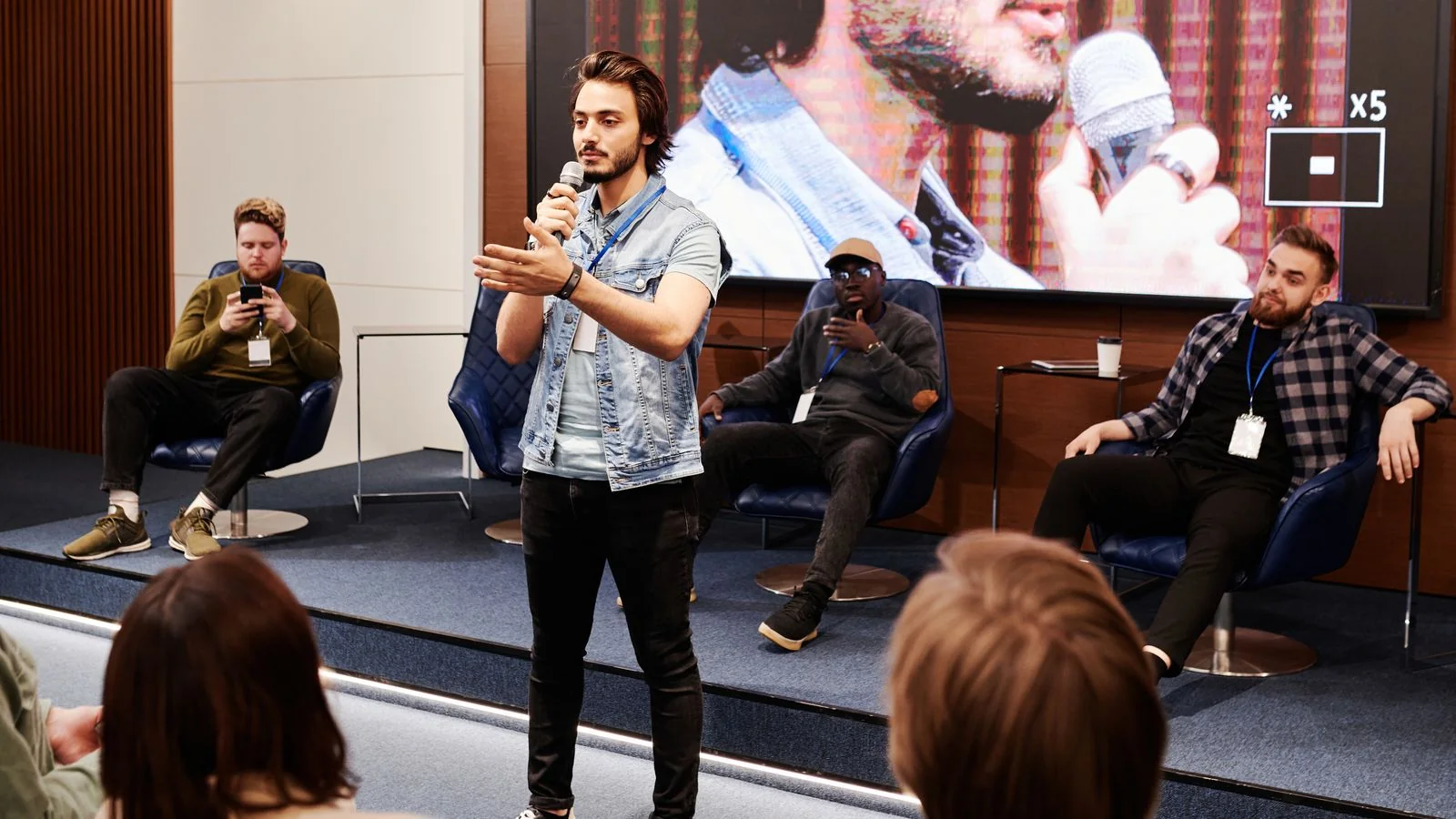
The person assembling a panel has one nightmare: a dull session that empties the room and embarrasses the event. Everything they decide flows from avoiding that. When you pitch yourself as “an expert who would love to share insights,” you have handed them work and risk. You are one more unknown they have to vet, shape, and hope does not flatline on stage.
Flip it. Arrive with the session half-built. Propose the actual topic, frame the specific tension the audience cares about, suggest the other voices that would make it crackle, and offer a title that sounds like something a person would skip lunch to attend. Now you are not a favor to grant. You are a solution to the booker’s problem, and you have demonstrated you understand what makes a panel work. That single shift moves you ahead of every applicant still talking about themselves.
The tension is the part most people leave out, and it is the part that sells. A panel where everyone agrees is a press release with chairs. A panel where a practitioner, a skeptic, and someone who tried it and failed sit side by side is a session people stay for. When you pitch, name the disagreement on purpose: “three operators who took opposite bets on the same problem, and what it cost each of them.” You are handing the booker a promise of friction, which is what keeps a room awake and what makes attendees rave afterward. Frame yourself as one corner of that triangle and you become structurally necessary to the session, not an interchangeable talking head.
Notice what you are doing for the organizer at a deeper level. You are reducing their cognitive load. Every booker is juggling speakers, sponsors, logistics, and the fear of a flat program. The pitch that arrives with the topic framed, the co-panelists named, and the title written removes three decisions from their plate. People remember who made their job easier under pressure, and they reward it with the seat.
There is one more move that quietly separates you from every other pitch: bring the other panelists yourself. If you suggest two named experts who would round out the conversation, and better still, confirm they are interested before you pitch, you have not applied for a seat. You have delivered a finished session the organizer can approve in one reply. Bookers spend enormous energy assembling a balanced lineup, chasing busy people across weeks of email. Hand them three confirmed voices with built-in tension and you have done the hardest part of their job for them. That is the pitch that does not just get you on the panel. It often gets you named as the moderator, which is the most valuable seat in the room.
Rule two: bring proof you will not freeze
Bookers are risk-averse because the stakes are public. A bad speaker cannot be edited out in real time. So before they say yes, they want evidence that you can hold a room. Give it to them without being asked. A ninety-second clip of you speaking, even from a webinar or a podcast video, does more than any list of credentials. It answers the only question that actually worries them: is this person watchable.
If you have no clip, manufacture one. Record yourself answering a sharp question in your field, clean and tight, and host it somewhere shareable. Get on a few podcasts first, because audio with video is the modern speaking reel. Each appearance becomes proof for the next, larger one. The progression compounds: a local roundtable becomes a clip that lands a regional panel, which becomes a clip that lands a national stage. Nobody starts at the top, and the bookers know it. They just need to see you can do the size you are asking for.
What the clip really proves is not eloquence but composure. Bookers have been burned by experts who are brilliant on paper and stiff on stage, and a thirty-second window of you speaking calmly to a camera settles that fear faster than any bio. Keep it short. Nobody watches a ten-minute reel from an unknown. They watch the first thirty seconds, decide, and move on, so put your most engaging moment at the very front.
There is a credibility ladder hiding in this rule. A webinar clip qualifies you for a podcast. A podcast video qualifies you for a local panel. A local panel recording qualifies you for a regional stage. Each rung produces the artifact that opens the next, which means your first goal is not the dream stage. It is the next clip. Treat every small appearance as a deliberate step that generates proof, and the bigger seats become reachable in a way they never are when you pitch them cold with nothing to show.
Rule three: pitch the producer, weeks before you think you should

The single most common reason qualified people miss panels is timing. By the time an event is on your radar, the lineup is often locked. Roundtables, conference panels, and broadcast segments get assembled weeks or months ahead, and the producer fills the seats long before the marketing tells the public the event exists.
So get earlier in the chain. Identify the events in your field and find the actual human who books talent: the producer, the program chair, the content lead. Their name is usually findable through last year’s program, LinkedIn, or a direct email to the general inbox asking who handles speakers. Reach out before the call for speakers, not after. A short, specific note that names a session you could anchor and includes your clip will sit in front of the right person at the moment they are actively building the lineup. Keep that first email short and specific, because producers, like everyone else who books talent, skim. Two or three sentences: the session you would anchor, the tension it carries, a link to a clip, and a line on the audience you would bring. A long, self-promotional message buries the one thing the producer needs to evaluate, which is whether your idea makes their program better. Respect their time in the pitch itself and you signal that you will respect it on stage, which is exactly the reassurance a nervous booker is looking for. Being first in the inbox beats being most impressive in a stack of late applications.
Build a simple calendar to make this systematic. List the ten events you most want to be on, then note when each one assembled its lineup last year, and reach out roughly two months before that date this year. Most annual events run on predictable cycles, so last year’s timing is a reliable map for this year’s window. The person who shows up two months before the lineup forms is a planning partner. The person who shows up the week applications open is one of fifty. Same pitch, completely different reception, decided entirely by when it landed.
The SXSW PanelPicker model is worth studying even for events that do not use it, because it makes the hidden logic visible. Submissions there compete on the strength of the idea, the clarity of the framing, and the draw of the co-panelists, and the ones that win read like finished sessions rather than speaker applications. Whether the event uses a public picker or a private inbox, the winning move is the same: hand them a session, not a résumé, and hand it to them early.
Rule four: make co-promotion part of the offer
Every event lives or dies by attendance, and the organizer carries that pressure. When you pitch, fold in what you will do to fill the room. You will promote the session to your list, post about it, bring your audience. This does two things at once. It reduces the organizer’s biggest secondary worry, and it quietly signals that you have an audience worth having, which raises your value as a panelist.
You do not need a huge following for this to matter. Even a modest, engaged audience that reliably shows up is an asset to a booker counting heads. The point is that you arrive as a partner in the event’s success, not a guest expecting to be hosted.
Be concrete about what you will do, because vague promises to “help promote” carry no weight. Tell them you will send it to your email list of a specific size, post about it on the channels where your audience lives, and bring a named number of attendees. Specificity reads as reliability. And then follow through visibly, because the booker who watches you actually drive attendance to this event will book you again for the next one without a second thought. The first panel is an audition for becoming a repeat speaker, which is where the compounding really lives.
Combine all four rules and you stop being a hopeful applicant and become the obvious choice: a half-built session with real tension, a clip that proves you can hold a room, an email that landed before the lineup locked, and a concrete promise to fill seats. Send the note this week to the one event you most want to be on next quarter, address it to the person who actually books the seats, and lead with the session, not yourself.