
Serious Eats reaches a total audience of 9.5 million and has published about 7,000 rigorously tested recipes, according to the brand’s profile on the People Inc. site. That same page lists five wins for the IACP Best Culinary Website award. Those numbers explain why founders, chefs, and kitchen brands want in, and they also explain why most pitches fail. A site that has tested 7,000 recipes does not need your recipe. It needs a reason that only you can give.
The Serious Eats homepage carries the tagline “Good cooks know how. Great cooks know why.” Your pitch has to answer the second half of that line. If you want to know how to get featured on Serious Eats, treat that tagline as the brief, since it sums up what the editors publish. This post covers how to get featured on Serious Eats in 2026, who owns it, how its editors test, what they accept, and a scoring model you can run on your idea before you send it.
A quick status check first. Ed Levine founded Serious Eats in 2006. Dotdash bought it in 2020, and the parent company, Dotdash Meredith, rebranded as People Inc. on July 31, 2025. People Inc. is a wholly owned subsidiary of IAC, per its 2025 financial statements. Daniel Gritzer, who joined in 2014 as culinary director, describes himself in 2026 as the editorial director overseeing recipe development, product reviews, and coverage of technique, food science, and culture.
How Does Serious Eats Test a Recipe Before It Runs?

Start here, because the testing method is the whole editorial product. The Serious Eats About page says each recipe “is methodically tested and tasted, over and over again” by recipe developers and crosstesters, all of them skilled culinary professionals. The team does not publish a new recipe until it believes the version is the best one out there, and it revises old recipes as testing and reader feedback turn up improvements.
The editorial guidelines frame this as a belief that “science is one of the strongest tools in the kitchen,” paired with a warning that you can’t science your way to a great recipe without understanding the dish first. The guidelines commit to original, tested, and tasted recipes that explain why each method and ingredient choice works. They also ban content generated by AI writing tools. The site wants writing “by humans, for humans,” with the testing shown on the page.
That last part changes how you pitch. Serious Eats readers expect to see the failed batches. A story about the best way to cook a steak walks through the methods the writer tried, what happened with each, and why the winner won. J. Kenji López-Alt’s Food Lab column worked this way, and Food52 still cites his 15-minute vegan tomato soup as one of the smartest recipes he developed there.
So if you are a chef or a food founder, your pitch has to promise the same kind of evidence. “My grandmother’s brisket is the best” gets deleted. “I braised brisket 11 ways over two months, and wrapping it in butcher paper at hour four beat foil on bark and moisture” gets read. The second pitch tells the editor what the test was, what you measured, and what the reader learns. You don’t need a lab. You need notes, controls, and a result you can defend.
Credentials help when they connect to the claim. A pastry chef who has laminated dough in a hot restaurant kitchen for a decade can pitch a piece on butter temperature with authority. A DTC brand founder pitching the same story has to borrow authority by testing in the open and citing sources. Serious Eats says it brings in outside experts when it lacks the expertise on staff, so a credible expert with a clear specialty is a real asset to an editor.
Pitch the Sections Serious Eats Is Buying
The Write for Us section is short and specific. Serious Eats says it is always looking for new writers, recipe developers, equipment reviewers, and photographers. It currently accepts pitches for recipes, technique-driven service articles, and features such as food science, personal essays, and food histories. Send a short bio and your relevant experience to contact@seriouseats.com.
The same page lists what it is not buying. Serious Eats is not taking pitches for restaurant reviews or dining-out roundups, and it does not accept unsolicited guest posts. If you are a restaurant publicist hoping for a review of your client’s new opening, this is the wrong outlet for that ask. You would do better pitching the chef as the expert behind a technique story, such as how the kitchen gets a pizza crust that blisters at home-oven temperatures.
Max Falkowitz wrote the site’s long-running guide, “So You Want to Pitch a Food Article?”, last updated May 2, 2023. He says to find a publication’s submission guidelines and “follow them to the letter,” and to research both the outlet and the editor before you write. The guide lists editor@seriouseats.com as the general inbox and suggests writing to a specific editor from the masthead. The About page’s contact@seriouseats.com address is the more recent instruction, so lead with that and check the masthead for the editor who covers your beat.
Falkowitz also spells out the writers Serious Eats wants. He names “smart, savvy writers” who can speak with authority about the most delicious food where they live and make regional food relevant to a national audience. He wants experts with opinions. And he wants “curious thinkers who pose the non-obvious questions about how food works and why it’s important.”
Read that list as a filter. A regional food angle needs a national hook. An opinion needs expertise behind it. A question has to be one the reader hasn’t asked yet. Your pitch should hit at least one of the three in the first sentence, then show the test or the reporting that backs it up. Keep it to a few short paragraphs, link two or three clips, and say what the reader will be able to do after reading.
What Serious Eats Equipment Reviews Mean for Your Product
The homepage counts about 1,000 gear guides and reviews, and the product side runs on a strict process. Serious Eats’ How We Test Products page describes the team as “allergic to marketing pitches and wary of trends.” The editors decide what to test, consult outside experts when needed, then buy products or request testing samples. Their policy is plain: “When we receive samples, there is never promise of coverage, positive or negative.”
Testing happens in a dedicated lab in Birmingham, Alabama, with four test kitchens and more than 10,000 square feet for side-by-side evaluation, plus a network of expert testers who use products at home. Your skillet, knife, or blender will sit next to its competitors and go through the same tests.
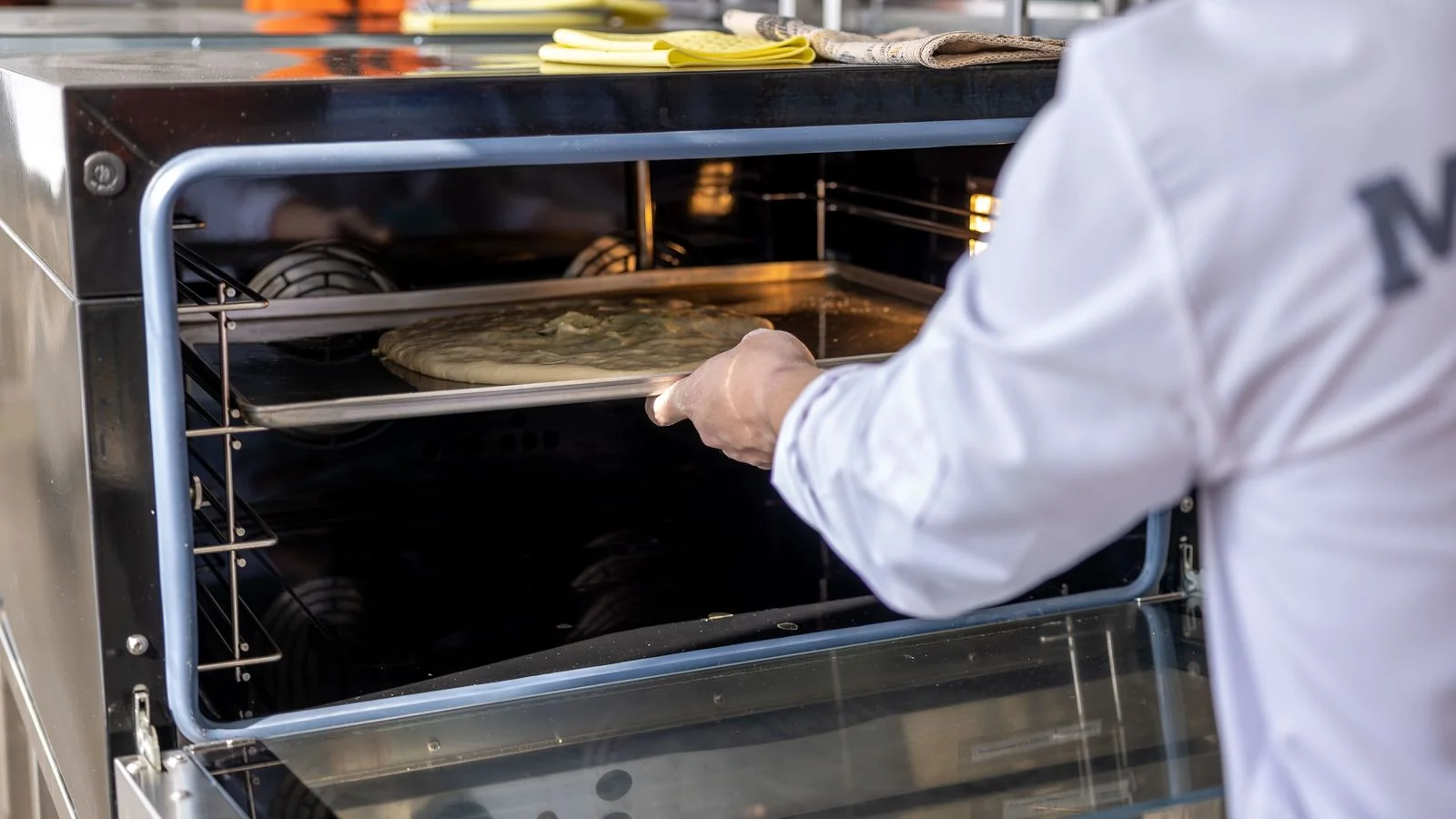
The outdoor pizza oven roundup, updated April 2026, shows what that looks like. Testers used an infrared thermometer to measure the stone at several points as each oven heated, then baked an ‘nduja pizza in every oven with dough built for high heat, timing each bake and checking the stone between pies. The data is specific. The Gozney Roccbox hit nearly 750°F at 14 minutes and 898°F at 30, while the Ooni Koda 16 reached 906°F at 20 minutes. The top pick was the Ooni Koda 2 Pro, credited for its extra-large opening and a digital temperature display. In a separate review of the Ooni Volt 2, senior editor Grace Kelly reported that the indoor oven hit 800°F in 21 minutes.
For a kitchen brand, three lessons follow. First, a review is not something you can pitch your way into. You can tell the right editor your product exists and offer a sample, but the test decides the outcome. Second, your spec sheet should state numbers the testers will verify, because they will. If you claim 950°F, expect a thermometer on the stone. Third, the fastest route to coverage is often a product category the team hasn’t reviewed yet or a meaningful new model, since roundups get updated when the field changes.
When you do write to the equipment team, keep the note short and factual. Name the category, the model, the price, and what changed from the last version. Offer a sample and say in writing that you expect no coverage in return, because that matches the site’s own policy and tells the editor you read it. Skip adjectives like “groundbreaking” and “best-in-class.” The testers will decide what the product is, and a note that reads like ad copy works against you.
Founders with a strong product and no review should pitch the technique around it rather than the product itself. A cast iron maker can offer an expert who has seasoned thousands of pans for a story on seasoning myths. If the reporting is good, the product earns a mention on its merits, or a later test.
Score Your Pitch With the WHY Score Before You Send It
Here is a scoring model built from everything above. Call it the WHY Score, after the tagline. It rates a pitch on three questions, each from zero to three, for a total out of nine.
W is for Why it works. Does your pitch explain a mechanism? Zero means you have a claim with no reason (“our sauce is the best”). Three means you can name the cause (the starch in pasta water emulsifies the fat, so the sauce clings), and the cause is something readers can apply elsewhere.
H is for How you tested it. Zero means you have no evidence. One means you cooked it a few times. Two means you ran variations and kept notes. Three means you tested against controls, measured something (weight, temperature, time, a blind taste), and can show the losing versions.
Y is for Your standing to say it. Zero means you have no relevant experience. Three means you have done this work for years, professionally or at serious depth, and the editor can check it through clips, a restaurant résumé, a book, or a body of published recipes.
Send pitches that score seven or higher. At five or six, find the weak letter and fix it, most often by running more tests or bringing in a credentialed coauthor. Below five, the idea belongs on your own blog, newsletter, or social channels, where you can build the evidence Serious Eats will later want to see.
Apply it to the brisket example. The butcher paper pitch scores a three on W (it explains moisture and bark), a three on H (11 methods over two months), and somewhere between one and three on Y depending on who sends it. A pitmaster scores nine. A food startup founder might score seven, which still clears the bar.
If you are building a target list beyond Serious Eats, our free journalist list at Instant Press covers food and drink editors worth knowing.
To recap: People Inc. owns Serious Eats, Daniel Gritzer leads it as editorial director, and the site publishes only what it has tested. Pitch recipes, technique service pieces, and features to contact@seriouseats.com with a short bio. Skip restaurant reviews and guest posts. Expect your product to face a thermometer, not a press release. And before you hit send, make sure your idea answers why, shows how you know, and proves you are the person to say it. That is how to get featured on Serious Eats.