
It is a Tuesday, the night off, and you finally type your own name into Google. The first result is your restaurant’s Business Profile, with the hours and the map pin and a review complaining about the wait for a table. Below it sits a reservations page, a four-year-old opening announcement that spells your surname wrong, and an Instagram account. On the right side of the screen there is either nothing at all, or a panel for somebody else who shares your name, maybe a footballer or a dentist in Ohio.
Your food has been reviewed. You were on a regional best-chef shortlist once. A publisher has your cookbook proposal. And as far as Google’s structured understanding of the world goes, you do not exist as a person. You exist as a property of a building.
That gap is what this guide closes. The restaurant can have its own panel, and we covered that separately in the restaurant version of this process. This piece is about the other entity: you, the chef, as a human being whose career will outlast any single dining room.
Why Google Shows Your Restaurant Instead of You
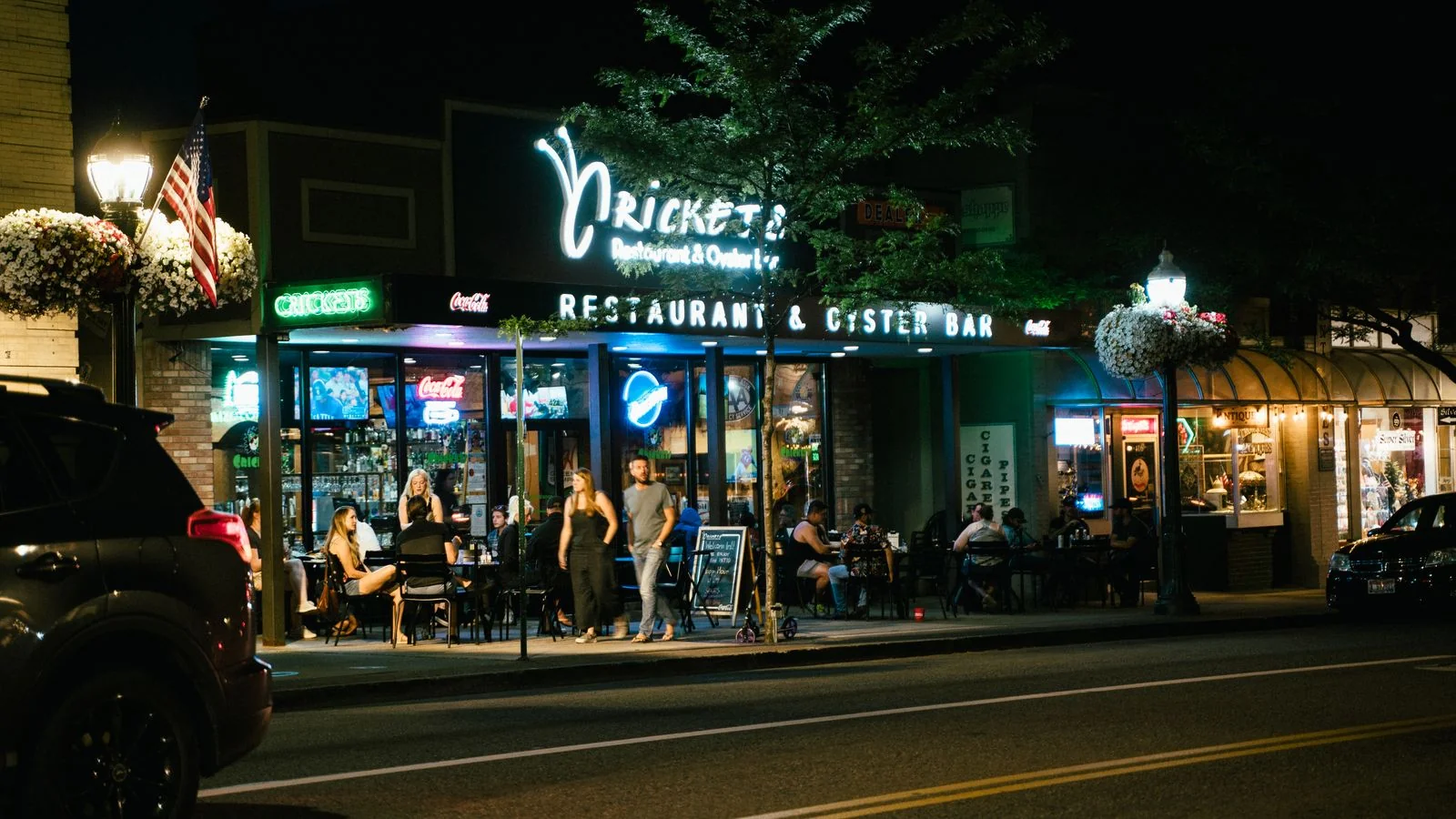
Google’s Knowledge Graph stores entities by type. A restaurant is an organization with an address and opening hours. A chef is a person with a birthplace, an education, awards, books and a list of places they have worked. These are separate records, and a knowledge panel only appears when Google is confident enough about one specific record to show it.
Most chefs never cross that threshold because almost everything written about them is written about the restaurant. A review says “the kitchen at Hearth does remarkable things with a wood fire,” and the chef’s name appears once, in passing. Google reads that coverage and strengthens the restaurant entity. The person behind the stove gets a mention, not a profile.
This matters more than vanity. Chefs leave partnerships, open second concepts, write books and appear on television, and every one of those moves strands the reputation you built inside an entity you no longer control. A Google knowledge panel for chefs is the portable version of your career, the record that follows you from one kitchen to the next and that AI assistants read when somebody asks who you are.
Google says this plainly in its own help documentation. Its guidance on verification tells local businesses serving customers at a location to use a Business Profile instead, because knowledge panels and Business Profiles look similar but cover different kinds of entities. Your restaurant belongs in the first system. You belong in the second.
The Pass Check: Five Stations for a Chef Entity
Every plate in a serious kitchen crosses the pass before it reaches a guest, and somebody checks it against a standard. We use the same idea for chef entities. We call it the Pass Check, and it has five stations. Our working rule is that four cleared stations give Google real corroboration for a person entity, and one or two leave you relying on luck.
Station one: the reference record. Is there a Wikidata item for you as a person, typed as a human, with your occupation, and with statements that carry references to published sources? Wikidata is the open database Google and most AI systems read as a backbone, and it is the cheapest station to clear if you already have coverage.
Station two: the institutional credential. Has a body with its own authority recognised you by name? The James Beard Foundation’s chef categories name individuals. Culinary schools publish alumni profiles. National chef associations and competition organisers publish winners. One named credential from an institution that maintains its own records outweighs a dozen mentions in listicles.
Station three: the authored work. Do you have a book, with you listed as author, on a publisher’s site and in the catalogues Google reads? A cookbook is one of the strongest person signals a chef can produce, because the author field is structured data by design. Publisher author pages, library catalogue records and Google Books entries all describe you, not the restaurant. Our notes on how Google Books feeds knowledge panels cover that pipeline in more depth.
Station four: press that profiles the person. Has at least one publication written about you as the subject, with your background, your training and your career path? A profile, an interview, a podcast episode built around you.
Station five: the entity home. Is there one page on the web, which you control, that states who you are in Person markup and links outward to every station above? This is where you tell Google which footballer you are not.
Run the check honestly before paying anyone who promises a Google knowledge panel for chefs. The common pattern is station four half covered, station five missing entirely, and no idea whether station one exists.
What Does Wikidata Need From a Chef?
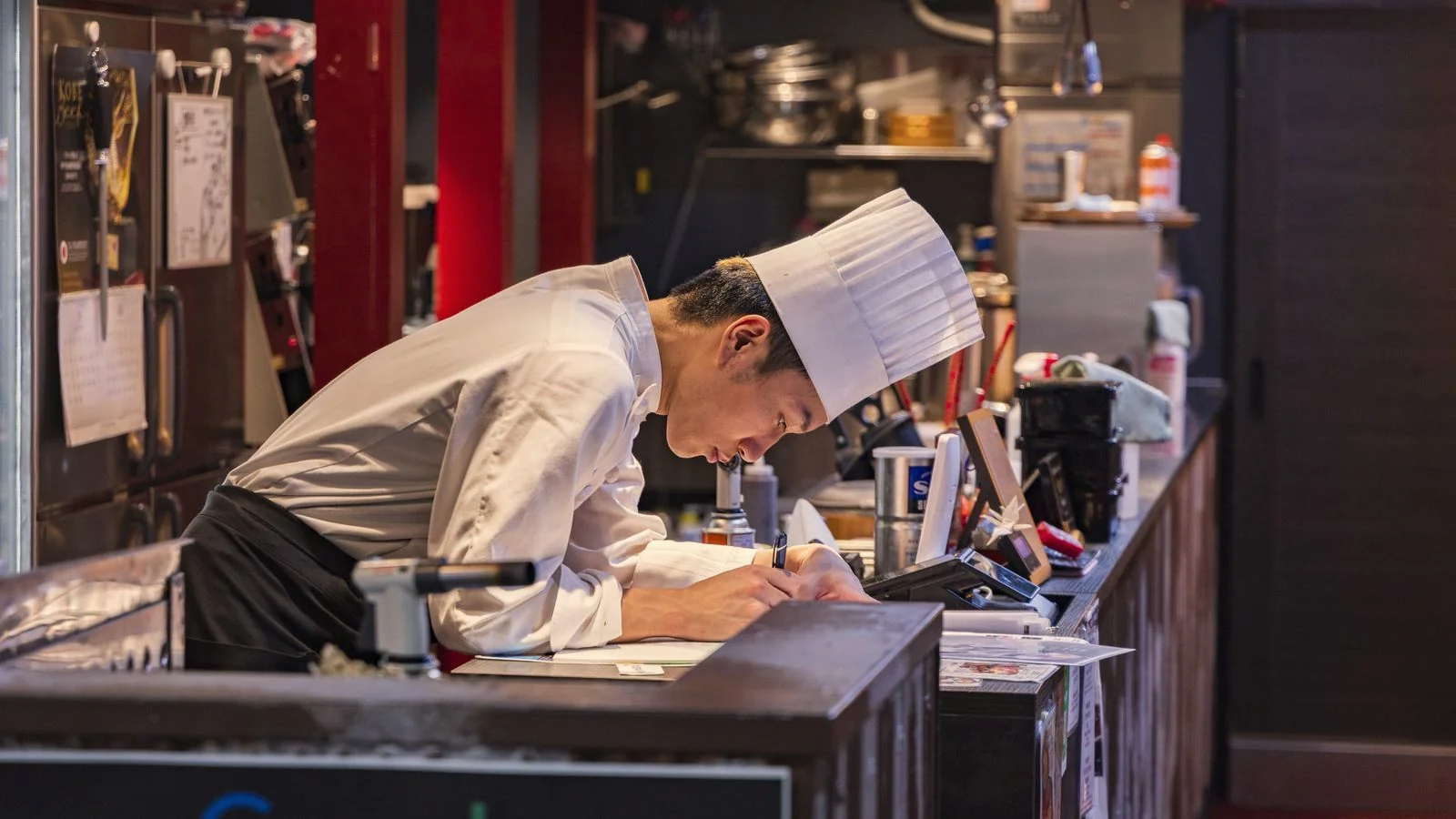
Wikidata does not require a Wikipedia article. Its notability policy accepts items that refer to a clearly identifiable entity described by serious, publicly available references. For a chef, a James Beard nomination, a published cookbook and two profiles in established outlets usually satisfy that standard. Wikipedia’s bar is much higher.
The statements on the item are where chefs leave value on the table. Occupation should be specific, and here is a detail most people miss: Wikidata keeps “cook” (Q156839) and “chef” (Q3499072) as separate items, the first described as an occupation involving cooking food and the second as a person who directs the preparation of meals. Pick the one that matches how the press describes you, and add both if both are accurate.
Then the statements that do the real work. “Award received” (P166) should list each named honour with a point in time and a reference to the awarding body’s own page. “Employer” (P108) should name your restaurants as separate items, which links your person entity to your restaurant entity without merging them. “Notable work” (P800) should point to your cookbook. “Official website” (P856) should point to your entity home. Social identifiers such as the Instagram username property (P2003) let Google match your accounts to you rather than to a namesake.
Award bodies deserve their own note because chefs routinely confuse what each one is evidence of. A James Beard Award in a chef category is awarded to a person, and the foundation publishes the winner’s name alongside the restaurant. Michelin stars are different. The Michelin Guide awards stars to restaurants, and a starred kitchen is a fact about the restaurant entity even when every article about it leads with the chef. You can and should reference Michelin recognition through the employer link, but a person entity built only on a restaurant’s stars is borrowing credit, and it collapses the day you leave.
A word on editing. Wikimedia’s conflict-of-interest norms discourage people from writing about themselves without disclosure. The clean route is to have a publicist or a knowledgeable friend add statements, each one with a reference, or to disclose your connection on the item’s talk page. Unreferenced statements get removed. Our walkthrough on getting onto Wikidata covers the mechanics.
Person Markup, sameAs, and Then the Claim
Station five is the one you fully control, and it is the station that makes a Google knowledge panel for chefs land on the right person. It is usually a single page: an About page on your personal site, or a dedicated chef page on the restaurant site if you own the restaurant and plan to stay. It needs Person schema in JSON-LD with your full name exactly as it appears on your book cover, a jobTitle, a worksFor pointing at the restaurant as a separate Organization, alumniOf for your culinary school, award for each named honour, and an image that is a photograph of you rather than of your dining room.
The sameAs array is the property that ties the stations together. It should list your Wikidata item URL, your Wikipedia article if one exists, your author page at your publisher, your page at any awarding body that publishes one, your Instagram, and any video or podcast profile that is clearly yours. Every URL in sameAs is a claim that this other record describes the same person. One wrong link to a namesake’s profile undoes a lot of good work.
Then reciprocate. The restaurant’s Restaurant schema should name you as founder or employee, using the same name string and the same entity home URL. Two pages describing two entities that point at each other is exactly the structure Google needs to keep you separate and connected at once.
Once a panel appears for you as a person, claim it. Google’s process is short. Sign in to a Google Account, search your name, find the panel, and click “Claim this knowledge panel,” which sits at the bottom of the panel or in its About section (on mobile, in the menu). Google then asks you to sign in to one of the official profiles it has associated with you, and its help page lists YouTube, Search Console, Twitter and Facebook. If Google cannot link any of those sites to you, it asks for more information to confirm your identity. Google’s own announcement from June 2018 states that any person with a knowledge panel is eligible.
Verification gives you the ability to suggest factual corrections and propose a featured image, plus a Contributor studio where you can add a manager or contributor, which is useful if your publicist handles this. It does not give you control of the description, which Google draws from sources. If a panel you believe is yours is already managed by somebody else, Google’s account recovery route notifies the current owner, who has three business days to respond before the panel becomes claimable again. And not every panel shows the claim button straight away, so check back periodically rather than assuming you are ineligible.
Reading a Real Chef Entity: Mashama Bailey
The clearest way to see the Pass Check work is to run it against a chef whose record is public. Mashama Bailey, executive chef and partner at The Grey in Savannah, Georgia, is a good case because her career shows every station and her structured data shows a gap.
Station two is strong. The James Beard Foundation’s own archive lists her as the 2022 winner of Outstanding Chef for The Grey, and her Wikipedia article records the 2019 James Beard Award for Best Chef: Southeast. Station three is covered by Black, White, and The Grey, which she wrote with her business partner John O. Morisano and which Lorena Jones Books published on January 12, 2021, and Penguin Random House maintains an author page for her. Station four is covered by years of profiles, plus a featured episode in the sixth season of Netflix’s Chef’s Table. Her career has also already moved beyond the original building: in 2025 she and Morisano opened L’Arrêt by The Grey in Paris’s 7th arrondissement, which is exactly the kind of move a person entity survives and a restaurant entity does not.
Now station one. Her Wikidata item, Q62066055, describes her as an “American chef” and types her as a human. It carries a Google Knowledge Graph ID, a strong sign that Google holds a person entity for her. It also carries her Instagram and X usernames, her IMDb identifier and three schools, including the Institute of Culinary Education. When we pulled the item on November 3, 2026, it had no “award received” statements, no “notable work” pointing to her book, no “employer” link to The Grey and no “official website.” Its occupation was “cook,” not “chef.” And the lead image Wikipedia returns for her article is a photograph of The Grey’s building, not of her.
None of that is a criticism of Bailey. It shows that even a two-time James Beard winner with a book, a Netflix episode and a Wikipedia article carries a reference record missing the statements that state her credentials in machine-readable form. If her Wikidata item can be thin, yours almost certainly is. Run the five stations against your own name tonight, start with whichever one is empty, and give Google a person to find the next time you search.