
You search your own name on a Tuesday night, half expecting to see your new novel. Instead Google shows a Books row with a cookbook you never wrote, a 1987 poetry collection by someone who shares your surname, and a blank gray square where your author photo should be. Or worse, nothing. No panel, no carousel, just your Goodreads page on result four and a podcast you guested on two years ago.
That moment is almost always a metadata problem, not a fame problem. Google is not ignoring you. It is uncertain about you, because the records describing your books disagree with each other about who wrote them. Your Google Books author page, the “About the author” block on Play Books, the ISBN records your publisher filed, and the library authority files that catalog your work all feed the same question inside Google’s Knowledge Graph: which person is this book attached to? When those sources agree, the panel tends to follow. When they argue, Google hedges.
Below: how that data flows, a four-part framework I call the Byline Lock, and how to claim the panel. For the broader primer, see our guide to personal knowledge panels for authors and speakers.
Why Your Google Books Author Page Shows the Wrong Book
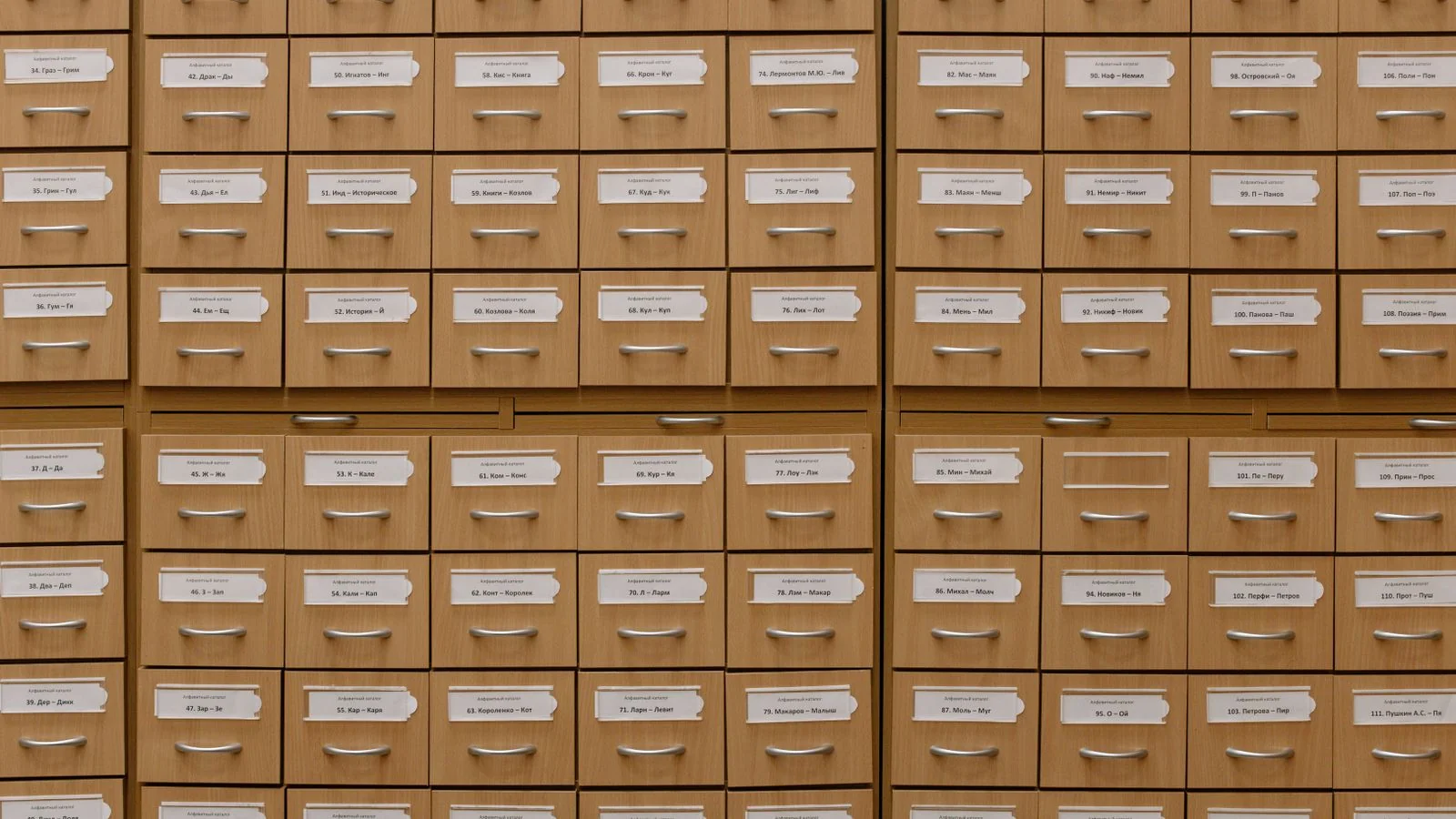
Google has been open about the fact that its book catalog is stitched together from many sources, and that stitching produces errors. The clearest public record of this comes from August 2009, when the Berkeley linguist Geoffrey Nunberg published a Language Log post calling Google Books metadata “a train wreck.” His examples were memorable: Charles Dickens credited with books dated before he was born, a Bob Dylan biography listed as published in the nineteenth century, and Moby Dick classified under “computers.” Jon Orwant, who managed metadata for Google Books at the time, answered in the comments. As the Princeton CITP blog summarized on September 2, 2009, Orwant acknowledged the catalog probably contained millions of errors, explained that they came largely from aggregating records from many outside catalogs and inheriting each one’s mistakes, and described the catalog as a work in progress. His line has aged well: “a trillion metadata fields, one-in-a-million errors happen a million times over.”
That exchange is seventeen years old, but its mechanics still explain most broken author panels. Google has no single source of truth about you, only feeds to reconcile: publisher, distributor, library, retailer, Wikidata, and your own site. Your author name is the join key. If one feed says “J.R. Moreno,” another says “Jessica Moreno,” and a third says “Jessica R. Moreno-Diaz,” you have handed the reconciler three candidate people.
Here is where the Google Books side specifically matters. Google’s Play Books Partner Center help page on book metadata lists the fields a publisher or self-published author controls for each title: ISBN or another identifier, title and subtitle, description, publisher, publication date, series name and volume, related editions (such as the ISBN of the print edition that matches an ebook), BISAC subjects with up to three genres, contributors with their roles, and biographical notes about those contributors. Google’s guidance is that series names should match exactly across every book in a series, and it says series changes should appear within 48 hours. The same discipline should apply to contributor names, even though the help page does not spell it out.
The “About the author” text lives in that biographical notes field. Distributors such as PublishDrive note that this bio cannot contain links and should focus on professional achievements. PublishDrive also says it can request a dedicated Google author page for writers with more than 10 books and at least 3 reviews on most of them. Treat that bio like a press bio, not a back-cover blurb; it is one of the few first-party descriptions of you Google holds in a books context.
The practical upshot: every time your name appears in a books feed, it either confirms the entity Google already has in mind or creates a fork. Authors with a wrong book in their carousel usually have one of two problems. Either their name string collides with another writer’s and nothing distinguishes them, or their own records are inconsistent enough that Google cannot tell the books share an author. Our post on a knowledge panel merged with someone else covers collisions.
The Byline Lock: Four Pins That Hold Your Author Entity Together

I call the fix the Byline Lock because it works like a lock with four pins. Each pin has to sit at the same height for the cylinder to turn. One pin out of alignment and the whole thing jams, which is what an author panel with a stranger’s book in it looks like from the inside.
The first pin is the Name String. Pick one public form of your name, character for character, and use it everywhere: Partner Center contributor fields, KDP, IngramSpark, your publisher’s ONIX feed, your website’s author schema, your social bios, and your Wikidata label. Initials, middle names, hyphens, and accents all count. Earlier work under another form? Record it as an alias (Wikidata has an “also known as” field) and make the current form dominant everywhere else.
The second pin is the Edition Record. Every format of every book should have its own ISBN, and the editions should point at each other. In Partner Center that means filling the related books field so the ebook declares its print twin. It also means checking that your publisher’s data, your distributor’s data, and what Google Books displays all show the same contributor in the same role. Self-published titles often leave the contributor role blank, which weakens the link between book and person. Search Google Books for each ISBN and read the record the way a machine would.
The third pin is the Authority Anchor. Libraries solved the “which John Smith” problem decades ago with authority files, and those files now sit inside the open knowledge graph. Wikidata carries properties for the International Standard Name Identifier (ISNI, property P213), the VIAF cluster ID (P214), the Library of Congress Authorities ID (P244), and even a Google Books ID (P675) for individual works. An ISNI is an ISO-standard identifier for public identities of creators. A Library of Congress name authority record usually exists if a library has cataloged your book with LC data. These identifiers are the closest thing the book world has to a fingerprint, and a Wikidata item that lists them tells every downstream system that this person, these library records, and these books are one entity. If you have never built a Wikidata item, our walkthrough on getting your brand on Wikidata covers the mechanics, and the same rules apply to people: cite independent sources and expect scrutiny.
The fourth pin is the Claim Key. Google’s verification flow, covered below, asks you to prove you control an official profile it already associates with you. That only works if your website, YouTube channel, or social profiles are already linked to the entity. So the Claim Key pin means your site has a clear author page with Person schema, a sameAs list pointing to your Wikidata item and social profiles, and a books section listing ISBNs in the same name string as pin one. When Google offers you the claim button, the key is already cut.
Run the four pins as an audit before you touch anything. Write your name exactly as it appears in each source, list every ISBN with its contributor field, check for an ISNI or LC authority record, and note which official profiles link back to your site. The Name String is usually the cheapest fix; the Authority Anchor takes longest because library records update on their own schedule.
How Do You Claim the Panel Once Google Books Agrees?
Google’s “Get verified on Google” help page lays out the process in five steps. Sign in to a Google Account. Search Google for yourself. Find your knowledge panel and click “Claim this knowledge panel” at the bottom (on mobile it may sit behind a menu, and on some panels it lives in the About section). Review the information shown. Then sign in to one of the official sites or profiles Google lists for you. The help page names four: YouTube, Search Console, Twitter, and Facebook. If Google cannot find any sites linked to you, it says you will be prompted to provide more information so it can verify you.
Three details on that page trip up authors. First, Google states that “not all knowledge panels are claimable as of now,” so a missing claim button can mean the panel is not eligible yet rather than that you did something wrong. Second, if you see a message that someone is already managing the panel, you are limited to the Feedback option until you sort out who that is, which is common when a publisher’s publicity team claimed it years ago. Third, verification lets you suggest edits, but the Books carousel still comes from book data. If the data is wrong, the panel stays wrong.
That is why the order matters. Fix the Byline Lock first, then claim. Claim first and you can spend months filing feedback that Google keeps overriding with the same bad feed. Align the four pins first and the verified suggestions you make afterward have clean data behind them. For the full click-by-click on verification, including what to do when the panel belongs to a publisher account, see our step-by-step guide to claiming a Google knowledge panel.
Google gives no general timeline for metadata changes outside its 48-hour series guidance, and Knowledge Graph updates run on their own cadence, so plan in weeks, not days. The payoff extends past Google, too. AI assistants answering “what books has this person written?” need the same confident join between a name and a bibliography, and a clean Google Books author page plus a well-anchored Wikidata item gives them one.
Look at How Brandon Sanderson’s Byline Holds Together
The fantasy novelist Brandon Sanderson is a useful reference case because his public record is unusually consistent, and you can inspect every piece of it yourself. His Wikidata item, Q457608, describes him as an “American fantasy writer (born 1975)” and lists a birth date of December 19, 1975. It carries an ISNI (0000 0001 1472 4577), a VIAF cluster ID (50418535), and a Library of Congress Authorities ID (n2004036176), along with national library identifiers from France and Germany. It names his official website, brandonsanderson.com, and lists notable works including Elantris, Warbreaker, Mistborn, The Stormlight Archive, and The Reckoners. The item links to Wikipedia articles in 48 language editions.
Notice what that record does. The name string is identical across every source. The library authority anchors from three countries agree that he is one person. The notable works are separate Wikidata items, so the books carry their own records that point back to him. The official website gives Google a Claim Key it can match. That is all four pins of the Byline Lock sitting at the same height, built over two decades of publishing.
Scale tests that alignment. His Kickstarter campaign for four secret novels closed at $41.7 million, CNBC reported on March 31, 2022, setting a platform record and spawning a flood of press, listings, and new editions. Each was a chance for the record to fork, and the anchors held.
You do not need forty books or a record-breaking campaign to get the same structural result. You need one name string, ISBNs with clean contributor fields, an authority anchor or two, and an official profile Google can verify. Pull up your own Google Books author page tonight, compare it against your Wikidata item and your publisher’s listing, and count how many pins are out of line. That count is your to-do list.