
The best performing content at most climbing gyms is the content that brings in the fewest new members.
Send footage is the clearest example. A twelve second clip of someone latching a hard move gets more engagement than anything else a gym publishes. It is also almost perfectly useless for growth, because the people who understand what they are watching have already chosen a gym, and the people who have not climbed see a person doing something impossible in a room they now feel less welcome in.
That mismatch runs through the whole category. Climbing gyms have unusually good raw material and unusually poor conversion from content to membership, and the reason is that they publish for the tribe rather than for the newcomer.
Content marketing for climbing gyms works when you separate those two audiences on purpose and build for both. Here is the model I use for it, and then the eight pieces that make it run.
The Beta Ladder: four rungs, four kinds of content
In climbing, beta is the information you need to do a thing you cannot currently do. The word is perfect for content strategy, because content is beta for the decision a person is currently stuck on.
There are four rungs, and each needs a different kind of writing.
Rung one is the stranger who has never climbed and is mildly curious. Their blockers are logistical and social. Do I need a partner. What do I wear. Will people look at me.
Rung two is the first timer who has been once and is deciding whether to come back. Their blocker is progress. They cannot tell whether they are bad at this or simply new, and nobody has explained the difference.
Rung three is the regular who climbs twice a week and is now plateaued. Their blockers are technical and physical. Grades, technique, finger pain, training.
Rung four is the committed climber who is going outside, competing, or thinking about coaching. Their blockers are advanced and their loyalty is already yours.
Almost every gym publishes exclusively for rungs three and four. Almost all the available growth is on rungs one and two. That single reallocation is worth more than any change in production quality.

Write the rung one page and put it on your own website
This is the highest value single asset a climbing gym can build, and most do not have it.
A page called something like “climbing for the first time at our gym”, written in plain sentences, answering every logistical question a nervous adult has. Whether they need a partner, and if bouldering, that they do not. What shoes are, whether they rent, what sizes. What to wear, specifically, including whether leggings are fine and whether they need to bring a towel. Whether there is an induction and how long it takes. What the coloured tape means. What happens if they cannot complete a single problem, which is the real fear.
Write it once, keep it current, and give it a named author from your staff. Two thousand words of honest logistics will outperform every reel you make this year for one reason: it is what a person types into a search box or an assistant, and it is retrievable text rather than footage.
The test for whether yours is good enough is uncomfortable. Read it and ask whether a 45 year old who has never done anything athletic in public would feel safe walking in. If the answer is no, add the reassurance you left out because it seemed obvious.
What does rung two content look like?
Rung two is where gyms lose the most money and pay the least attention.
Someone comes once, has an alright time, and never returns. The reason is almost never the gym. It is that they left without a framework for what just happened. They did not know whether struggling on a V0 was normal. Nobody told them their forearms would give out before their fingers learned anything. They have no idea what to do differently next time, so next time feels like a repeat rather than a step.
The content that fixes this is explanatory and slightly boring. What your first month actually feels like, week by week. Why your forearms fail first and what that means. Why grades are inconsistent between gyms and why you should ignore them for a while. What to work on in session two. Why everyone falls off things and it is not failure.
Publish these as pages, not just posts, because the person reading them is searching at eleven at night after a frustrating session. A well titled page answering “am I bad at climbing or just new” will earn traffic for years and convert at a rate no reel matches.
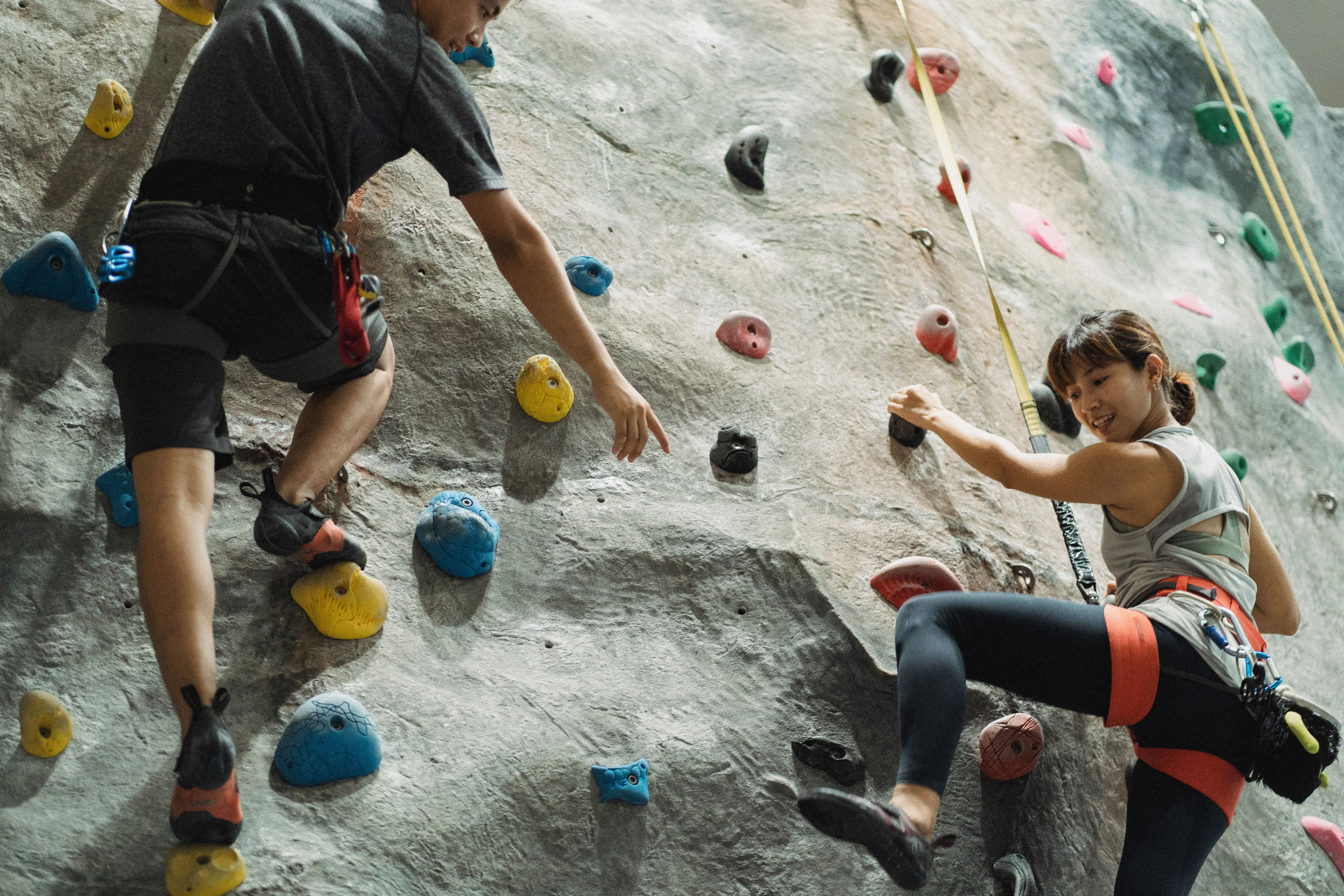
Turn your setters into your content engine
Your gym produces new product every week and almost nobody narrates it.
Every set is authored by a person with intentions. That is a story, and it is the only story in fitness content that renews itself on a schedule without any additional effort. Thirty to sixty seconds of the setter explaining her own problem. What she was going for. Where the crux is and why. What she expects people to get wrong. What she thinks the grade is and why grades are a negotiation.
This works on every rung at once, which is rare. Rung four climbers argue about it. Rung three climbers learn from it. Rung two climbers finally understand that the wall is designed rather than random. Rung one climbers see a friendly person explaining something rather than a stranger performing.
Name the setter every time. Consistency here creates member preferences and set-day attendance, and it gives you a named human to point journalists and partners at later.
Answer the injury questions properly
The most searched, worst served topic in climbing is fingers.
Every climber past their first few months develops finger pain and goes looking for information. What they find is a mess of forum threads, contradictory training advice, and content from people selling programmes. A gym coach writing clearly about load management, when to rest, what warning signs matter, and when to see a physiotherapist fills a genuine vacancy.
Two rules. Stay inside your competence and say where the line is. A coach can write about training load and warm-up protocol. A coach should not diagnose, and should say so in the piece, with a clear instruction to get assessed.
Do this well and it becomes the piece that earns you links and citations from outside your city, which lifts everything else on your site. It is also the single topic where a gym can credibly claim expertise that a chain’s marketing department cannot fake.
Build the outdoor transition content nobody builds
Almost every indoor climber eventually wonders about going outside, and almost no gym helps them.
The reasons are understandable. Outdoor climbing is not your revenue, it carries risk, and some gyms worry about liability. The result is that your members learn from YouTube, which is a worse outcome for everyone including you.
Content here is high value and low competition. What is different outside. What gear you need and what you do not. How grades compare and why outdoor grades feel harder. What a first outdoor session should look like and who to go with. Access and etiquette, which local crags care about and newcomers routinely breach.
Gyms that own this become the trusted authority for their region’s climbing community rather than a facility, and that standing is what turns into press coverage, partnerships, and the kind of loyalty that survives a competitor opening nearby.
Do you actually need a newsletter?
Yes, and for a reason that has nothing to do with marketing theory.
Every audience you build on a platform is rented. Your setter’s following, your gym’s following, your reach: all of it is subject to an algorithm change you will not be consulted about. A list of member email addresses is the only audience you own outright.
Keep it simple. Once a fortnight. What is new on the wall and who set it. One thing worth reading. One event. Two sentences from a coach. Nothing designed, nothing long.
The measurable value shows up when you need it: a price change, a closure, a new programme, a competition. Gyms with a list can fill a beginner course in a day. Gyms without one post about it and hope.
Stop measuring the wrong thing
The final piece, and the one that changes behaviour.
If you measure engagement, you will keep making send footage, because send footage is what your existing followers engage with. Engagement is a measure of how well you are serving the audience you already captured.
Measure the things that indicate growth instead. Bookings for intro sessions and where they came from. Traffic to your rung one page. Search terms bringing people to your site. How many first timers return within two weeks. How many people mention a specific coach or setter when they sign up.
Those numbers will tell you that your least popular content is doing most of the work, which is uncomfortable and correct.
The whole strategy fits in a sentence: publish for the rung above the person you are trying to reach, put the plain facts on your own website where they can be found, and put a name on everything.