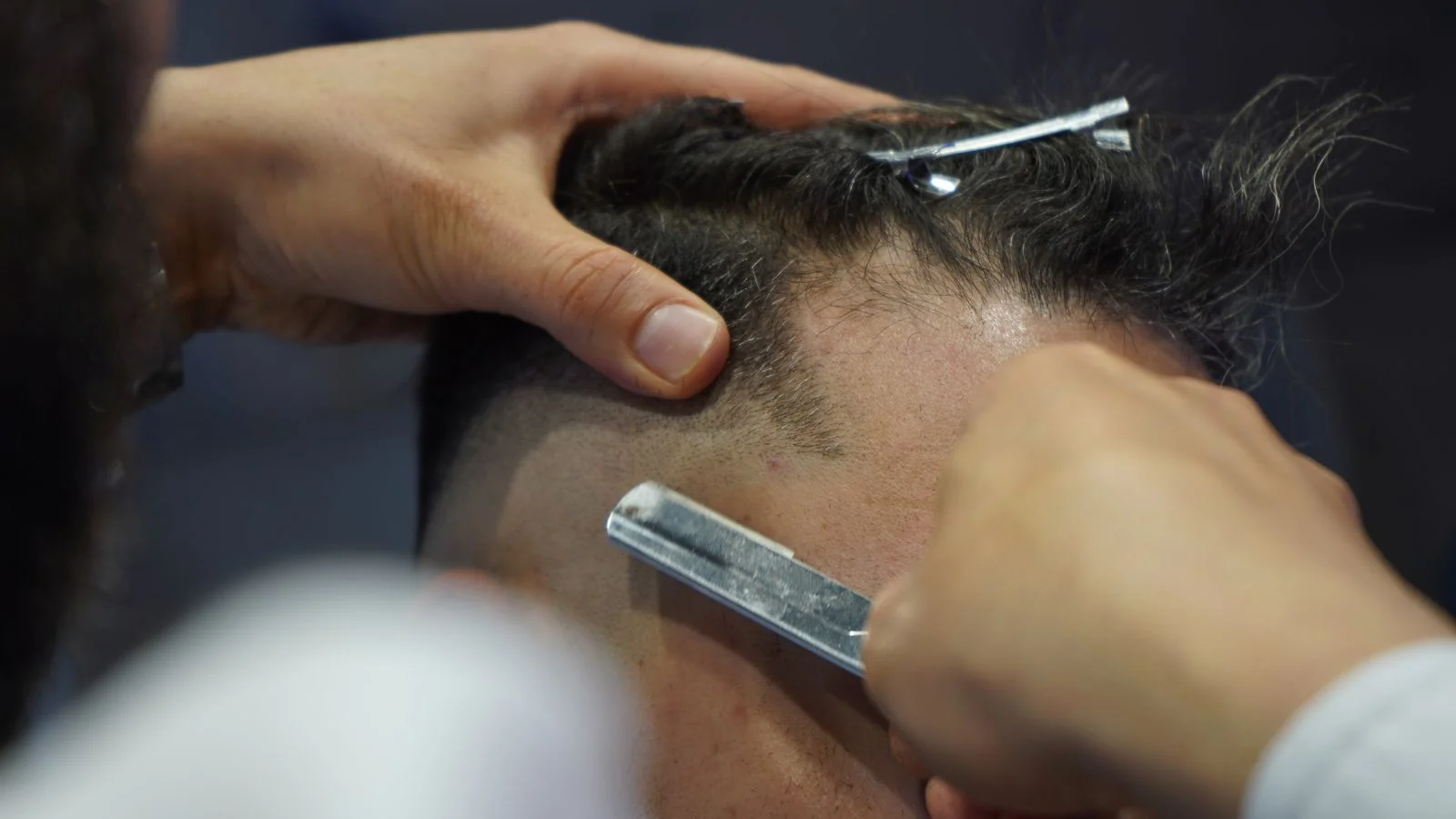
The most-liked content in barbering is worthless to barbershops.
That sounds like a cheap provocation and it is a measurable claim. The fade transition clip, shot from above, sped up, scored to something with a heavy bass line, is the format that performs best in this industry by engagement. It is also the format that books the fewest new clients, because the people watching it and rewatching it are overwhelmingly other barbers, barbering students, and the loose international audience of people who enjoy watching skilled hands work. They are not in your city and they are not sitting in your chair.
Meanwhile the man who moved into the neighbourhood three weeks ago, has a job interview on Friday, and does not know where to go, will never see that clip and would not know what to do with it if he did. He is your entire addressable market and he is looking for something else completely.
Likes are not the product
Every shop that has been burned by this says a version of the same thing. The account grew, the comments were nice, the chairs stayed half empty on Tuesdays.
The gap is one of audience geography and audience intent. Barbering content optimised for engagement reaches other practitioners because practitioners are the ones who understand what they are looking at and reward it. Customers do not have the vocabulary to appreciate a clean blend, which is precisely why they cannot use a photograph of one to make a decision.
Ask it the other way around. If a stranger sees ten flawless fades on your page, what has he actually learned? That your clients have good hair, maybe. That you can cut. He has learned nothing about whether you will listen to him, whether you can work with his hairline, how long he will wait, what it costs, or whether he will feel out of place walking in.
Those are the questions standing between him and a booking, and none of them are answered by the content the industry has agreed to make.
What does a man actually search before he changes barbers?
Three kinds of thing, and almost none of it is aspirational.
He searches logistics. Barber near me open Sunday. Walk in barber downtown. How much is a haircut. He searches vocabulary, because he genuinely does not know the words and is afraid of asking wrong. Difference between taper and fade. What to ask for if my hairline is receding. Number two on the sides means what. And he searches risk. Best barber for curly hair. Barber who does beard lines. Barber that will not butcher a cowlick.
The vocabulary searches are the opening nobody takes. There is a large, persistent, low-competition pool of men who want a haircut and lack the language to order one, and they are anxious about it. A shop that publishes clear answers to those questions gets found by people at the exact moment they are deciding where to go, and is remembered as the place that did not make them feel stupid.
The risk searches are where a specialty matters. A shop that says plainly that it is good with coily hair, or thinning hair, or kids who will not sit still, captures the person who has been let down before and is now shopping defensively. That man becomes a five-year client because the switching cost, for him, is fear.
The Chair-Time Content Loop
Here is the framework I use for this. Call it the Chair-Time Content Loop, and the idea behind it is that the best content in a barbershop is generated during work you are already doing rather than produced separately after hours.
Every appointment contains four capturable moments, and a shop that systematically captures them never runs out of material and never has to invent anything.
The first is the consultation, the ninety seconds where a client describes what he wants and you translate it. This is the highest-value footage in barbering and practically nobody films it. The second is the correction, where you handle a cowlick, an uneven hairline, a previous bad cut, or a scar, and explain the adjustment. The third is the finish, which is what everyone already shoots. The fourth is the grow-out, which is a photo taken at the client’s next visit showing how the cut aged, and which is the most persuasive image a barbershop can publish.
The loop is: capture during chair time, publish across the grow-out cycle, and let the next appointment refill the library. No content days, no scripts, no separate production. The shop generating the content is the shop running normally.
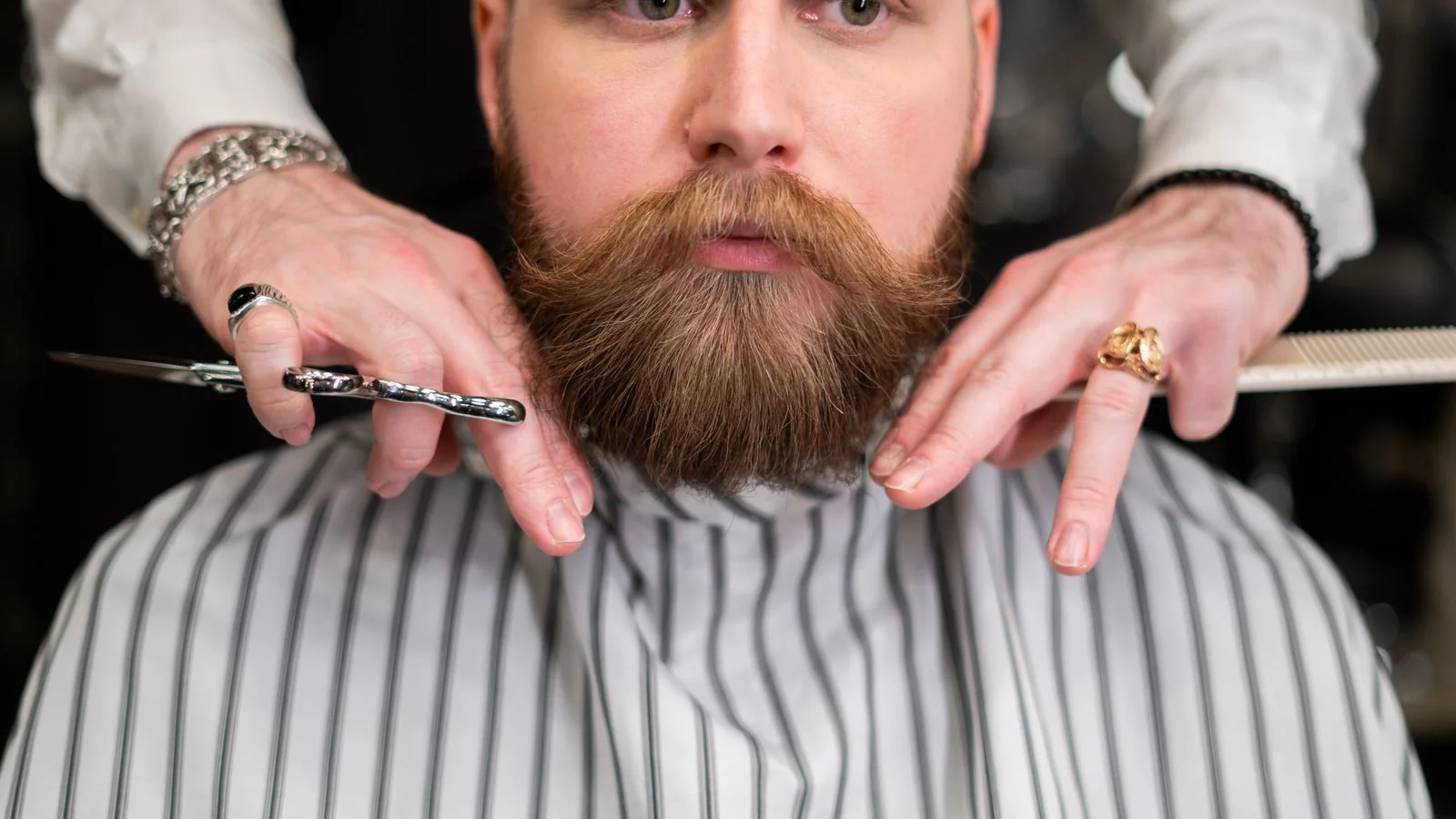
Post the consultation, not the fade
If you take one thing from this, take this one.
Film the conversation, with consent, from the client’s shoulder so his face is out of frame if he prefers. He says what he wants, badly, the way real people do. “Short on the sides but not too short, and leave a bit on top.” You ask two questions. You translate it into a decision and say the decision out loud. “So a low taper, scissor on top, and I am going to leave the front longer because your hairline sits back on the left.”
Publish that, thirty to forty-five seconds, with captions.
It works because it resolves the actual fear. The man who has been given a haircut he did not ask for three times in a row is not worried about your skill. He is worried about being misunderstood. Watching you understand somebody else is the only evidence that meaningfully reduces that worry, and it is evidence no competitor is offering.
It also does something useful for search and for AI answers. A consultation clip with accurate captions contains the natural language people use when they search, which a polished fade video never does.
Make the shop legible to people who have never walked in
A barbershop is a socially loaded room. Plenty of men will drive past a shop for months because they cannot tell from outside whether they belong in it.
Legibility content answers the unasked questions. What the room looks like at a normal Tuesday hour rather than styled. Who works there, by name and face, with one line about what each is best at. What happens when you walk in without an appointment. Whether the music is loud. Whether kids are welcome. What it costs, stated plainly, because a shop that hides prices reads as a shop that will surprise you.
Price transparency deserves emphasis. Publishing your prices is the single easiest trust move available and a surprising number of shops still refuse to do it, which costs them the price-anxious customer entirely.
This category of content will get the least engagement of anything you post and will convert better than anything except the consultation clips. Do not judge it by likes. Judge it by how many first-time clients mention having seen it.
Why does the same haircut video get 40,000 views and no bookings?
Because reach and relevance are different things, and the platform optimises for one of them.
A clip that travels does so by appealing broadly, which means it is being shown to a global audience of people who like watching haircuts. Your shop can serve a radius of a few miles. The overlap between a viral barbering audience and a bookable one is close to nothing, and chasing the first actively damages the second, because the algorithm learns to show your work to the audience that responds, which is the wrong one.
The counter-move is deliberate local specificity. Name your neighbourhood in captions and on camera. Reference local landmarks, local teams, local events. Film the street. Work with the coffee place two doors down. Signals that limit your reach are the ones that improve your bookings, which feels wrong and is right.
A shop with 1,100 local followers will outbook a shop with 60,000 scattered ones, every week, without exception.
Own the words men actually use
Write the vocabulary content. Nobody in your market has, and it is the most durable asset a barbershop can build.
One page explaining taper versus fade, with photographs of each at low, mid and high, and the plain sentence about which suits which head shape. One page on what the guard numbers mean in millimetres. One page on how to ask for something when you are growing out a bad cut. One page on beard lines and why a barber will sometimes refuse to take one higher. One page on what to ask for with a receding hairline, written without condescension, because that search is made by an anxious person.
These live on your own website, not on social, and that distinction is the whole point. Social content disappears into a feed and belongs to a company that can change the rules. A page on your domain accumulates, gets found by people searching that exact question, and can be read and cited by AI assistants when somebody asks one for a recommendation.
That last part is becoming the difference. Assistants answer with entities they can describe consistently. A shop whose site says, in the same words on multiple pages, that it specialises in textured and coily hair in a named neighbourhood, is a shop a model can confidently name. A shop with a homepage that says “premium grooming experience” is a shop that model has nothing to say about.
Nine posts that book
One, the consultation clip. Described above. Highest converting piece in the format.
Two, the correction. Cowlick, scar, uneven hairline, previous bad cut. Show the problem, say the adjustment, show the result.
Three, the grow-out. Same client at week zero and week four. Proof that your cut ages well, which is what a man is actually buying.
Four, the price and process post. What things cost, how long they take, how walk-ins work.
Five, the barber introduction. One per barber, name, face, and the one thing he is best at. This is also how you let your barbers build their own names, which keeps them and keeps their clients.
Six, the hair-type post. Aimed at a specific texture or condition. Coily hair, fine thinning hair, a double crown. Speak directly to one person.
Seven, the vocabulary explainer. Taper versus fade, guard numbers, what to ask for. Post it socially and publish the long version on your site.
Eight, the neighbourhood post. Local, unglamorous, specific. Limits reach, improves bookings.
Nine, the shop-floor post. The room at a normal hour, unstyled. Answers the belonging question that stops men walking in.
Three a week, rotating through the nine, refilled from chair time.
Put it on your own land
The summary is short enough to act on today. Stop making content for barbers and start making it for the nervous man who needs a haircut. Capture the consultation and the correction during chair time rather than producing anything separately. Aim your posts at week three of the grow-out cycle, when he is deciding, not at the day of the cut, when he has already decided. Be relentlessly local, even though it lowers your numbers. And put the vocabulary content on your own website, where it compounds, gets found by people searching a question they are embarrassed to ask a person, and can be quoted back by the systems that are increasingly answering those questions on your behalf.