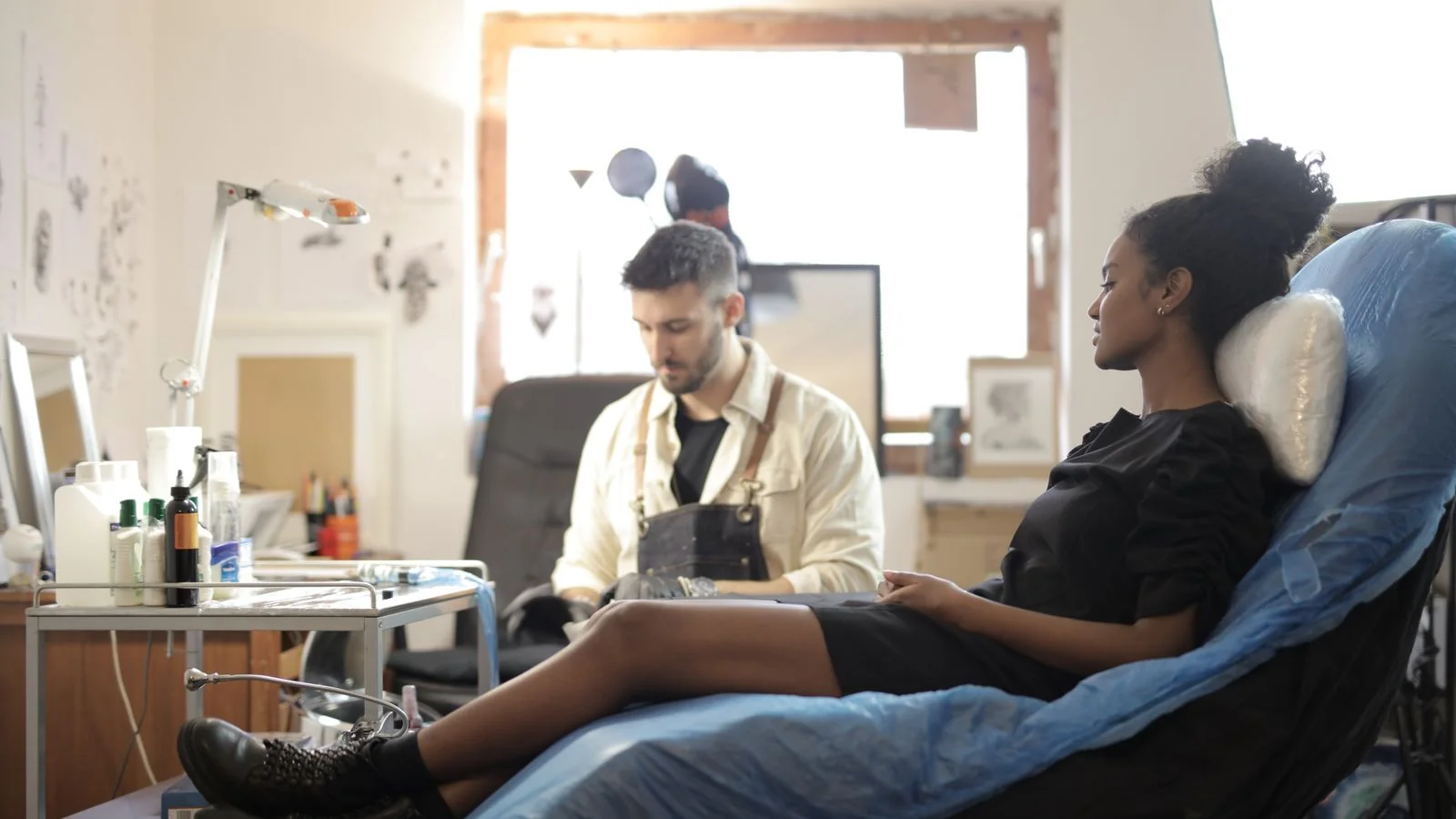
The best tattoo studio in your city is probably not the one an AI assistant recommends, and the reason has nothing to do with the tattooing.
It is because the best studio put its argument into photographs. Ten thousand images of beautiful work, a feed that stops people scrolling, a portfolio that closes anyone who sees it. And every one of those images is a closed box to a system that answers questions in sentences. The studio three doors down with mediocre work and a website full of plain text about pricing, healing, and consultation process gets named instead.
That is an uncomfortable trade and it is also a solvable one. AEO for tattoo studios is not about making worse images. It is about writing down the thing your images already prove, in a form that can be read, quoted, and attributed.
What is an assistant actually reading when it recommends a studio?
Not your work. That is the first thing to accept.
A model answering “where should I get a fine line tattoo in Phoenix” is assembling a paragraph from text it can parse: your site copy, your review text, any article that mentions you, a listing or two. It has no aesthetic judgment and no way to develop one. It cannot look at a healed blackwork sleeve and conclude that the linework is clean.
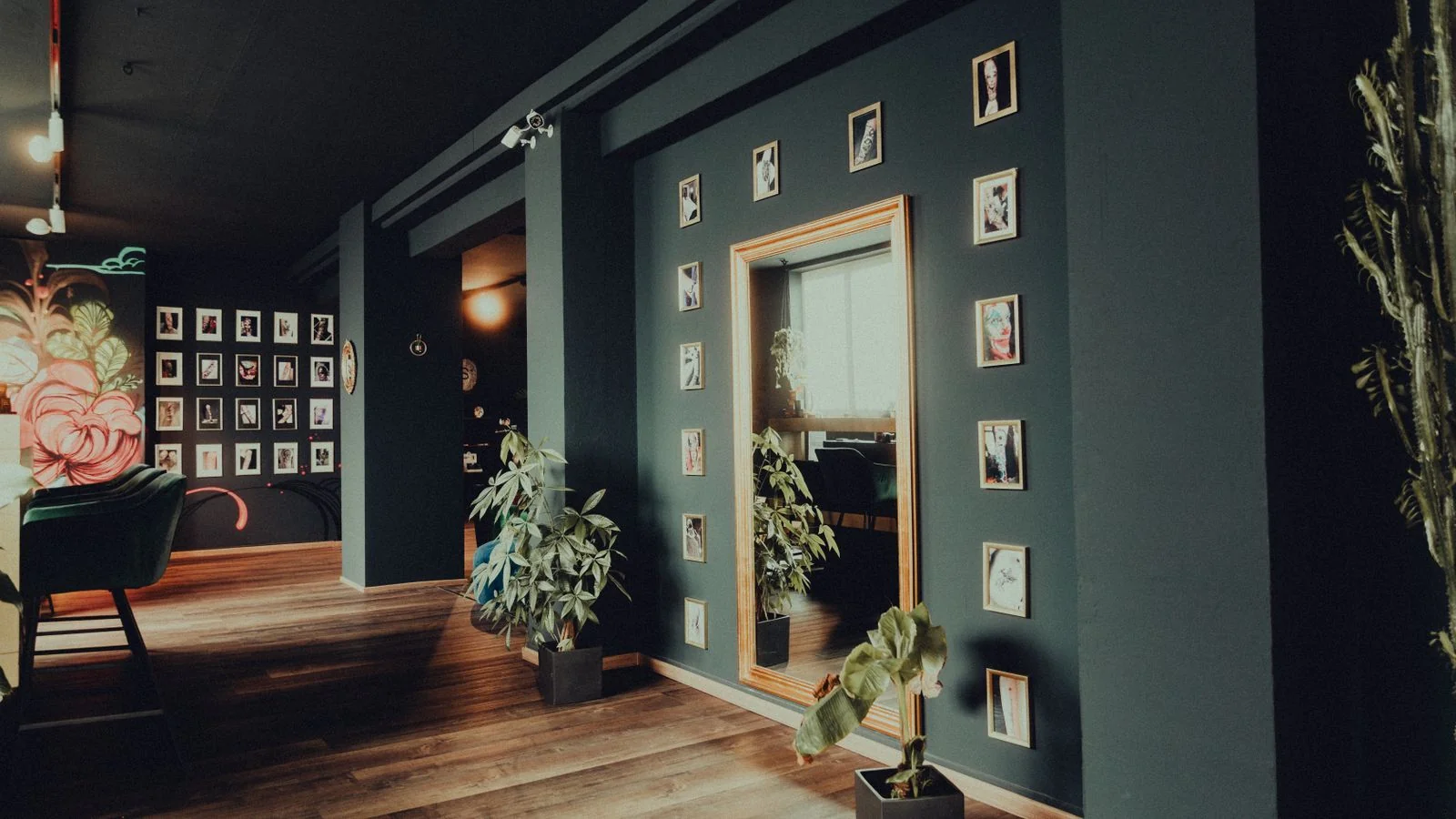
So it substitutes proxies. Specialization stated in words. Artist credentials and years working. Pricing structure. Consultation process. Aftercare protocol. Licensing and sterilization standards. Whether the studio does walk-ins. Whether it does cover-ups. Whether it tattoos hands, necks, or faces. These are the raw materials of the answer, and a studio that has published none of them cannot be assembled into one.
This is the gap worth naming, because once you see it you cannot unsee it. Call it the Portfolio-to-Prose Gap: the distance between what your work proves and what your words state. Almost every studio in the country has an enormous gap here, and closing it is a weekend of writing rather than a rebrand.
You can measure your own gap in ten minutes. Count the images on your site. Then count the sentences of original text, excluding your address, your hours, and your booking form. A shop with four hundred images and two hundred words of prose has a ratio that guarantees invisibility. A shop with sixty images and three thousand words of specific text about styles, pricing, process, and healing will be recommended over it, and the second shop is doing less work.
The reason this feels backwards is that the last fifteen years of marketing advice pointed the other direction. Visual platforms rewarded images and punished text, so an entire generation of studios built their presence inside feeds and treated the website as a booking link. That was the correct strategy for a decade. It stopped being correct the moment a meaningful share of purchase research moved to a system that reads.
Which six pages close the gap?
Six pages will move a studio from invisible to quotable. None of them requires a copywriter.
The first is a specialization page written in words. Not a gallery filtered by style. A page that says, in sentences, which styles the studio and each artist actually works in, which ones they decline, and what they consider their strongest work. Naming what you do not do is the part that gets skipped, and it is the part that makes the rest credible.
The second is a pricing page with real structure. Hourly rate or minimum, how you quote larger pieces, what a deposit is and whether it applies to the final total, and what a typical small piece actually costs. The industry habit of quoting nothing in public is a gift to whichever competitor breaks ranks first.
The third is a consultation and booking page describing the process step by step. How someone gets in touch, what happens next, how long the wait runs, what to bring, what happens if they need to reschedule. This is the page that answers the most common query in the category, which is some version of “how do I actually book a tattoo.”
The fourth is an aftercare page. Written by you, specific to your methods, with your healing timeline and your product recommendations. Aftercare queries have enormous volume and almost all of it goes to generic listicles. A studio-authored version gets cited and it also reduces your own message volume.
The fifth is a licensing, sterilization, and safety page. State your license number, your autoclave protocol, your single-use policy, your inspection history. Nobody writes this and everybody worries about it.
The sixth is a page for each artist with a real biography. Years working, training, styles, the kind of project they want more of. An artist page that reads like a person is the single most quotable asset a studio can publish, and it is also how a studio survives an artist leaving.

Why does describing your own images matter so much?
Because alt text and captions are the only part of an image a system reads, and most studios leave them empty.
Every portfolio image should carry a description that a person reading aloud would find useful. Style, placement, subject, approximate session count, whether it is healed or fresh, whether it is a cover-up. “Healed black and grey realism portrait on the outer forearm, two sessions, shown at four months” is a sentence that does work. An empty alt attribute is a photograph that never existed as far as the answer is concerned.
Do this across a hundred portfolio images and something interesting happens. You have accidentally written a detailed, structured account of your body of work in text. The specialization claims on your specialization page are now supported by a hundred specific instances. The system is no longer taking your word for it.
Captions compound the effect. A short paragraph under a piece describing what the client wanted, what the constraint was, and what you decided, turns a picture into a case study. Twenty of those and your site contains something no competitor has: evidence of judgment, in words.
How do you get reviews to say something useful?
Star ratings are close to worthless for this purpose. Review text is not.
The systems reading your reviews are extracting claims, not averaging scores. A review that says “Dani talked me out of the placement I wanted and she was right, and she redrew the stencil three times until the flow worked” contributes facts about consultation rigor and a named artist. A five-star review saying “amazing shop” contributes nothing that can be used.
So change the ask. Most studios say some version of please leave us a review. Instead, ask for one specific thing: the artist’s name, the style, and one detail about the process. You will get shorter reviews and better ones. Thirty specific reviews outperform three hundred generic ones for visibility in AI answers, and they read better to humans too.
There is a related move that studios underuse. When a client posts a thoughtful caption about their own piece, ask permission to quote it on the relevant page with attribution to their first name. That is testimonial content in natural language, tied to a specific style and artist, which is precisely the shape of evidence an assistant can work with.
Timing matters more than most shops think. The best review you will ever get is the one written at the four-week mark, when the piece has healed and the client has had time to notice how it settled. Most studios ask at the moment of payment, which produces gratitude rather than detail. A short message four weeks out, asking one specific question about how the healing went, produces review text with a timeline in it. A healed-result review is worth several fresh-ink reviews, because it speaks to the thing buyers are actually nervous about and it contains a verifiable claim about durability.
Consider also where reviews live. A studio with forty reviews spread across five platforms looks thinner in every one of them than a studio with forty in one place. Pick the platform your market actually uses, concentrate the ask there, and let the others accumulate on their own.
Where does earned coverage fit?
Studios tend to treat press as vanity, and for a shop with a strong local reputation it can look like the least necessary spend on the list. For AEO it functions differently.
An article about your studio in a publication that gets indexed becomes a third-party text description of your work. It says in sentences what your portfolio says in pictures, and it says it somewhere other than your own domain, which is worth more to a system weighing whether to trust a claim. A profile that describes an artist’s training, a studio’s specialization, and one specific project is a durable asset for exactly this reason.
The Instant Press catalog runs a little over a thousand publications, and the genre breakdown is instructive for anyone in a visual trade. News outlets dominate at more than seven hundred, with lifestyle around seventy and fashion near twenty. For a studio the useful targets are rarely the biggest names. They are the regional and lifestyle outlets whose articles carry enough specific detail to be extractable, and whose pages stay indexed. Across the catalog ninety-six percent of publications are indexed by Google, which is the baseline requirement for any of this to matter at all.
One good profile with your specialization, your artists’ names, and a described project will do more for your presence in AI answers than a year of posting. Not because press is magic, but because it produces prose about you that you did not have to write, in a place that is not your own website.
The sequencing matters. Coverage before your own pages exist is mostly wasted, because an interested system follows the reference back to a site that says nothing and the trail dies. Write the six pages first. Get the alt text done. Then pursue coverage, so that a citation leads somewhere that confirms and extends it. Studios that reverse this order spend money on placements and see nothing change, then conclude press does not work for their category, when what actually happened is that the destination was empty.
A last practical note. Whatever you publish, publish it as text on a page you own, not as an image of text, not as a PDF, and not only in a booking platform you do not control. A pricing graphic posted to a feed is invisible. The same numbers as a paragraph on your own site are permanent, quotable, and yours.
The studio that wins the recommendation in your city over the next two years will not be the one with the best portfolio. It will be the one that bothered to describe it.