
Picture your ideal customer, someone with a nice car who just noticed swirl marks in the paint and wants them gone before an event. A year ago they would have searched Google for a detailer and scrolled. Today, more and more, they open ChatGPT or their phone’s assistant and ask, “Who is the best car detailer near me for paint correction, and what should I expect to pay?” The assistant answers. It names a detailer, maybe two. If it is not you, that customer books someone else, and you never got the chance, because you were never in the answer.
This is the shift that makes answer engine optimization matter for detailers. AEO for car detailers is the work of becoming the business an AI assistant recommends when someone asks about detailing, ceramic coating, or paint correction in your area. It is not the same as ranking on Google, though the two connect, because the engines still lean on search. It is about being the specific answer the AI states, in a world where your best customers increasingly get one recommendation instead of a list to sift through.
For a local detailer this is winnable, because AI answers for local services name only a few businesses, and getting into that short list is achievable if you understand how these engines decide. Here are the seven moves that get a detailing business read, trusted, and named.
The question that decides your bookings
Everything starts with the questions your customers ask the AI, because those questions are where the recommendation gets made. Understand them and you know exactly what to build.

Detailing customers ask AI specific things. What does a full detail cost for an SUV. Is ceramic coating worth it. What is the difference between a wash and a detail. How often should I detail my car. Can you fix scratches and swirl marks. Who is the best detailer near me, and do they come to you. Each question is a booking waiting to happen, and each is a chance for the engine to name a business. The detailer whose site answers those questions clearly, and whose reputation the engine can verify, is the one that gets recommended. The detailer who has only a photo gallery and a booking button gives the engine nothing to work with. So the foundation of AEO is knowing the exact questions and making sure you are the clearest, most trustworthy answer to each one. Bookings follow the answer, and the answer follows the business that earned the engine’s trust.
The 7 Moves
Here is the framework, seven moves that take a detailing business from invisible to recommended in AI answers.
Move one is to answer customer questions plainly on your own pages, leading with the direct answer. Move two is to keep your business facts, name, location, service area, hours, contact, identical everywhere the engine looks. Move three is to make your service model unmistakable, especially whether you are mobile, shop-based, or both, since that decides many recommendations. Move four is to build a steady stream of genuine reviews, the trust signal these engines weigh most for local businesses. Move five is to earn mentions in sources the engine trusts, from local directories to local press. Move six is to structure your pages so an engine can lift the answer cleanly, with clear headings and stated facts. Move seven is to keep everything current, because freshness signals that you are an active, open business worth recommending now. Seven moves, each aimed at a factor the engines use to choose who gets named.
Answer like a person asked you, because they did
The heart of AEO is writing answers the way a customer would ask the question, not the way a brochure would describe your services. Move three lives here, and it matters most for detailers.
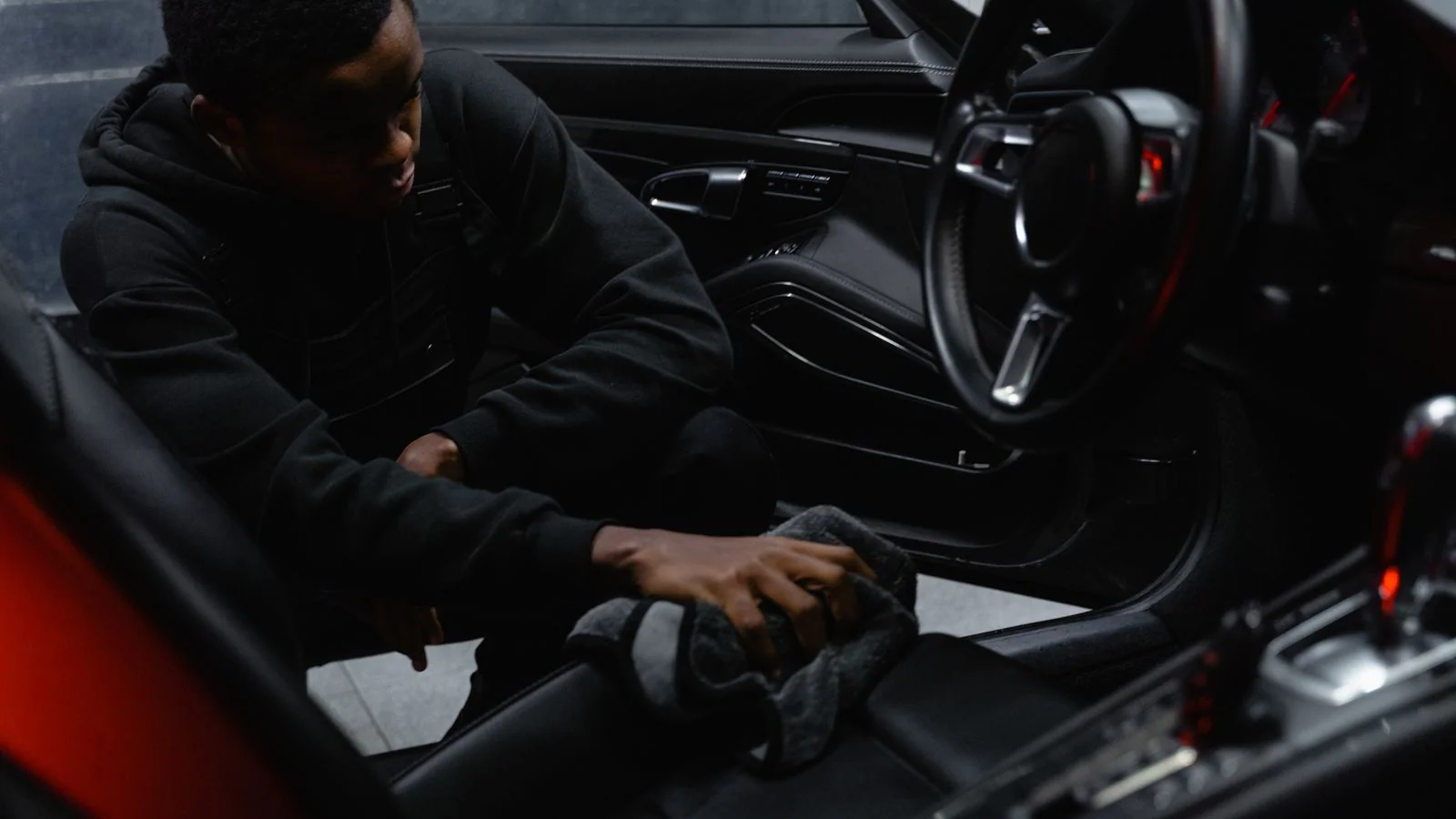
When someone asks an assistant about detailing, they use plain language and expect a plain answer. So a page that opens with “A full interior and exterior detail on a midsize SUV typically runs within a set range and takes a few hours, and we come to your home or office” is exactly what the engine wants to repeat. It states the price range, the time, and the service model in one clean passage. A page that opens with “Experience automotive perfection with our bespoke detailing artistry” gives the engine nothing usable and tells the customer nothing. The service model point is critical for detailers, because “do they come to me or do I go to them” shapes the recommendation heavily. If you are mobile, say so plainly and often, because a customer asking for a mobile detailer wants the engine to filter for exactly that. Make every key fact explicit and easy to lift, and you become the answer instead of the business the engine could not quite describe.
Write for the question, not for your ego. The detailer who sounds like a helpful expert answering a real person beats the one who sounds like a luxury ad, because the engine can actually use the helpful one.
Reviews and reputation are the tiebreaker
When several detailers could answer a customer’s question, the engine breaks the tie on trust, and reviews are the loudest trust signal it has. This is where many bookings are won or lost.
AI assistants lean on reviews to decide which local business to recommend, because reviews are public, current, and hard to fake, which makes them a reliable read on quality. A detailer with a steady flow of recent, positive reviews across the platforms that matter is the safer recommendation, so the engine favors it. That means building a genuine review habit is not optional, it is central. Ask every happy customer to leave a review, make it easy, and respond to the ones you get so you read as active and engaged. Reputation beyond reviews counts too. When trusted local sources mention you, when your work is discussed where the engine can see it, you accumulate the third-party validation that pushes you ahead of an equally qualified competitor who has none. In a tie between two detailers, the one the internet clearly trusts wins the answer, and reviews are how you build that trust in public.
Check the answer yourself
The whole point of AEO is a specific outcome, your business named when a customer asks, and you can check it directly, which makes this the rare marketing effort with an honest scoreboard.
Open ChatGPT, Perplexity, and your phone’s assistant, and ask the questions your customers ask: the best car detailer near you, a mobile detailer in your city, where to get ceramic coating locally. See whether you appear and how you are described. Do it monthly, because the answers shift as your work takes effect and as the engines update. Watch for the progression from absent, to mentioned, to recommended. That movement is the real measure of your AEO, because it tracks exactly what matters, whether the AI a customer is asking sends them to you. If you are missing, you know where to focus. If you are named, you know the moves are working. Either way, you are measuring the thing itself instead of a proxy.
Pay attention to how you are described, not just whether you appear. An engine that names you as the mobile detailer known for paint correction is doing more for you than one that lists you as a generic option, because the description is what matches you to the customer’s specific need. If the description is thin or wrong, that tells you which facts to make clearer on your pages and listings. The answer the engine gives back is, in effect, a report card on how well the rest of your AEO work is landing.
Get listed accurately where the engines look
AI assistants do not form their picture of your business from your website alone. They cross-check directories, maps, and review platforms, and they trust the businesses whose details line up everywhere they look. For a detailer, getting listed accurately across those sources is quiet, unglamorous work that has an outsized effect on whether you get recommended.
Start with the places that carry the most weight: your Google Business Profile, the major review platforms, and the local directories that show up when people search detailing in your area. Make sure your name, service area, phone, hours, and service description are identical across all of them, because a contradiction, a different phone number here, an old address there, makes the engine unsure of the facts and unwilling to state them confidently. A business the AI cannot pin down is a business it will not recommend. Beyond consistency, presence matters. The more of the trusted local sources that list you accurately, the more evidence the engine has that you are a real, established detailer worth naming. This is slow, careful cleanup, but it is the foundation the recommendation sits on, and most detailers never do it, which is exactly why doing it moves you ahead.
Show the transformation, because it builds the trust AI weighs
Detailing is a visual, proof-driven business, and while an AI engine does not see your photos the way a human does, the reputation those photos build is something the engine can read. Before-and-after proof is how a detailer earns the reviews, mentions, and reputation that the engines then use to decide who to recommend.
Document the transformation on every job. The paint corrected from swirled to mirror-clear, the interior taken from filthy to showroom, the faded trim restored. That visual proof drives the reactions that become reviews, the shares that become mentions, and the word of mouth that builds your name across the web. Each of those is a signal the engine counts when it decides which detailer to name. So make proof a habit: capture the before and after, share it where customers and platforms can see it, and let it fuel the genuine reputation that AEO ultimately rewards. The engine may not admire the shine, but it reads the trust the shine creates, and trust is what tips the recommendation your way. In a category built on visible results, the detailer who documents and shares those results consistently builds the reputation that makes the AI’s choice easy.
AEO for car detailers comes down to becoming the clear, trusted, verifiable answer to the questions your customers now ask AI. Answer plainly, keep your facts consistent, make your service model obvious, build real reviews, earn trusted mentions, structure your pages to be quoted, and stay current. Run the seven moves, and when your ideal customer asks an assistant who the best detailer near them is, the name it gives back can be yours.