
You have four weeks left on the lease, a team of nine who do not know yet, and a landlord who has already told two other tenants. Someone is going to describe this closure publicly. The only open question is whether that description comes from you.
A store closing press release is not a courtesy. It is the moment you decide whether the public record says a business made a planned exit or a business collapsed. Those read differently to a future lender, a future landlord, and anyone who searches your name in three years. The document itself takes forty minutes. Getting the sequence and the omissions right is what separates the two outcomes.
The three audiences reading your closing notice
Every closure announcement is read by three groups at once, and most drafts serve only one.

The first group is customers, who want to know a date and what happens to their money. Gift cards, deposits, repairs left in the back, a loyalty balance. If your release does not answer those in the first two paragraphs, your inbox answers them instead, one message at a time, for a fortnight.
The second group is staff and the people who know staff. A closure is an employment story before it is a retail story, and local reporters know this. What you say about redeployment, notice periods and final pay gets quoted more often than anything you say about the business itself.
The third group is the permanent record. Google, AI assistants, and whoever runs a background check on your company in 2029. This group reads nothing today and everything later. It is the reason a closing release should be written in flat, factual sentences that survive being quoted out of context, because they will be.
Call this the Three Audience Test. Before you send, read each paragraph three times, once as a customer, once as an employee, once as a stranger reading it years later with no memory of the business. A line that only works for one of the three gets rewritten.
Why does a closing become a story at all?
Most closures are not news. A single unit of a chain winding down rarely moves a reporter. The ones that do become stories share a small set of triggers, and knowing which one applies to you tells you how much preparation the announcement needs.
Longevity is the strongest trigger. A business that has been on a street for more than about fifteen years becomes a local landmark whether or not it ever felt like one, and its closure is treated as a change to the neighbourhood rather than a commercial event. If this is you, expect a reporter regardless of what you send.
Job numbers are the second. The threshold varies by market, but once a closure puts more than roughly ten people out of work in one town, it crosses into a labour story and attracts a different kind of coverage, often with a quote from a union or a local official you did not contact.
The third trigger is pattern. One store closing is a business decision. Three in a region inside six months is a trend piece, and the reporter writing it will go looking for the earlier two. This is the trigger most owners miss, because they assess their announcement in isolation while a journalist assesses it against a file.
The fourth is conflict. Any hint of a dispute with a landlord, a council, a developer or a franchisor turns an administrative notice into a narrative with sides. This is the one you control, and the control is exercised by leaving things out.
Lead with the date, not the sentiment
Open on the fact. The final trading day, the location, the business name as it is legally registered. Reporters are scanning for a hook and a date, and a release that opens with gratitude buries both.
The sentimental paragraph belongs third, in a quote attributed to a named person. That placement does two things. It keeps the top of the release factual enough to be copied into a news brief without alteration, and it puts the emotion inside quotation marks where it reads as a human speaking rather than a company performing.
There is a practical reason for the ordering too. Many outlets now run short closure items assembled from the first hundred words of a release. Whatever sits in those hundred words is the version most people will see. Spend them on the date, the address, the reason and what customers must do, in that order.
One more sequencing rule, and it is the one most often broken. Tell your staff before the release goes anywhere, including to a single friendly reporter. Not the night before, not an hour after. The morning of, in a room, before the file leaves your outbox. Every closure I have watched go badly in public went badly because an employee found out from a phone notification.
The template, line by line
Here is the structure, with the reasoning for each element rather than filler text you would have to replace anyway.
The headline states the business, the action and the date in under twelve words. Something close to: Hartwell Hardware to Close Elm Street Store on 14 November After 31 Years. No adjectives. The year count does the emotional work on its own, and a reporter can lift that headline unchanged, which is the point.
The dateline and first paragraph repeat the headline in full sentences and add the address and the single reason. One reason, stated once, with no hedging. If the reason is a lease expiring, say the lease is expiring. If it is a consolidation into another site, name the other site and its address, because that converts a loss story into a move story for anyone within driving distance.
The second paragraph handles customer logistics. Gift card deadlines with an exact date, deposit refunds and how to claim them, outstanding repairs or orders and the collection window, and whether remaining stock will be discounted. Put a real date on every one of these. Phrases like in due course generate more enquiries than they prevent.
The third paragraph is the owner quote. Two or three sentences, first person, naming something specific. A staff member’s tenure, a particular year, a product the shop was known for. Specificity is what stops a quote reading as boilerplate, and a quote that reads as boilerplate gets cut.
The fourth paragraph covers staff, and only states what is already settled. If redeployment offers have been made, say how many and to where. If consultation is ongoing, say that and nothing more. Never forecast an outcome you do not control, because the correction is a second story.
The fifth paragraph is the forward look, if you have one honestly available. Another location continuing to trade, an online store remaining open, a plan to return. If there is no forward look, leave this out rather than inventing optimism. Readers detect manufactured hope, and so do reporters.
Then the boilerplate: founding year, what the business sold, number of locations, and a named media contact with a phone number that a person will answer the same day. A closure release with a generic info@ address and no phone number signals that nobody wants to talk, which is itself a line a reporter can write.
Leave these four things out
Omission is most of the craft here. Four things belong nowhere in a closing announcement.
Blame is first. No landlord, no council, no rates regime, no competitor, no delivery platform. You may be entirely right about all of them. Naming any of them converts your closure notice into an accusation, and the accused party gets a right of reply that extends the story by a week and moves the subject away from your thirty one years to a rent dispute.
Speculation about other sites is second. If a reporter asks whether other locations will close, the answer is a plain statement about what is decided today. Any wording that leaves room for inference becomes the headline, and your remaining staff read it before your remaining customers do.
Financial detail is third. Revenue figures, loss figures, debt levels. These invite a follow up you cannot win and they sit in the permanent record alongside your name. A closure can be reported as orderly or as distressed, and voluntary disclosure of numbers pushes it towards distressed every time.
Apology language beyond a single sentence is fourth. One acknowledgement of the disruption to customers is right. Three paragraphs of regret reads as liability, and in a dispute it will be quoted back at you.
Who sends it, and when
One more decision sits upstream of the writing, and getting it wrong undoes a good draft.
If the business is a single site, the owner sends the store closing press release under their own name and answers the phone. Handing it to an agency at this moment reads as distance, and distance is the thing a closure announcement most needs to avoid. If the business is part of a group, the release goes out from the group’s communications contact, because a reporter checking will find the parent company anyway and discovering it independently makes the announcement look evasive.
Timing is the second half. The standard pattern is staff in the morning, release before noon, final trading date at least two weeks out. Two weeks gives customers time to use gift cards and collect orders, which converts the announcement from a problem into a run of trade. Less than a week and you generate complaints rather than goodwill, because people with deposits and vouchers cannot act in time.
There is one case for moving faster. If a landlord, a council or a liquidator is going to announce before you, speed outranks preparation. A thin store closing press release that goes first beats a polished one that goes second, because the first version sets the framing and every later account responds to it.
Two closings, two outcomes
Two closures, same month, same sort of town, opposite results. The first sent a release at 9am that led with the final trading date, named a thirty one year tenure, gave a gift card deadline, and offered the owner for a phone interview that afternoon. Local coverage ran as a retrospective of the shop, the last two weeks of trading sold through most of the remaining stock, and the owner’s name now returns a nostalgic piece rather than a closure notice.
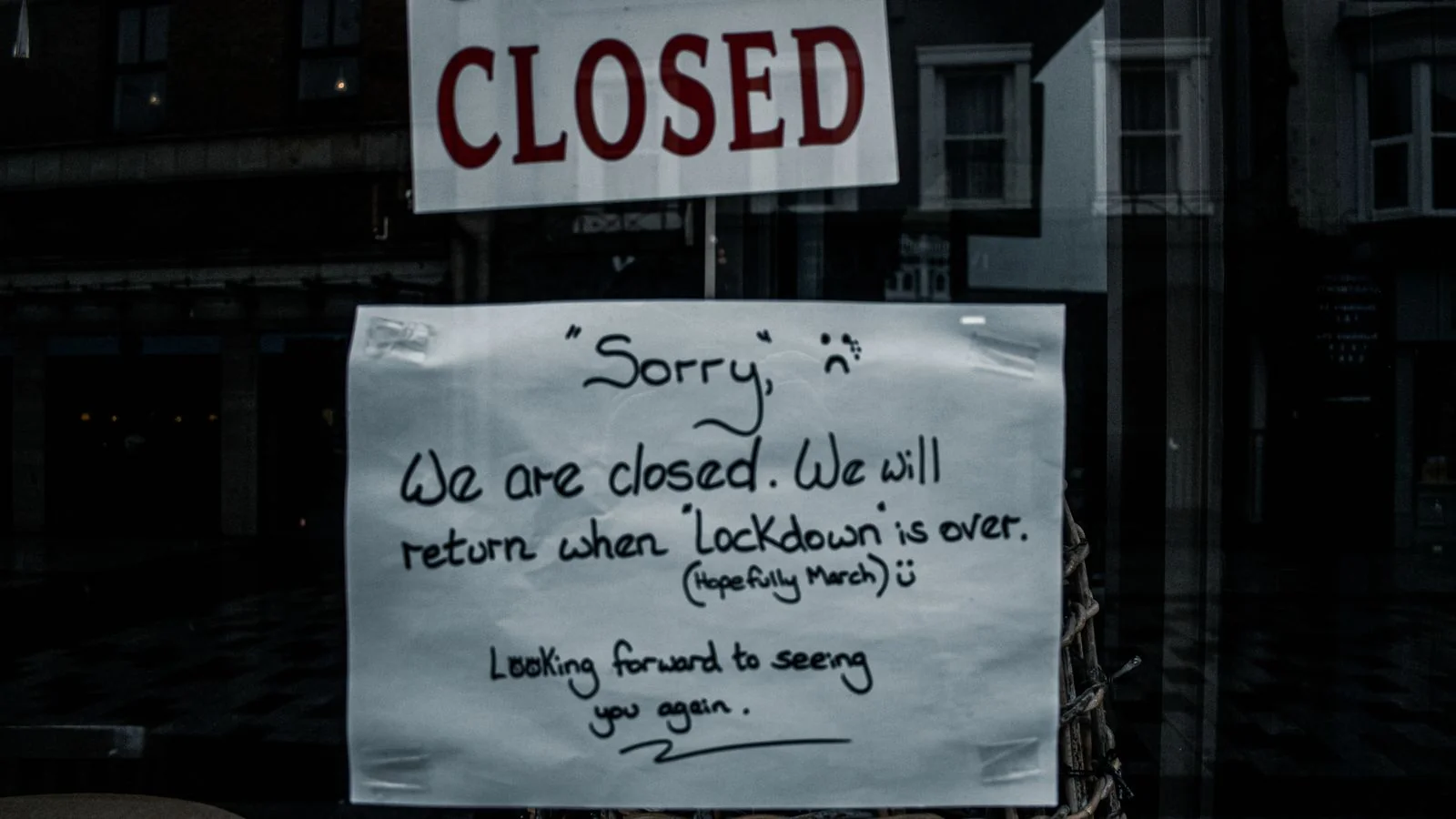
The second told nobody, let a handwritten sign do the announcing, and then responded to a reporter’s call by declining to comment. The resulting article was assembled from three customer interviews and a line about the owner not responding to requests for comment. That sentence is the first result for the business name now, and it will be for years.
The difference was not budget or media contacts. It was forty minutes and the decision to go first.
At Instant Press we maintain a catalogue of just over a thousand publications, and about 96% of them are indexed by Google, which is the uncomfortable detail behind all of this. Whatever gets published about a closure stays searchable long after the unit is relet. A planned announcement competes for that space. Silence concedes it.
So the next step is small and it is today’s work, not next month’s: write the headline sentence, with the real date and the real tenure, and read it as all three audiences. If it survives that, the rest of the release is assembly, and you have already won the part that matters.