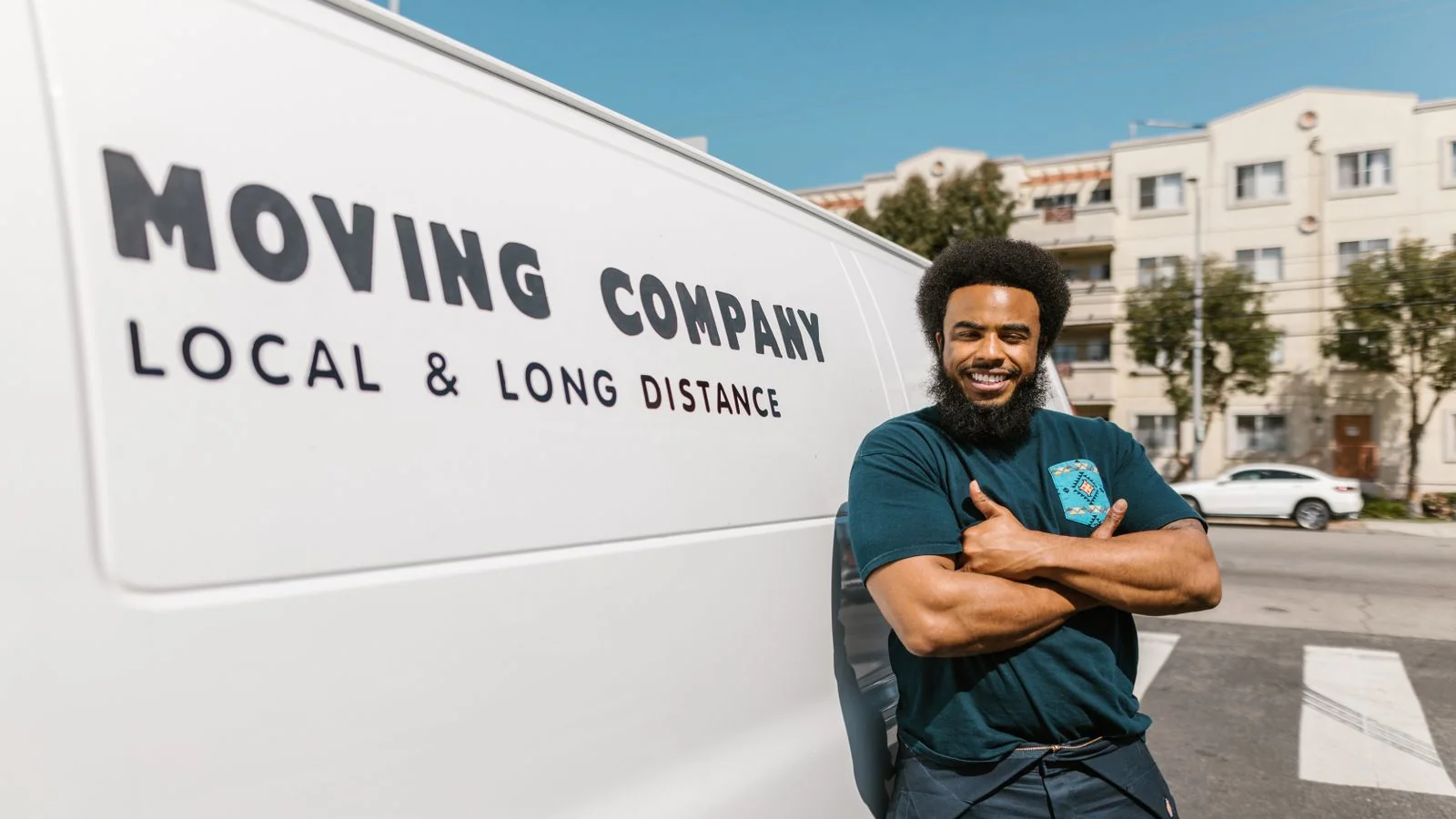
Two brothers ran a small moving operation in Michigan as teenagers before it became one of the most recognized franchise names in the country. The company was called Two Men and a Truck, and the reason it worked was not the trucks. It was that a customer could picture two actual people showing up, not a faceless dispatch number that might or might not arrive. That mental picture, a name attached to a human you can trust with everything you own, is the entire product a moving company sells. The move itself is just labor.
Most movers forget this. They advertise price, hourly rates, and free boxes, and then they lose the job to a competitor who quoted more. The customer did not choose the higher quote because they wanted to spend money. They chose it because something about that company felt safer, and safety in moving comes from trust, and trust comes from a name and a face. Personal branding for moving companies is the work of building that name on purpose instead of leaving it to whichever competitor bothered.
Why movers live and die on trust
Think about what a customer is actually agreeing to when they book a move. They are letting strangers into their home, handing them every possession they own, and trusting those strangers to carry it all to a new place without breaking it, stealing it, or vanishing with the deposit. The horror stories are common enough that most people book a mover with real fear.

That fear is your opening. A moving brand that reduces it wins, even at a higher price, because the customer is not really buying muscle and a truck. They are buying the confidence that the day will go fine. Everything you publish, every review, every photo of your crew, every post from the owner, either builds that confidence or leaves the customer to their fear. When you have no visible presence, the customer fills the silence with the worst move story they ever heard. When you have a real one, they fill it with you.
This is why personal branding for moving companies is not vanity. The owner’s face, the crew’s names, the visible track record, these are risk reducers. They convert a scary decision into an easy one.
The 5 Trust Moves
Here is a framework you can run this quarter. Five moves, each one aimed at a specific fear the customer carries into the booking.
The first move is to put a real owner front and center. People trust a named person more than a logo, so the owner’s face and story belong on the homepage, the truck, and the review responses. The second move is to make the crew visible. A short bio and a photo of the people who will actually show up removes the stranger-danger feeling before the door opens. The third move is to publish proof relentlessly, meaning before-and-after moves, testimonials with the customer’s first name and neighborhood, and photos of a job done clean. The fourth move is to answer the fears out loud, addressing damage policy, timing, and pricing so plainly that the customer stops worrying you are hiding something. The fifth move is to be findable at the exact moment of need, which means a strong local presence and reviews that load the instant someone searches “movers near me” with a knot in their stomach.
Run all five and you have changed what the customer feels before they call. You are no longer a quote on a comparison sheet. You are the company that already made them feel safe.
Make the owner the face
The single most powerful asset a moving company has is the owner, and most owners hide. They think the brand should feel big and corporate, so they scrub every trace of a human from the marketing. That is exactly backward.

A customer who sees the owner, hears why they started the company, and reads how they handle a broken lamp is buying from a person they can hold accountable. That accountability is the product. So show the owner on the site with a real photo and a real story. Have the owner respond to reviews by name, especially the critical ones, because a calm, specific reply to a complaint sells better than a wall of five-star ratings with no human behind them. Put the owner in a short video walking through what happens on move day. None of this needs production polish. It needs to feel like a real person you could call if something went wrong, because that is the fear you are answering.
When the owner becomes the face, referrals get easier too. It is hard to recommend “a moving company.” It is easy to recommend “my guy Marcus, he owns the company and he handled everything.” Give your customers a name to pass along.
Turn every move into proof
Your crews complete proof-worthy work every single day and photograph almost none of it. That is the cheapest marketing you are throwing away.
Every clean move is content. A time-lapse of a truck loaded well, a testimonial captured on a phone while the customer is still glowing with relief, a photo of a piano moved without a scratch. Build a simple habit: the crew lead grabs one photo and one sentence of feedback at the end of each job. That feeds a steady stream of proof that does the selling for you. Over a few months, a prospect who finds you sees dozens of real moves, real customers, and real outcomes, and the fear that made them hesitate quietly disappears.
Contrast that with the mover who has three stock photos and a list of services. Same trucks, same crews, but one of them looks proven and one looks like a gamble. The work was identical. The difference was who documented it.
Reviews are your brand whether you manage them or not
Ask any person how they picked their last mover and the answer is almost always the same. They read the reviews. For a moving company, reviews are not a side channel. They are the brand itself, the single largest factor in whether a nervous customer trusts you with everything they own.
This means review management is not optional busywork. It is the core of personal branding for moving companies. Every completed move is a chance to earn a review, and the companies that win ask for one at the right moment, when the customer is standing in their new place feeling relief and gratitude. Wait a week and the moment is gone. Ask on the spot, make it effortless, and a steady stream of recent, specific reviews builds. Those reviews then do the selling for every future prospect who finds you in a panic and needs a reason to trust.
How you handle the bad review matters even more than the good ones. Moves go wrong sometimes. Something breaks, a crew runs late, a customer is impossible to please. The instinct is to argue or ignore. Resist it. A calm, specific, human reply to a complaint, from the named owner, tells every future customer that you show up when things get hard, which is exactly the fear they carry. A defensive rant or silence tells them the opposite. Prospects read the negative reviews closely, and they read your responses even more closely, because the response is where they learn who you really are under pressure. Own the miss, explain what you did, and move on with grace. That single reply can sell more jobs than ten five-star ratings.
The referral engine a strong name opens
Moving is a referral business. People ask friends, neighbors, and coworkers who to trust, and the recommendation carries more weight than any ad. But referrals need a name to attach to, and this is where an anonymous moving company quietly loses.
A recognizable owner turns a one-time customer into a repeat source of business, because people move more than once and know others who are moving right now. When your name and reputation are visible, the customer who loved their move remembers you two years later and recommends you again without hesitation. When you were just a truck and a logo, they have already forgotten which company they used. The name is the memory hook, and the memory hook is what keeps the referrals coming long after the boxes are unpacked.
When your brand is built around a real owner and a real reputation, you become referable. A past customer does not say “I used some moving company, look them up.” They say “call Marcus, he owns the company, he was great, tell him I sent you.” That named, personal recommendation is the most powerful marketing in the trade, and it only exists when there is a name and a face to pass along. Build the owner’s presence, keep the crew visible, and stack the reviews, and every satisfied customer becomes a node in a referral network that feeds you jobs at zero cost. Real estate agents plug into that same network. So do apartment managers, relocation coordinators, and anyone else whose clients move. They refer the mover they trust and can name, and a visible personal brand is what makes you the one they remember. Left invisible, you are the company nobody can quite recall when a friend asks. Made visible, you are the first name out of their mouth.
What kills a moving brand
A few things reliably sink a mover’s reputation, and they are all avoidable. Ignoring reviews, especially the angry ones, tells every future customer you disappear when things get hard. Hiding your pricing structure makes people assume the worst about the final bill. Using only stock imagery signals that you have nothing real to show. And going silent, no posts, no responses, no visible owner, leaves the customer alone with their fear at the exact moment you needed to reassure them.
Personal branding for moving companies is not complicated, but it is consistent. Put a real person in front of the brand, make the crew visible, document the work, answer the fears out loud, and be there when someone searches in a panic. Do that and you stop being the cheapest quote that loses to the safer one. You become the safe one, and the safe one gets to charge what the peace of mind is worth.