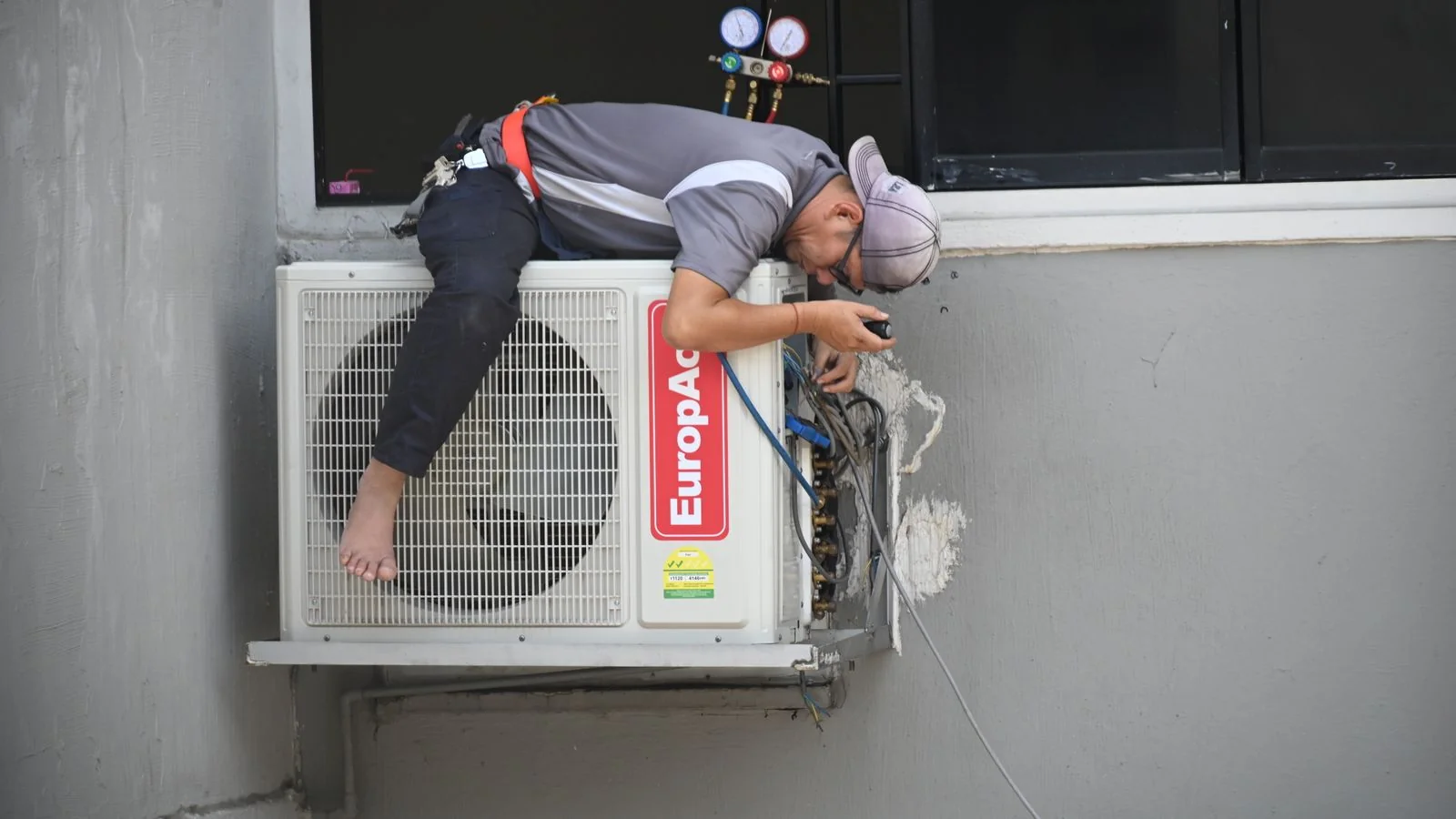
It is ninety-five degrees, a family’s air conditioning just quit, and instead of typing “AC repair near me” into Google the way they would have a couple of years ago, one of them opens an AI assistant and asks, in plain words, “my AC stopped blowing cold air, should I repair or replace it, and who should I call.” The assistant gives them an answer, walks them through the repair-or-replace question, and, when it can, names a few companies. If your HVAC business is one of the names, you may get the call. If it is not, you never existed in that decision. The homeowner is on the phone with a competitor before you knew there was an opportunity.
That moment is happening more every month, and it is what answer engine optimization for HVAC companies is about. Not abstract AI theory. The concrete work of being the company the assistant names when a homeowner in your service area asks who to call. Here is the playbook, in seven moves, built for a trade business rather than a tech company.
Why AI answers matter for a local trade

There is a reasonable objection here: HVAC is local and physical, so why would AI answers matter more than a truck wrap and a good spot in the map pack. The answer is that the research step has moved, even for local trades. Homeowners increasingly start with a conversation, not a search box, and they ask the assistant to do the thinking: is this worth repairing, what should it cost, what should I watch out for, who is reputable near me. By the time they pick up the phone, the assistant has shaped what they believe and, often, who they call.
This actually favors focused local businesses over big national brands, because the assistant answering a “near me” question is looking for a specific, credible, local answer, not a generic national one. A well-optimized local HVAC company with strong reviews, clear service-area information, and content that answers real homeowner questions can be named ahead of a national franchise, because it is the better answer to a local question. Size does not win here. Local specificity and credibility do.
It also compounds with everything else you already do. The reviews you gather, the local citations you maintain, the questions you answer on your site: these feed both traditional local search and the AI answer. AEO is not a separate marketing channel competing with your existing local marketing. It is the same signals, pointed at a new surface where an increasing share of homeowners now make the hire-or-not decision.
The seven moves
The first move is to answer the real homeowner questions on your site, in plain language. Not marketing copy. The actual questions people ask: how do I know if my AC needs refrigerant, what does a new furnace cost to install, is it worth repairing a ten-year-old unit, why is my heat pump freezing up. Each of these, answered directly and honestly on a page, is content an assistant can pull from when a homeowner asks the same thing. You are building the answers the machine will quote.
The second move is to lead every answer with the answer. Put the direct response in the first sentence or two, then explain. “A ten-year-old AC is usually worth repairing if the fix is under about a third of replacement cost and the system uses current refrigerant; beyond that, replacement often makes more sense.” That is liftable. A page that buries the same guidance under three paragraphs of preamble gives the assistant nothing clean to quote.
The third move is to nail your local entity signals. Consistent name, address, and phone across your site, your Google Business Profile, and every directory. Clear statement of your service area and the towns you cover. Hours, services, and specialties in plain text. This is what tells both Google and the assistant which local business you are and where you operate, so you can be matched to “near me” questions confidently.
The fourth move is reviews, because they are the corroboration layer for a local trade. A strong, recent body of reviews across Google and the platforms homeowners trust is exactly the third-party signal an assistant weighs when deciding whether to recommend you. Ask every satisfied customer, make it easy, and respond to the ones you get. A company with two hundred recent, well-answered reviews is a safer recommendation than one with twelve, and the machine treats it that way.
The fifth move is structured data. Mark up your business as a local business, your services as services, and your FAQ content as FAQs, so systems parse your site without guessing. This is the unglamorous technical step most HVAC sites skip, which is exactly why doing it moves you ahead of local competitors who did not.
The sixth move is local corroboration beyond your own site. A mention in the local paper, a spot on a regional “best of” list, a quote in a trade or community publication, a partnership with a recognizable local organization. These outside signals tell the assistant that others vouch for you, which raises its confidence to name you. This is where local PR and AEO become the same activity.
The seventh move is to test and track. Ask the assistants the questions your customers ask, “best HVAC company in [your town],” “who should I call for AC repair in [your area],” and see whether you appear. Note who does. Repeat monthly. This tells you exactly where you stand and which of the six other moves needs work.
The mistakes that keep HVAC companies invisible
Most HVAC companies that are absent from AI answers are making the same handful of errors, and each one is fixable once named.
The first is a website that sells instead of answers. Pages full of “we are your trusted local HVAC experts” and stock photos, with no actual answers to homeowner questions, give an assistant nothing to pull from. The machine is looking for the answer to “should I repair or replace my furnace,” and a page that only says how great your company is does not contain it. The fix is to add genuinely useful answer content, which most competitors have not done either.
The second is inconsistent local information. A name, address, or phone number that differs between your website, your Google Business Profile, and the directories tells both Google and the assistant that it cannot be sure which business you are or where you operate. For a “near me” question, that uncertainty gets you left out. Standardize every local detail everywhere and the machine can confidently match you to local queries.
The third is neglecting reviews. An HVAC company with a dozen old reviews is a weak recommendation for an assistant weighing who to name, especially against a competitor with hundreds of recent ones. Reviews are the corroboration a local trade lives on, and treating them as an afterthought caps how often you get recommended no matter how good your site is.
The fourth is hiding facts in images and PDFs. A service area map as a graphic, prices in a downloadable brochure, key information baked into a banner: none of it is readable by the systems you want reading it. Keep your service areas, services, and answers in plain text on the page.
The fifth is never checking the assistants. Many HVAC owners assume that ranking in the map pack means they are covered, and never actually ask ChatGPT or Gemini who to call in their town. Then they discover a competitor owns every answer. The only way to know is to ask, regularly, and the companies that check are the ones that improve.
Fix these five and you clear the path for everything else to work, because most of your local competitors are committing several of them and have left the AI answer wide open.
Content that wins the homeowner’s question

The heart of HVAC AEO is content that genuinely answers what homeowners want to know, because that content is what the assistant draws on and what earns the homeowner’s trust in the same motion. The instinct to write thin promotional pages about how great your company is works against you here. Assistants do not cite self-promotion. They cite useful answers.
Build a library around the decisions homeowners actually face. The repair-or-replace question, with honest guidance on when each makes sense. What different services actually cost in your region, stated in real ranges rather than “call for a quote,” because the assistant rewards specificity and homeowners trust the company willing to give it. Seasonal maintenance guidance. Troubleshooting for common symptoms. Explanations of the terms and choices that confuse people: refrigerant types, efficiency ratings, sizing, financing. Each of these is both a citation opportunity and a trust builder.
Write each one to be genuinely helpful to a homeowner who may never call you, because that honesty is exactly what makes both the machine and the reader trust you. A page that says “here is when you do not need to replace your system yet” earns more credibility than one that pushes replacement on everyone, and the assistant, weighing which sources to cite, favors the useful one. Call this the Local Answer Advantage: the trade business that most honestly answers the homeowner’s real question is the one the machine most reliably recommends, because usefulness and citability are the same thing here.
The HVAC companies that win this are not the biggest or the ones with the largest ad budgets. They are the ones that treated their website as a place to genuinely answer homeowner questions, kept their local signals clean, gathered real reviews, and earned a few credible local mentions. Do that, and when the family with the dead AC on a ninety-five-degree day asks the assistant who to call, your name is in the answer. Ask the assistant that exact question about your town today, and see whether it already is.
A 30-day starting plan
You do not need to do all seven moves at once, and trying to usually stalls the whole effort. A focused month gets you moving. Spend the first week writing down the ten questions homeowners ask you most often and drafting an honest, direct answer to each on your site, leading with the answer. Spend the second week cleaning up your local signals: make your name, address, phone, hours, and service area identical across your website, your Google Business Profile, and every directory you can find. Spend the third week building a review habit, asking every satisfied customer and setting up a simple way for them to leave one, so recent reviews start flowing. Use the fourth week to add basic structured data and to test the assistants, asking them the questions your customers ask about your town and noting where you appear and where a competitor does. At the end of the month you will have real answer content, clean local signals, fresh reviews, and a baseline measurement, which is more AEO groundwork than most of your competitors have ever laid. From there, you improve the questions where you still do not appear, one at a time, and let the results guide the next month.