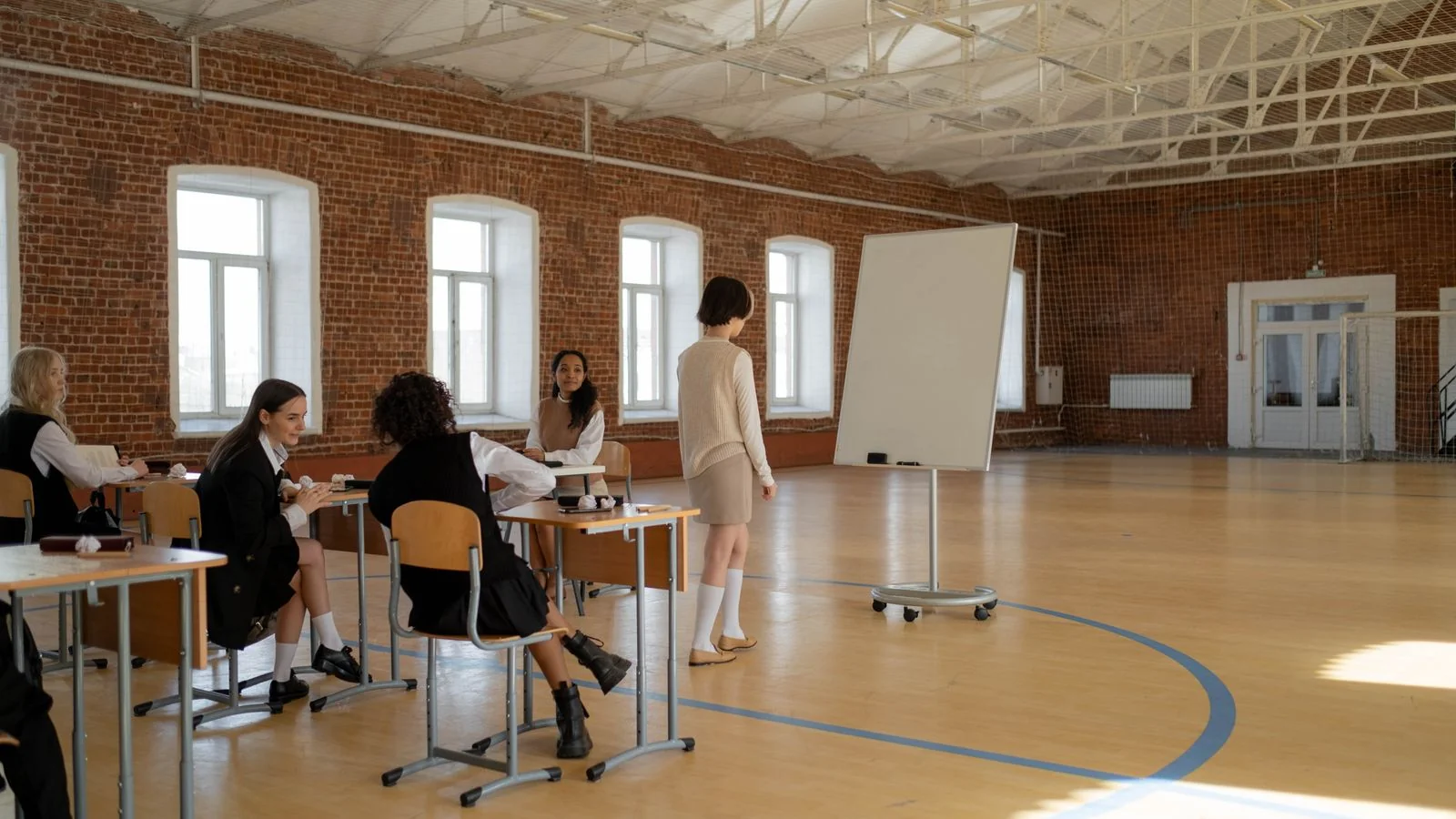
Education reporters at regional outlets are covering more schools with smaller staffs than at almost any point in modern journalism, which means the average education-beat writer is fielding far more pitches than they can ever run. That scarcity of attention is the entire problem an education press release has to solve, and most of them solve it backward. They open with the name of the institution and a quote from a superintendent praising a new initiative, which is precisely the construction a busy reporter has learned to skip.
The fix is not better adjectives. It is a different understanding of what an education press release is for. The document is not an announcement broadcast outward to an audience that cares about your school. It is a tool handed to one overworked professional whose readers care about students, outcomes, and the community, and who will run your story only if you have done the hard part of the reporting for them. Here are the seven rules that turn a release from inbox filler into actual coverage.
Rule one: lead with what changed for students, not for the school
The first sentence decides everything. A reporter reads it and either keeps going or moves to the next message in a queue of forty. The losing opener centers the institution: “Lincoln Academy is proud to announce the launch of its new STEM program.” The winning opener centers the learner: “Two hundred students at Lincoln Academy will spend this fall building working robots, in a county where most middle schools cut hands-on science years ago.”
The difference is who the sentence is about. Education coverage exists to serve readers who are parents, teachers, and taxpayers, and those readers care about kids and community, not organizational pride. Write the lead of your education press release so the subject is the student and the stake is something a parent would actually feel. The institution still gets named. It just is not the hero of the sentence.
Rule two: pass the so-what test before you write a word
Every education press release should survive a brutal question asked out loud before drafting: so what? A new curriculum, a grant, a partnership, a building. So what, to a family that has never heard of you? If the honest answer is “it makes the school look good,” there is no story, and no amount of polish will create one. If the answer is “it changes what a kid can do, learn, afford, or become,” you have something a reporter can use.
I call this the so-what filter, and it kills roughly half of all proposed releases at the door, which is exactly its job. The releases that survive it are the ones built around a real change in a student’s experience, and those are the only ones worth a reporter’s column inches. Run every announcement through the filter first. A weak release that gets sent anyway does not just fail; it teaches the reporter that your name on a subject line is safe to ignore next time.
Rule three: give them numbers a reporter can quote
Specificity is credibility. “Many students improved” is a claim a reporter cannot run without independently verifying it, which means they probably will not run it at all. “Reading scores rose for sixty-eight of ninety third-graders over one school year” is a fact they can drop straight into the story with attribution to you. Numbers do the reporter’s sourcing work in advance, and an education press release thick with verifiable specifics is far easier to publish than one full of warm generalities.
The numbers do not have to be dramatic. They have to be concrete and honestly sourced. A modest, real, specific figure beats an impressive vague one every time, because the reporter is staking their credibility on what they print and they will always choose the claim they can defend.
Rule four: write the quote so they do not have to call
A reporter on deadline will favor the story that is closest to finished, and a usable quote is a large part of finished. The quote in most education releases is unusable: a generic line of administrator gratitude that says nothing a human would say out loud. Replace it with a quote that has a real opinion, a specific detail, or a genuine stake. A teacher saying “I watched a kid who hated math ask to stay after class to finish a build” is a quote a reporter lifts verbatim, because it is alive and it is specific.
The test is whether the quote survives being read aloud. If it sounds like a press office wrote it, rewrite it until it sounds like a person said it. Every quote a reporter can use without a follow-up call is one less reason your education press release dies in the queue.
Rule five: match the angle to the outlet
The same school news is three different stories depending on who you send it to. The local daily wants the community-impact angle. The education trade publication wants the replicable-model angle, what other administrators could copy. The parenting site wants the what-this-means-for-your-kid angle. Sending one identical education press release to all three guarantees it is optimized for none of them.
This is more work, and it is the work that separates coverage from silence. You are not writing a release; you are writing the version of the release that makes one specific reporter’s job easiest. Tailoring the angle to the outlet signals that you actually read their work, which a stretched reporter notices and rewards.
Rule six: attach the assets that let them publish today
A story with art is easier to run than a story without it, and education outlets running on skeleton staff often have no photographer. Attach a clean, high-resolution photo with explicit permission to publish, and you remove a silent reason stories die unpublished. Include the names and titles spelled correctly, a one-line bio of anyone quoted, and contact details for a fast follow-up. The release that arrives publication-ready gets published; the one that requires three emails to fill gaps gets deferred until it is stale.
Rule seven: build the relationship past the single release
The schools that get covered repeatedly treat education reporters as long-term relationships, not one-time targets. Read the reporter’s recent work and reference it honestly. Respect their deadlines and their no. Occasionally send a tip that has nothing to do with you, just because it is a good education story they would want. A reporter who sees you as a reliable, generous source treats your next education press release completely differently from a stranger’s cold pitch.
That relationship is the real asset, and it outlasts any single placement. The newsrooms shrank, the reporters got busier, and the opportunity went to whoever was willing to do the reporting in advance and keep showing up as useful. Write the release for the reporter, not for the school, and the coverage follows.