
A 2026 procurement survey from Thomas reported that a majority of industrial buyers now use generative AI tools at some point in their sourcing process, most often at the shortlist stage, before a single vendor site gets a click. Sit with that. The moment where suppliers get eliminated has moved from your website to a chat window you do not control, and the manufacturers who show up in that window are not the ones with the biggest ad budgets. They are the ones whose capabilities a machine can read and repeat. That is what AEO for manufacturing is, and most plants are losing the shortlist before they know the race started.
The frustrating part is that manufacturers already own the exact content AI search rewards. Tolerances, materials, certifications, capacity, lead times, these are precise, factual, and easy to structure, which is everything an answer engine wants. The problem is that this data usually lives in a PDF spec sheet, a sales rep’s head, or a paragraph of marketing prose that says “world-class quality” and means nothing. The seven moves below turn what you already know into what the machine can cite.
Why buyers eliminate you before your site loads
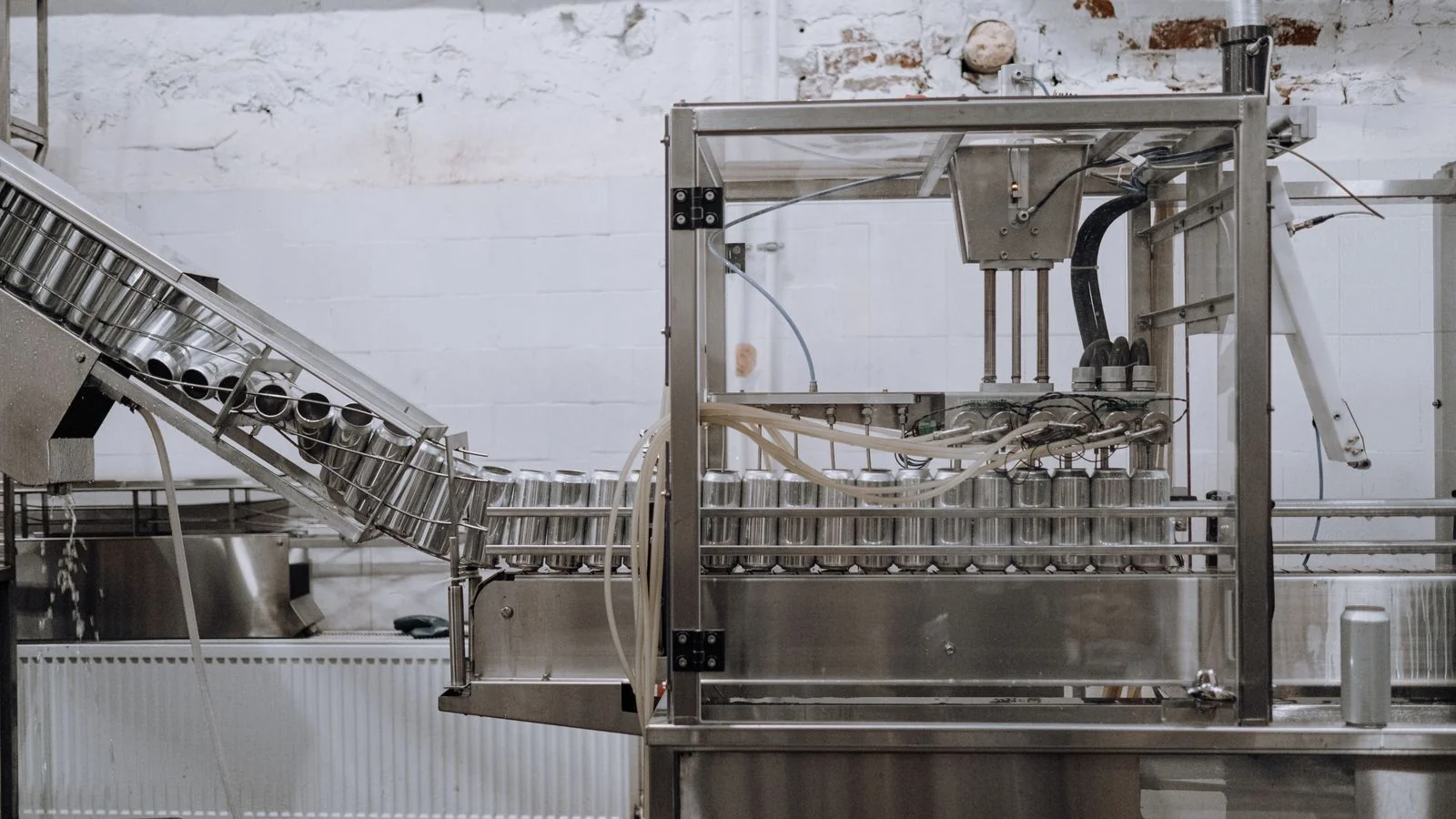
Industrial buying starts with a filter, not a search. An engineer needs a supplier who can hold a tight tolerance on a specific alloy, hit a certification, and deliver in a window. Historically they built that shortlist by reading directories and asking colleagues. Now they ask an AI, and the AI answers by pulling from whatever sources have stated those capabilities clearly enough to extract. If your tolerances are trapped in a downloadable PDF and your certifications are buried three clicks deep, the machine cannot see them, and you are not on the list.
This is elimination by absence, and it is quieter and more damaging than losing a bid. You never get the inquiry, so you never know you were considered and dropped. The plant across the state that wrote a clean capabilities page with structured data gets the call, not because it is a better manufacturer, but because it is a more legible one. AEO for manufacturing is the work of becoming legible to the systems that now build the shortlist.
The spec-sheet-to-answer pipeline
The core method I use with industrial clients is a model I call the spec-sheet-to-answer pipeline. It has three stages, and each one moves your capability data closer to something an AI can quote. Skip a stage and the data stalls where buyers cannot reach it.
Stage one is extraction: pull every hard capability out of PDFs, quote sheets, and tribal knowledge into plain text on indexable pages. Stage two is structuring: wrap that text in the formats machines parse best, tables for specs, clear headings phrased as buyer questions, and schema markup that labels what each number means. Stage three is corroboration: get those capabilities confirmed off your own domain, in directories, trade press, and third-party profiles, so the AI sees the same facts in multiple places and trusts them enough to repeat.
Most manufacturers never finish stage one. Their best data sits in a spec sheet that a search crawler treats as an opaque file and an answer engine cannot open. Run every capability through all three stages and you move from invisible to citable. That is the whole pipeline, and it is the backbone of every move that follows.
Move 1: turn capabilities into answerable text
Rewrite your capabilities as direct answers to the questions buyers actually ask. Not “precision machining solutions,” but “we hold tolerances to plus or minus 0.0005 inches on stainless, titanium, and Inconel for aerospace and medical parts.” The first is marketing. The second is an answer an AI can lift verbatim when someone asks who can machine titanium to a tight tolerance. Specificity is not a style choice here, it is the difference between being citable and being skipped.
Go through every service you offer and state the concrete parameters: materials, dimensions, tolerances, volumes, and industries. Vague superlatives are invisible to answer engines because they contain no extractable fact. A number is a fact. “World-class” is not.
Move 2: structure specs as tables and schema

Answer engines parse tables far more reliably than prose, because a table maps a label to a value with no ambiguity. Put your capability matrix, materials down one axis, processes and tolerances across the top, into an actual HTML table on the page, not an image and not a PDF. Then add structured data that tells the machine what it is looking at, using schema types for your organization, products, and services.
The certifications belong in structured form too. ISO 9001, AS9100, ITAR, IATF 16949, whatever you hold, should appear as plain text and as machine-readable data. When a buyer’s query filters on a certification, the engines favor sources that state it unambiguously. A certification logo in a footer image is invisible. The same certification named in text and schema is a qualifier that gets you into filtered answers.
Move 3: build one page per capability, not one catch-all
A single “Capabilities” page that lists everything shallowly loses to focused pages that go deep on one thing. Build a dedicated page for each core process, CNC milling, injection molding, sheet metal fabrication, with its own specs, tolerances, materials, and example applications. Depth signals expertise to both search and answer engines, and a focused page can win a specific query that a broad page never ranks for.
This also mirrors how buyers ask. They do not search for “manufacturing.” They search for the exact process and material they need. One page per capability lets you answer each of those precise questions completely, which is exactly the granularity AEO for manufacturing rewards.
Move 4: corroborate off your own domain
An AI trusts a fact more when it sees it in several independent places. Claiming AS9100 on your own site is a start. Having that same certification confirmed in an industry directory, a trade association listing, and a supplier database turns a claim into a corroborated fact. Get your capabilities and credentials listed consistently across Thomasnet, relevant trade directories, and any association you belong to, with the same numbers and names every time.
Consistency is the point. If your site says one lead time and a directory says another, the engine sees a conflict and hedges. Matching data across sources builds the confidence that gets you named in an answer rather than left out of it.
Move 5: publish the questions engineers actually ask
Create content that answers the specific technical questions buyers bring to an AI: which alloy suits a corrosive environment, what tolerance a given application demands, how a process compares to an alternative. This is not blog filler, it is capability content that demonstrates you understand the buyer’s problem at the level they experience it. When your page is the clearest answer to a real engineering question, the AI has a reason to cite you, and the buyer who reads that answer arrives already trusting your expertise.
Move 6: keep the data current and watch the answers
Capabilities change. You add a machine, earn a certification, expand capacity. Stale data gets you cited for work you no longer do or missed for work you now can. Review your capability pages and directory listings on a set schedule, and actually query the AI engines yourself with the questions your buyers ask. If a competitor is named and you are not, that gap tells you exactly where your spec-sheet-to-answer pipeline broke, and where to fix it next.
Manufacturers spent decades competing on tolerances and lead times. That competition has not ended, it has moved into a chat window where the first cut happens before anyone visits your site. AEO for manufacturing is how you make that cut. Run your capabilities through the pipeline, become legible to the machine, and you will start getting inquiries from buyers who found you in an answer, not an ad.