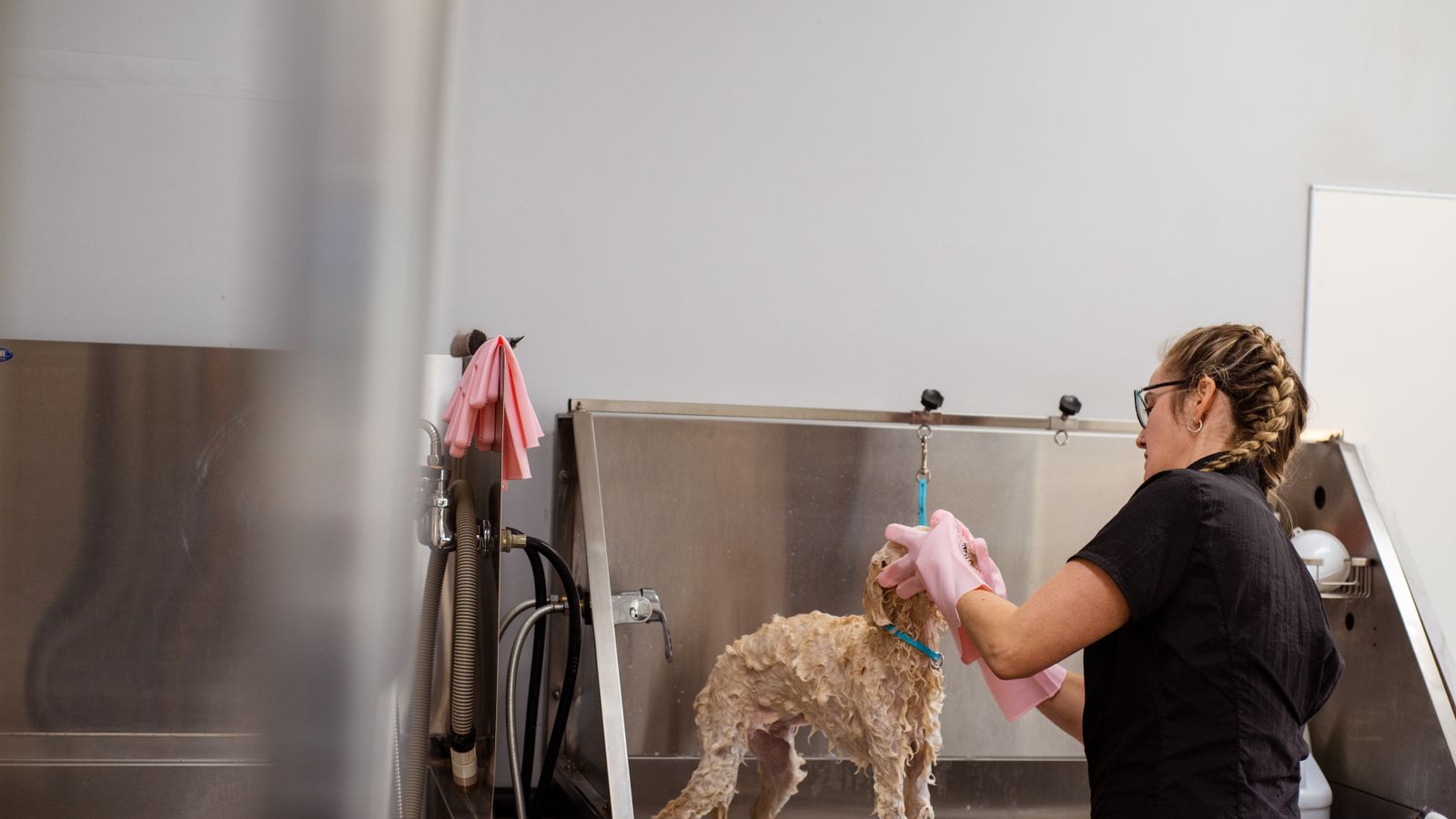
The pet industry is one of the best AEO opportunities in consumer services right now. Pet owners ask AI products questions they’re embarrassed to ask the vet, too specific to ask a friend, or too mundane to research through traditional websites. “Is coconut oil safe for dogs.” “How often should a shih tzu be groomed.” “What’s a fair price for cat teeth cleaning in Austin.” These are high-intent, answer-seeking queries, and the businesses that show up in the AI response get the next appointment, the product purchase, or the shelf recommendation. This post is about how pet businesses actually win in that environment in 2026.
The pet owner’s search has fundamentally changed
Five years ago, a dog owner with a lethargic puppy would Google the symptoms, click through WebMD-style pages, and maybe book a vet visit. Today, more and more owners open ChatGPT, Claude, or Perplexity first. They describe the symptoms in natural language, get a direct answer about what might be wrong and when to see a vet, and then ask “what’s a good vet near me” or “is there a home vet service in Columbus.” Every step of that process now happens inside an AI product before the user ever touches Google.
What this means for pet businesses: the moment of choice has moved upstream. By the time a user searches for your business name, they’ve already formed an opinion based on what the AI said. The AI mentioned three local vets and not you? You’re out of the consideration set before the user ever saw your website. AEO is how you make sure the AI includes you when it should.
Where pet businesses most often lose in AI search
The most common failure mode is that pet businesses produce content about themselves, not about what their customers ask. A vet clinic blog with posts like “Meet Dr. Smith, our new associate veterinarian” is useless for AEO. The AI has no reason to cite that. A post titled “Signs your cat might be in pain: what every cat owner should watch for,” written by Dr. Smith with real clinical detail, is what gets cited.
The second failure is generic content. Pet owners don’t want a 2,000-word philosophical essay on dog nutrition. They want to know if they can feed their dog peanut butter, whether the brand they’re looking at is safe, and how many cups a 40-pound labrador needs per day. Specific, direct, answerable questions deserve specific, direct, answerable content. Most pet industry content is the opposite: vague, generic, and written for SEO keyword density rather than for a real owner at 10pm with a real question.
The third failure is lack of authority markers. AI products weight sources based on signals like “does this site have veterinarians listed with verifiable credentials,” “does the content cite peer-reviewed research,” and “does this brand appear in publications I trust.” A pet blog with no vet author, no sources, and no press mentions is less likely to be cited than one that has all three, even if the content is similar.
What pet businesses should actually build
Start with a question inventory. Spend two hours listing every question a real customer has asked you in the last 90 days. Not hypothetical questions, real ones. The groomer gets “how short should my corgi’s coat be in summer.” The vet gets “should I vaccinate my senior dog against lepto.” The pet food brand gets “can I switch my dog to your food cold turkey or do I need to transition.” Each of those questions is a page on your website.
Don’t write 2,000 words when 400 will do. A direct answer at the top (“Yes, a coat length of X is recommended because Y”), a short explanation of the reasoning, and a clear call to action (book an appointment, buy the product, download the guide). AI products prefer content that gets to the answer quickly. So do pet owners.
Every page should be signed by a named expert with verifiable credentials. A DVM for veterinary content. A certified groomer for grooming content. A credentialed trainer for training content. The signed byline is a citation signal, and AI products use it to decide whether to trust your page. If you don’t have credentialed staff, hire a contractor to review and co-sign content. It’s worth the cost.
Location-specific content is the vet clinic’s superpower
For service businesses like vets, groomers, trainers, daycares, and boarders, the highest-converting AEO plays are location-specific. Not “how much does dog boarding cost” (too broad, you’ll lose to national sites) but “how much does dog boarding cost in Charlotte” or “best options for dog boarding in Charlotte if your dog has separation anxiety.” These longer, localized queries are where small local businesses can win.
Build one page per service per location. A clinic with three locations should have three “senior cat wellness exams in [city]” pages, each with actual details about that location’s pricing, staff, and specialty. This is time-intensive to write, but it compounds. Once you rank in both Google and AI answers for “vet for exotic pets in Denver,” you’ll get the inbound calls for years.
The Google Business Profile matters too. Fill every field, post monthly updates, and respond to every review. Local SEO and AEO reinforce each other: a strong GBP signal makes AI products more confident you’re a real business worth citing.
Press and publication coverage matters more than you think
This is the part most pet businesses skip. AI products cite publications, not websites. Your own site can have the best content in the world, but if your brand never gets mentioned in places like American Kennel Club, Good Housekeeping, Dogster, Chewy’s blog, pet industry trade publications, or local news, you’re missing the citation layer that AI products use to decide what to include.
The good news: pet stories are some of the easiest pitches in PR. Journalists at lifestyle publications love pet content because it performs well with readers. A small business with a compelling founder story, a useful product, a cute pet photo, and a clear story angle can usually get three to ten press clips a year with consistent outreach. Those clips don’t just drive traffic; they drive AI citations for the next several years.
The clips you care about are the ones that quote your brand or founder, not just mention you in a roundup of 25 products. A full paragraph in Reader’s Digest about a pet toy company beats being the tenth item in a listicle. Ask journalists for the former, not the latter.
Schema and technical basics that AI products look at
Most pet businesses neglect technical AEO. This is the boring, fix-once work that pays dividends. At minimum, every pet business site should have LocalBusiness schema (for physical locations), Organization schema (for the business entity), FAQ schema (on pages that answer common questions), and a clean robots.txt that doesn’t accidentally block AI crawlers.
Check that AI bots can access your site. GPTBot, ClaudeBot, PerplexityBot, and Googlebot should all be allowed unless you have a specific reason to block them. Run your site through an SEO audit tool quarterly. Fix anything that’s broken. These aren’t glamorous tasks, but the sites that skip them consistently underperform in AI citations.
A 90-day AEO plan for a pet business
Day 1 to 30: audit your current site content, list the top 50 questions your customers actually ask, set up schema, verify AI bots can crawl your site, and claim or optimize your Google Business Profile if you haven’t already. Publish five answer-focused pages to your site covering the highest-frequency questions, each signed by a credentialed expert.
Day 31 to 60: write and pitch ten stories to pet and lifestyle journalists. Focus on founder stories, customer transformation stories with permission, and category expertise. Aim for two to four placements. Build a simple tracking sheet of where your brand gets mentioned online.
Day 61 to 90: monitor your brand mentions in AI products by actually asking ChatGPT, Claude, and Perplexity the queries your customers would ask. If you’re not showing up, identify the publications that are getting cited and pitch them. Publish ten more answer-focused pages. Refresh older pages to tighten up the direct-answer structure.
By day 90 you should see early signs of AI visibility: a couple of queries where you show up, one or two new press mentions, and a more organized content structure. Real results (measurable traffic and calls) usually take 6 to 12 months of consistent work, but the foundation is what matters in the first quarter.
The pet industry opportunity in 2026
Most pet businesses haven’t started doing AEO yet. The ones that do now will own the AI citations in their category for years, the same way the first-mover SEO brands of the 2010s owned Google rankings. Pet owners have high lifetime value, they trust brands they discover through expert-cited sources, and they search for answers across exactly the kinds of queries where AI products shine. This is an open field, and it rewards the businesses that show up with real expertise, real content, and real press, not the ones still writing generic blog posts that nobody cites.